- What Exactly Is Soba?
- A Brief History: From Mountain Survival Food to Edo Sophistication
- Buckwheat Around the World: How Japan’s Approach Is Unique
- How to Enjoy Soba: Hot, Cold, and Everything In Between
- Where to Eat Soba in Tokyo: Chain Restaurants for Every Budget
- Beyond the Noodles: Side Dishes and Set Meals at Soba Restaurants
- Practical Tips for Soba Beginners
- Your Soba Journey Starts Here
What Exactly Is Soba?
If you have spent even a single day exploring Japan, you have almost certainly walked past the inviting aroma of soba — thin, elegant buckwheat noodles served in a warm dashi broth or chilled on a bamboo tray with a savory dipping sauce. Soba is not just another noodle dish; it is a cornerstone of Japanese culinary identity, deeply woven into the country’s history, seasonal rituals, and everyday life.
Unlike wheat-based pasta or ramen, soba noodles are made from buckwheat flour (sobako), which gives them a distinctive earthy, nutty flavor and a slightly firm, satisfying texture. The ratio of buckwheat to wheat flour varies: “Nihachi Soba” (80% buckwheat, 20% wheat) is the most common blend, while “Juwari Soba” (100% buckwheat) is the purist’s choice — and naturally gluten-free in terms of the noodle itself.
A Brief History: From Mountain Survival Food to Edo Sophistication
Buckwheat has been cultivated in Japan for thousands of years, originally thriving in the cold, mountainous regions of Nagano, Yamagata, and Hokkaido where rice paddies could not survive. For centuries, buckwheat was consumed as a simple porridge (sobagaki) or ground into flour for dumplings.
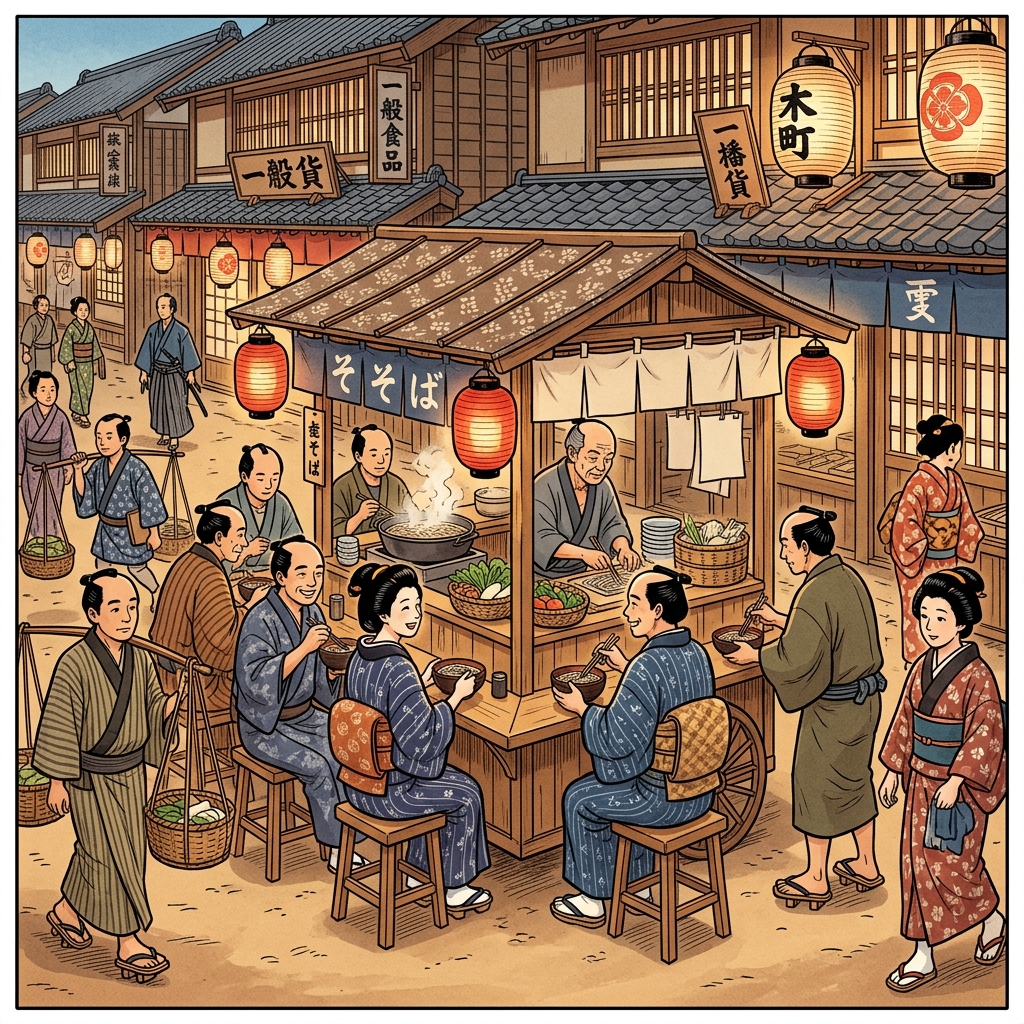
The transformation into noodle form happened during the Edo period (1603–1868), when soba stalls began appearing across the bustling streets of old Tokyo. By the mid-Edo era, soba had become the fast food of the merchant class — affordable, quick, and delicious. The city developed its own distinct soba culture: refined, lightly flavored broth using dark soy sauce (koikuchi shoyu) and premium bonito-based dashi. This Edo-style soba tradition is the direct ancestor of the soba you will find across Tokyo today.
Soba also carries deep cultural symbolism. On New Year’s Eve, families across Japan gather to eat “Toshikoshi Soba” (year-crossing soba). The long, thin noodles represent longevity and good health, while their easy-to-cut nature symbolizes severing the misfortunes of the past year. It is one of Japan’s most beloved food traditions.
Buckwheat Around the World: How Japan’s Approach Is Unique
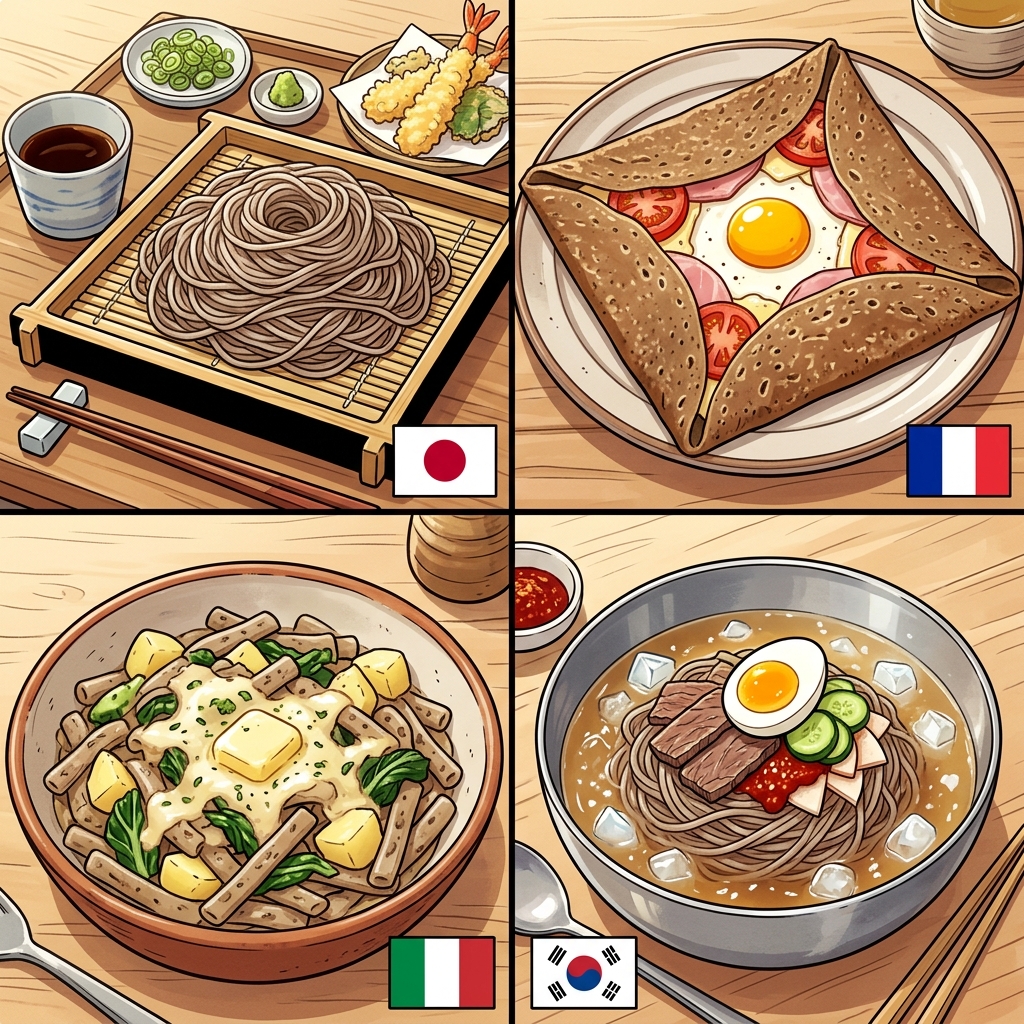
Japan is far from the only country that uses buckwheat, but no other culture has elevated it into such an art form. Here is how buckwheat appears across the globe:
In France, buckwheat flour is the base of galettes — savory crepes from Brittany filled with cheese, ham, and eggs. In Italy, the Alpine region of Valtellina produces pizzoccheri, thick buckwheat pasta layered with potatoes, cabbage, and melted cheese. Korea uses buckwheat for naengmyeon, chewy cold noodles served in an icy beef broth — a refreshing summer staple. In Russia and Eastern Europe, roasted buckwheat groats (kasha) are a warming side dish eaten with butter and onions.
What makes Japanese soba fundamentally different is the philosophy behind it. In Japan, soba is celebrated for its purity and subtlety. The goal is to taste the buckwheat itself — its delicate aroma, its gentle earthiness. The broth and toppings are designed to complement, never overpower. Master soba artisans (shokunin) spend years perfecting the art of hand-cutting noodles to a precise, uniform thickness. The entire experience is built around restraint, balance, and seasonality — a stark contrast to the rich, hearty preparations found in European buckwheat cuisine.
How to Enjoy Soba: Hot, Cold, and Everything In Between
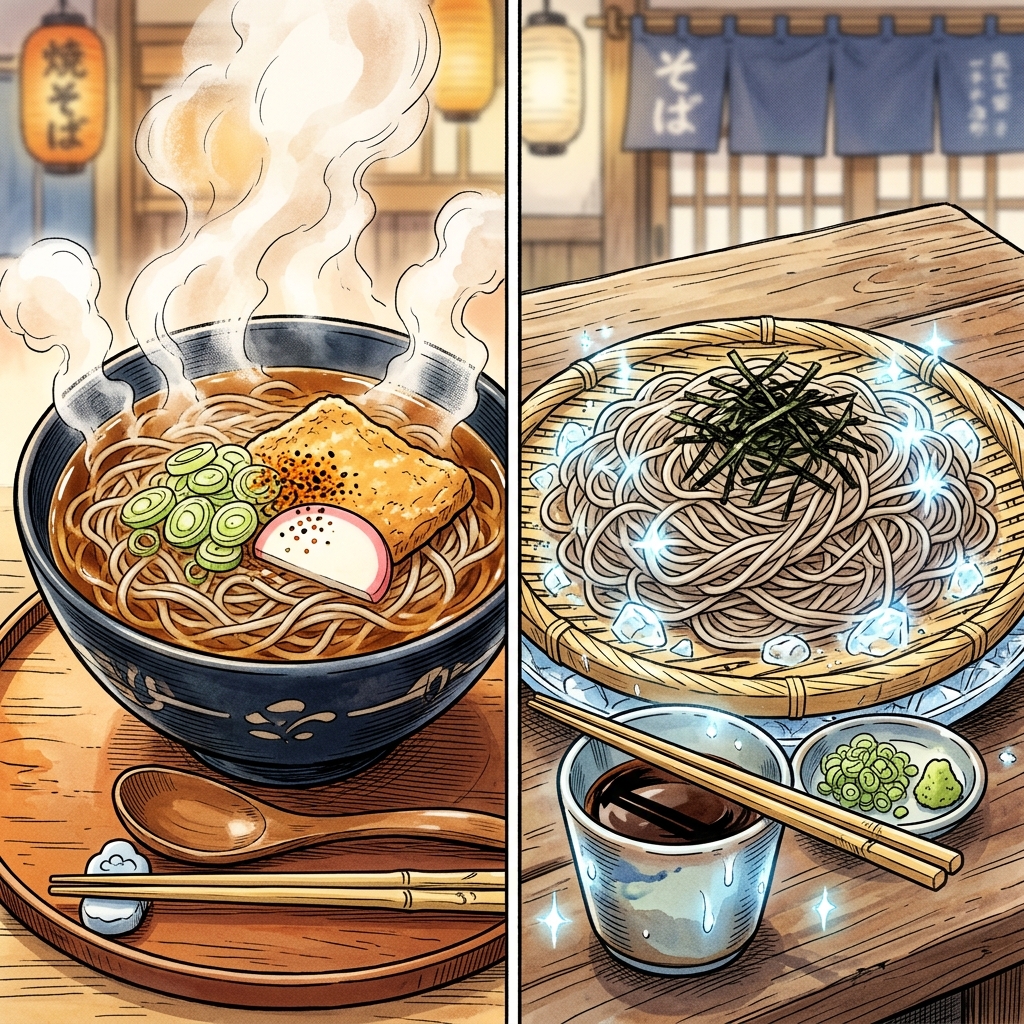
Soba noodles are served in two fundamental styles, each suited to a different season and mood.
Cold Soba (Zaru Soba / Mori Soba)
Cold soba is the purest way to appreciate the noodle itself. After boiling, the noodles are rinsed in ice-cold water and served on a zaru (bamboo draining tray). A small cup of concentrated dipping sauce (tsuyu) made from dashi, soy sauce, and mirin is provided alongside, usually with wasabi and finely sliced green onions. You dip each bite into the sauce — just a little — and slurp. Zaru Soba features shredded nori seaweed on top; Mori Soba is the same but without the nori. This style is especially popular in the warmer months from late spring through autumn.
Hot Soba (Kake Soba)
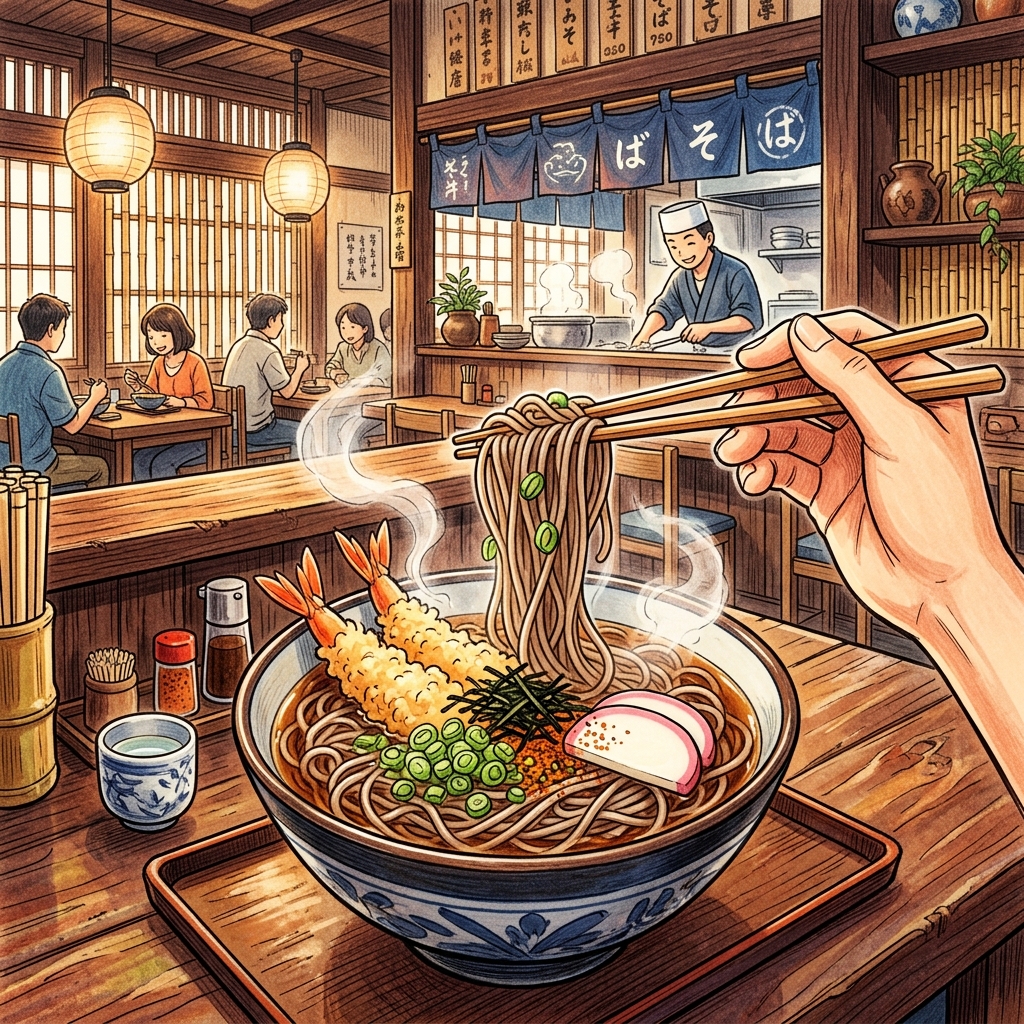
In colder weather, nothing beats a steaming bowl of Kake Soba — noodles swimming in a hot, savory dashi broth. The simplicity is the point: just noodles, broth, and perhaps a sprinkle of sliced scallions. From this base, countless variations emerge:
Tempura Soba features crispy shrimp or vegetable tempura perched on top. Kitsune Soba comes with a sweet, juicy slice of deep-fried tofu (aburaage). Tanuki Soba is topped with crunchy tenkasu (crispy tempura batter bits). Tsukimi Soba — “moon-viewing soba” — has a raw egg gently poached in the hot broth, its yolk resembling a full moon.
Where to Eat Soba in Tokyo: Chain Restaurants for Every Budget
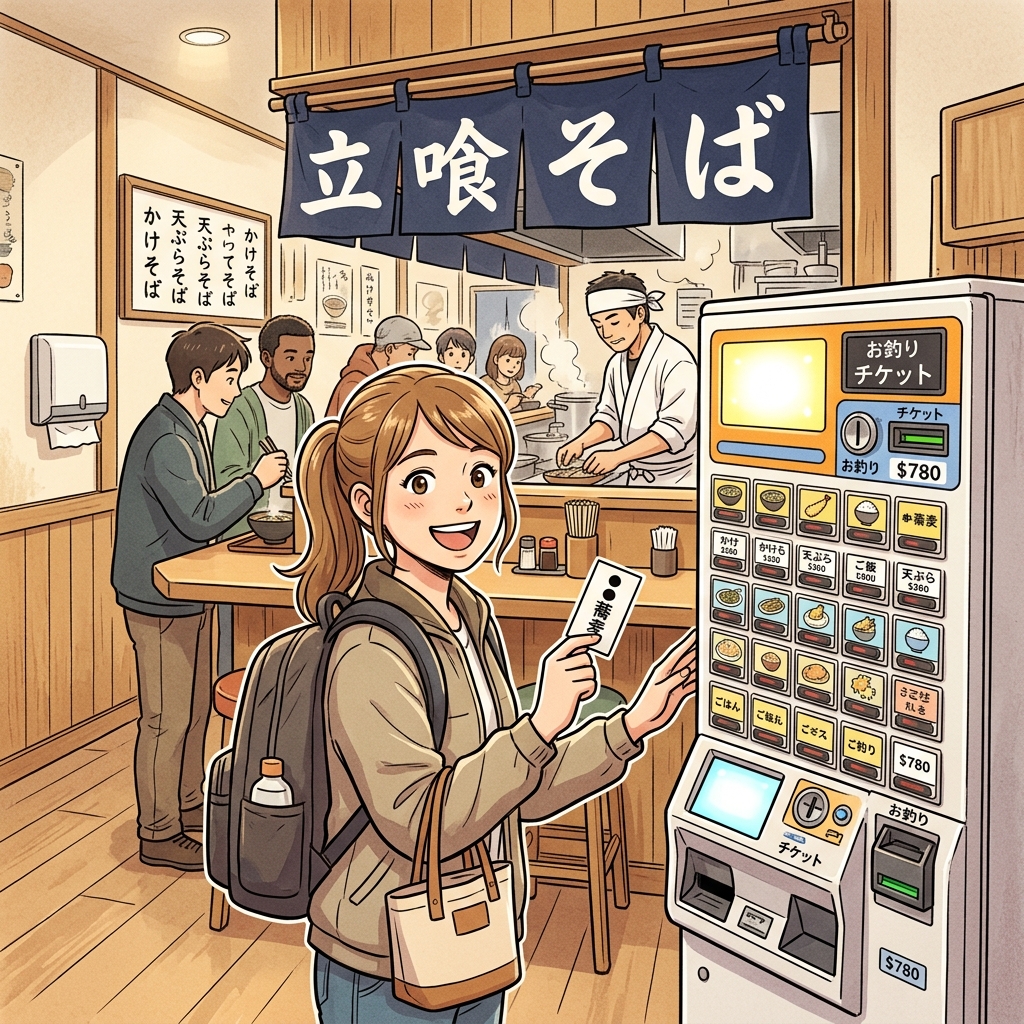
One of the best things about soba in Tokyo is that you do not need to hunt for an exclusive reservation to enjoy an excellent bowl. The city is dotted with fast, affordable soba chain restaurants — beloved by salarymen, students, and travelers alike. Here are the big names you should know:
Fuji Soba (富士そば)
Perhaps the most iconic standing soba chain in Tokyo. With its recognizable signage and locations near virtually every major train station, Fuji Soba is open 24 hours at many branches. A basic bowl of kake soba starts around 350 to 400 yen. The menu is extensive, offering tempura soba, curry rice combos, and seasonal specials. It is the perfect introduction to tachigui (standing-eat) culture.
Yudetaro (ゆで太郎)
Yudetaro prides itself on the “three freshnesses” — freshly ground buckwheat, freshly made noodles, and freshly boiled. Many locations have a visible noodle-making station inside the shop. The quality-to-price ratio is outstanding, with hearty sets pairing soba with mini rice bowls for under 600 yen. Look for the distinctive blue signage.
Komoro Soba (小諸そば)
A favorite among office workers in central Tokyo, Komoro Soba is famous for its efficient service and satisfying set meals. The soba-plus-katsudon (pork cutlet rice bowl) combo is legendary for its value. Prices are rock-bottom, and the speed of service is astonishing — you can be in and out in under 10 minutes.
How to Order at a Soba Chain
Almost all of these chains use a ticket vending machine (kenbaiki) near the entrance. Insert cash or tap your IC card (Suica, Pasmo, Welcome Suica), select your dish from the buttons (most have photos), take the ticket, and hand it to the staff at the counter. They may ask: “Atatakai?” (hot) or “Tsumetai?” (cold). Point at the photo on the machine if you are unsure. Your meal will be ready in about one to two minutes.
Beyond the Noodles: Side Dishes and Set Meals at Soba Restaurants
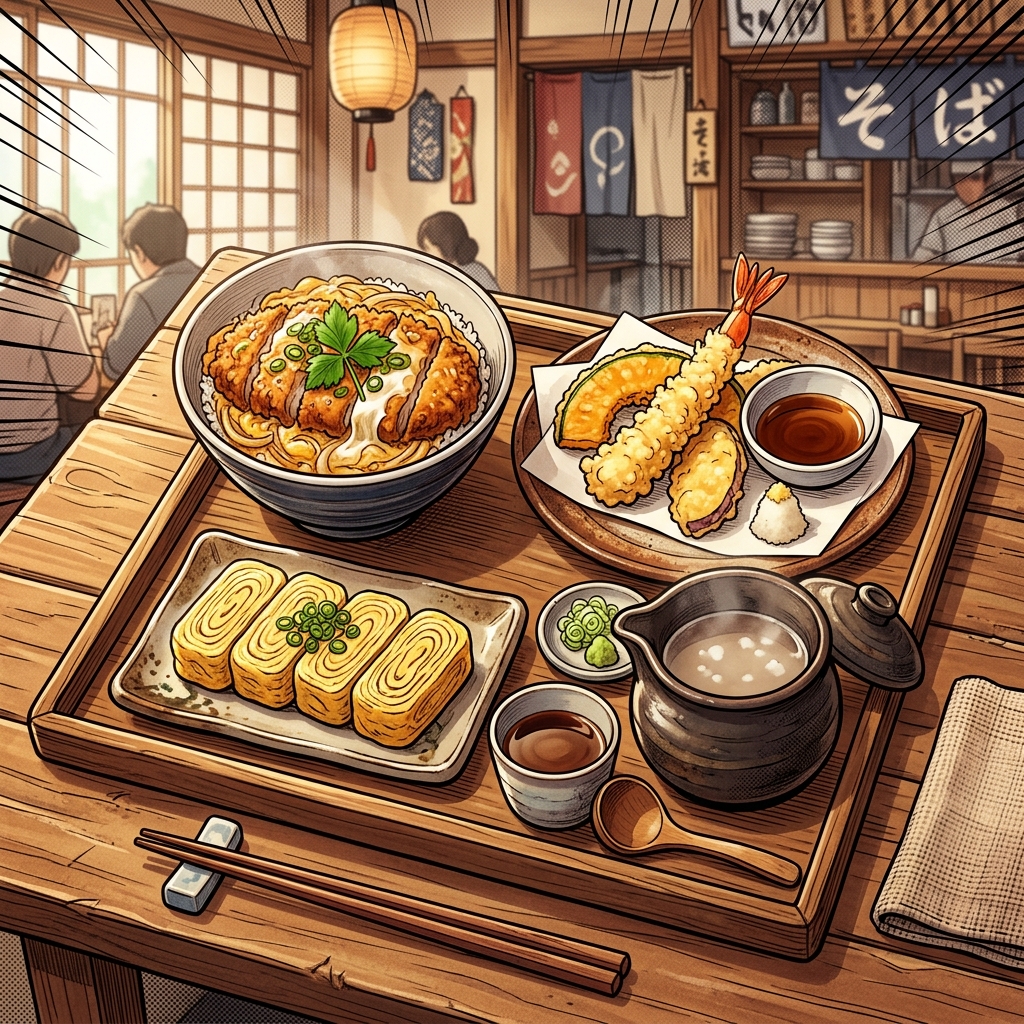
A soba restaurant is more than just noodles. The side dishes and set meals are a huge part of the experience — and often surprisingly delicious.
Donburi Sets (Rice Bowl Combos)
The most popular way to have a full meal at a soba shop is to order a “set” (setto). This typically pairs a half-sized soba (hot or cold) with a mini rice bowl. The classics include: Katsudon Set — a crispy breaded pork cutlet simmered with egg and onion over rice, paired with soba. Tendon Set — tempura (usually shrimp and vegetables) served over rice with a sweet soy glaze, plus a bowl of soba. Oyakodon Set — chicken and egg simmered in dashi sauce over rice, alongside soba.
Tempura
Tempura is inseparable from soba culture. You can order it as a topping on your noodles (tempura soba), as a standalone plate, or as part of a Tenzaru set (cold soba served with a separate plate of tempura). The batter is light and shatteringly crispy. Common items include shrimp (ebi), sweet potato (satsumaimo), eggplant (nasu), and shiso leaf.
Traditional Appetizers (Sobaya-mae)
At more traditional soba restaurants, there is a custom called “sobaya-mae” — drinking sake and nibbling small dishes before your noodles arrive. Look for: Itawasa (sliced kamaboko fish cake with wasabi), Tamagoyaki (rolled dashi omelet), Sobagaki (a rustic buckwheat dumpling dipped in soy sauce), and seasonal pickles (tsukemono).
Soba-yu: The Secret Final Course
After finishing your cold soba, the staff may bring you a small pot of soba-yu — the starchy, cloudy water left over from boiling the noodles. Pour it into your remaining dipping sauce to create a warm, comforting soup. This is rich in nutrients and is considered the proper way to end a soba meal. Do not skip it — it is one of the most uniquely Japanese dining rituals you can experience.
Practical Tips for Soba Beginners
Slurping is not just acceptable — it is encouraged. Slurping cools the hot noodles, enhances the aroma, and shows appreciation for the meal. Do not be shy about making noise.
If you have celiac disease or a severe gluten sensitivity, be cautious. While 100% buckwheat (Juwari Soba) noodles are naturally gluten-free, the dipping sauce almost always contains wheat-based soy sauce. Cross-contamination in the kitchen is also common. Carry a Japanese allergy card and consider bringing your own tamari (wheat-free soy sauce).
Soba is one of the most affordable meals in Tokyo. A basic bowl at a chain starts from around 350 yen (about 2.50 USD), and even a full set meal rarely exceeds 800 yen. It is the ultimate budget-friendly dining option.
For the freshest experience, try to visit during lunch hours (11:00 AM to 1:00 PM) when turnover is highest and noodles are being prepared continuously.
Your Soba Journey Starts Here
Whether you are grabbing a quick 400-yen bowl at a standing counter before catching your Shinkansen, savoring hand-cut Juwari Soba at a quiet artisan shop in Kanda, or discovering the joy of pouring soba-yu into your last drop of tsuyu, soba offers one of the most authentic, accessible, and deeply satisfying food experiences in Japan. It is fast food and fine dining. It is history and modernity. It is a 350-yen lunch and a cultural journey spanning centuries. Step inside, buy your ticket, slurp with confidence, and let this humble buckwheat noodle surprise you.