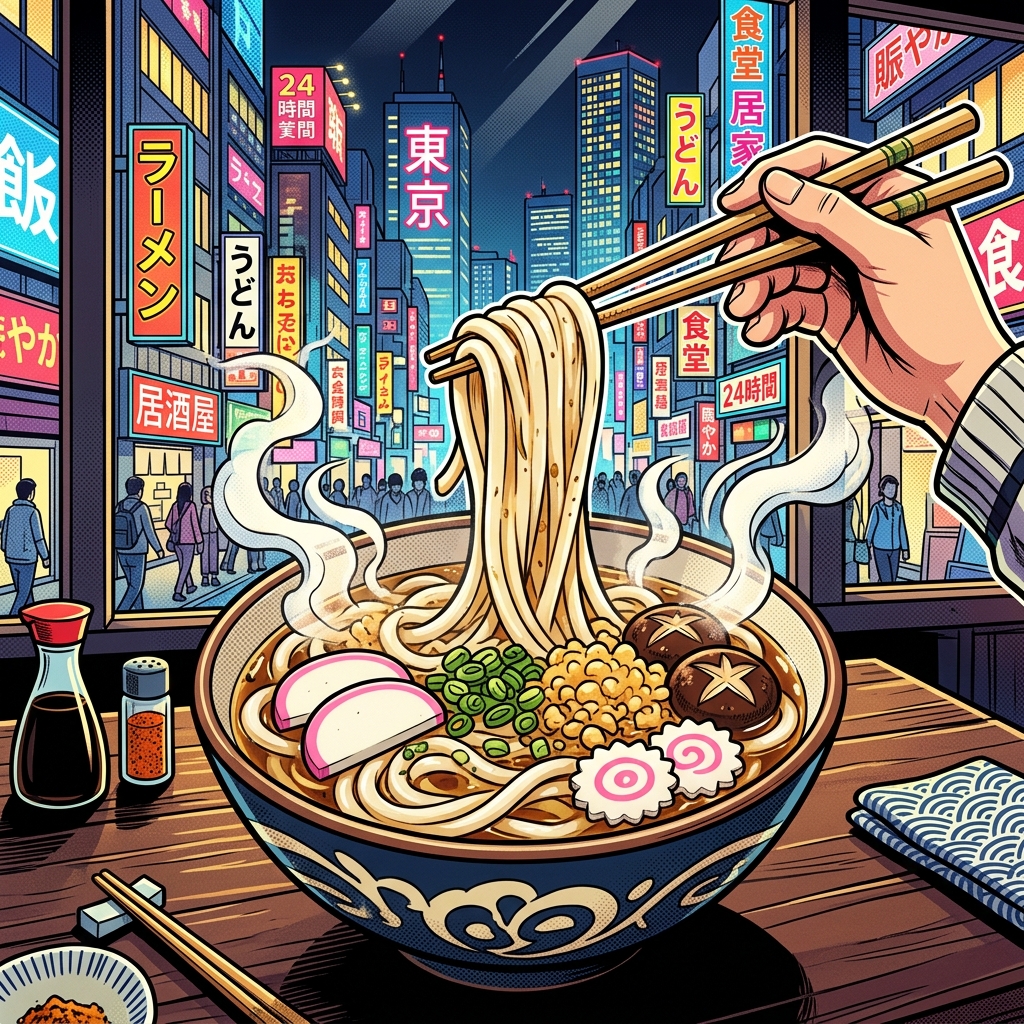
Udon (うどん), the thick, chewy wheat noodle, is one of Japan’s most beloved comfort foods. While ramen often steals the international spotlight, udon holds a special place in the hearts of locals for its versatility, deep historical roots, and incredible value. Whether you are craving a steaming bowl of dashi broth in the winter or refreshing cold noodles in the humid Tokyo summer, udon is the perfect meal.
Recently, Tokyo’s udon scene has become more exciting than ever. With legendary regional chains expanding into the capital and modern aesthetic cafes reinventing the dish, there has never been a better time to explore the world of udon.
In this guide, we will walk you through the history of udon, the different regional types, how to navigate the unique “cafeteria-style” ordering system, and the top 4 chain restaurants you absolutely must try in Tokyo.
A Brief History of Udon
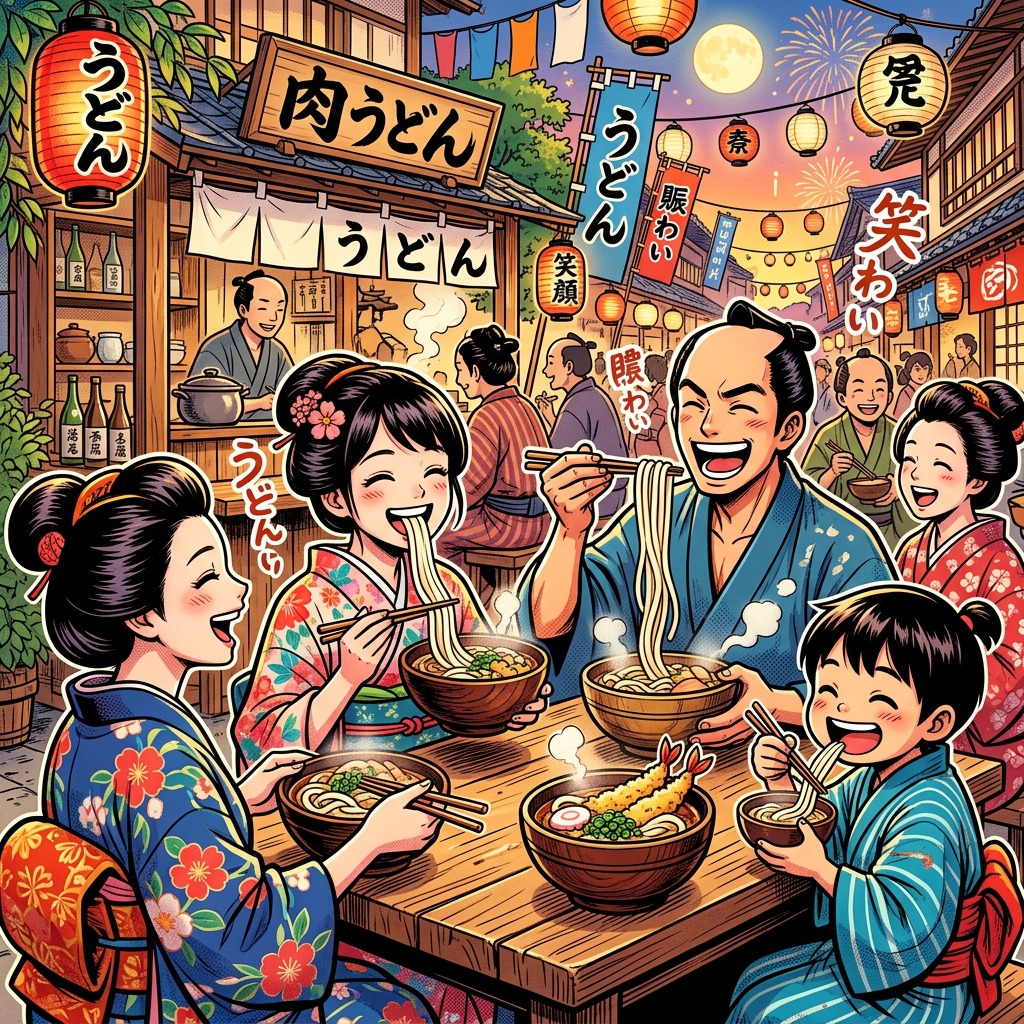
The origins of udon can be traced back over a thousand years. It is widely believed that the milling technology and the predecessor to udon were brought to Japan from China by a Buddhist monk during the Tang Dynasty (around the 8th or 9th century).
Initially consumed by aristocrats and monks, udon gradually spread to the common people during the Edo period (1603–1867). As wheat farming flourished in specific regions—like Kagawa Prefecture (formerly Sanuki Province) and Fukuoka—unique local variations of udon began to emerge. Today, udon is a staple of Japanese fast food, offering a healthy, quick, and satisfying meal.
Understanding Udon Types: Regional Differences and Temperatures
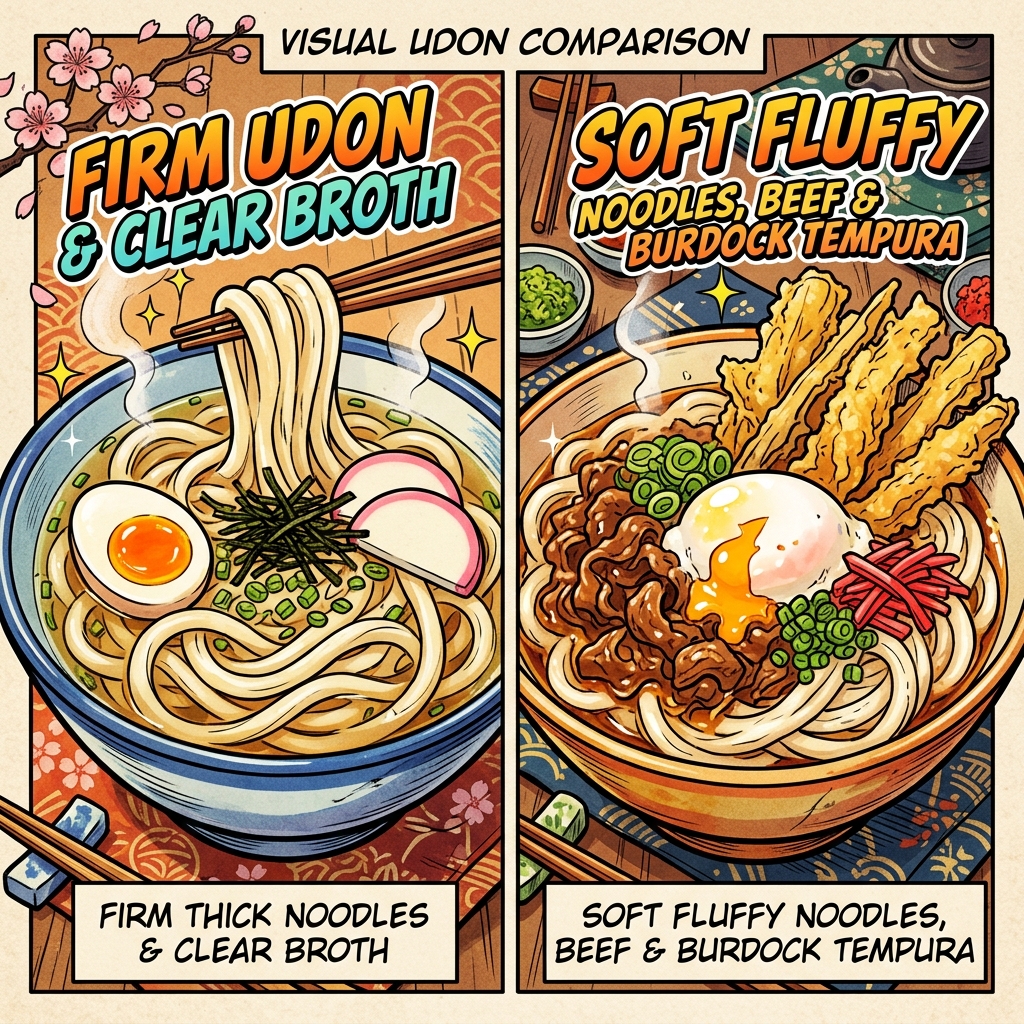
Before stepping into an udon shop, it helps to understand the different styles. Udon varies wildly depending on the region it originates from and how it is served.
1. Regional Styles:
- Sanuki Udon (Kagawa): The most famous type in Japan. Known for its firm, chewy texture (called koshi) and smooth surface. The broth is typically light in color, made from dried sardines (iriko).
- Hakata/Kyushu Udon (Fukuoka): The complete opposite of Sanuki! These noodles are boiled until they are incredibly soft, fluffy, and absorb the rich, sweet broth made from flying fish (ago) and kelp.
- Kanto Udon (Tokyo/Eastern Japan): Traditionally features a dark, rich broth made with strong soy sauce and bonito flakes.
Hot vs. Cold: How to Choose Your Udon
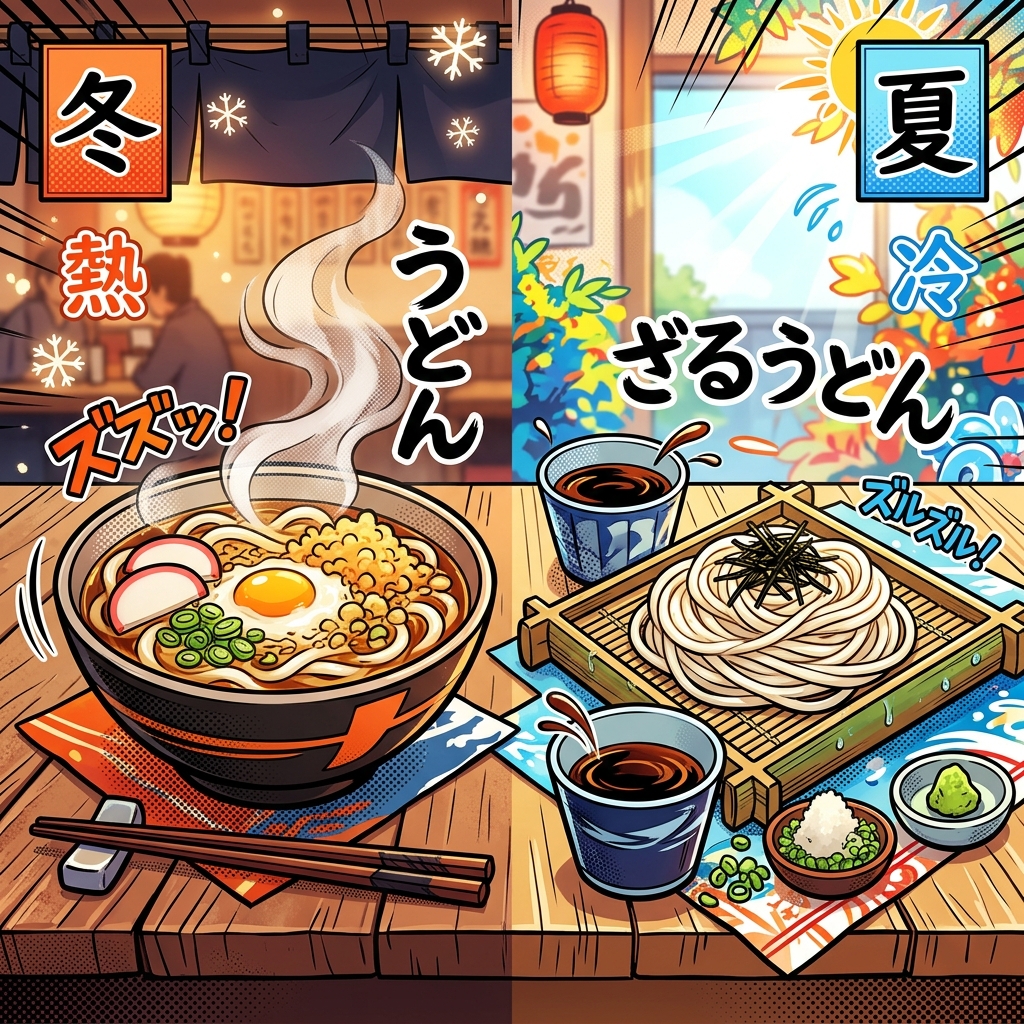
- Kake Udon (Hot): Noodles served in a hot soup. The ultimate comfort food.
- Zaru Udon (Cold): Chilled noodles served on a bamboo tray with a cold dipping sauce on the side. Perfect for the hot and humid Japanese summer.
- Bukkake Udon (Hot or Cold): Noodles served with a small amount of concentrated, rich soy-based broth poured directly over them.
Tourist Hack: How to Order at a Cafeteria-Style Udon Shop
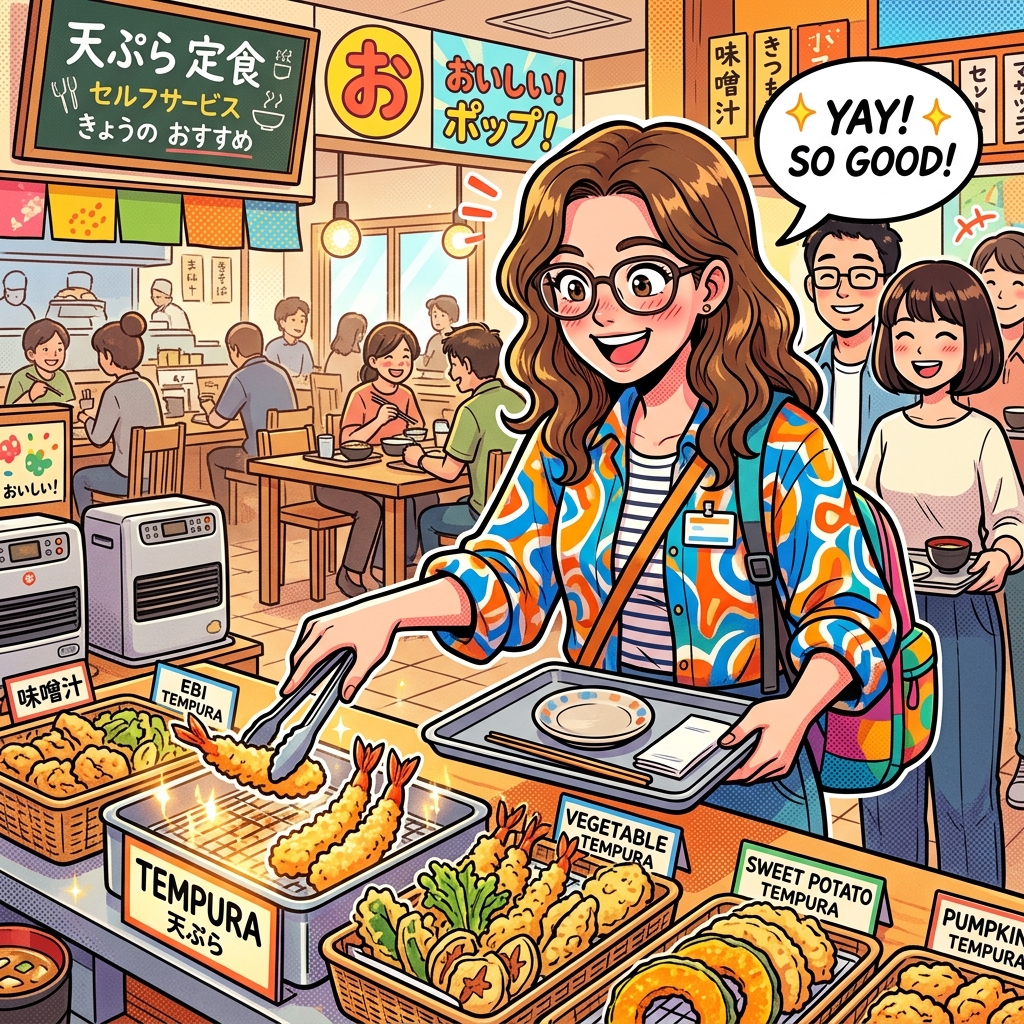
Many popular udon chains use a self-service “cafeteria style” (セルフ式) system. It can be intimidating for first-timers, but once you know the flow, it is incredibly efficient!
Step 1: Grab a Tray
At the entrance of the counter, pick up a tray and a small side-plate (for your tempura).
Step 2: Order Your Noodles
Tell the staff your order. You need to specify:
1. The type of udon (e.g., Kake, Zaru, Bukkake).
2. The size (Sho = Small, Nami = Regular, Dai = Large).
3. The temperature (Atsui = Hot, Tsumetai = Cold).
Tip: If you don’t speak Japanese, simply point to the picture on the menu and say “Hot” or “Cold”.
Step 3: The Tempura Station
Slide your tray down the counter. Here, you will find a buffet of freshly fried tempura and rice balls (onigiri). Use the provided tongs to place anything you want onto your small plate.
Step 4: Pay and Garnish
At the register, pay for your meal. After paying, head to the condiment station. Here you can add free toppings like green onions (negi), tempura flakes (tenkasu), ginger, and sesame seeds.
—
Popular 4 Udon Chains You Must Try in Tokyo
Now that you are an udon expert, here are the top 4 chains in Tokyo, each offering a completely different experience.
1. Marugame Seimen (丸亀製麺): The Global Standard of Sanuki Udon
With over 800 stores in Japan and many overseas, Marugame Seimen is the undisputed king of Sanuki udon.
- The Vibe: Energetic, bustling, and authentic. You can watch the staff kneading and cutting the dough right in the open kitchen.
- Must-Try: Kamatama Udon (Hot noodles mixed with a raw egg and soy sauce) and their famous oversized Chicken Tempura (Kashiwa-ten).
- Why we love it: The ultimate standard for the bouncy koshi texture. It is fast, incredibly cheap (a basic bowl is around 400 yen), and always fresh.
2. Hanamaru Udon (はなまるうどん): Healthy and Value-Packed
Another giant in the Sanuki udon world, Hanamaru Udon is beloved by students and office workers for its unbeatable value and health-conscious menu.
- The Vibe: Casual, bright, and very approachable.
- Must-Try: Ontama Bukkake (Cold or hot udon topped with a soft-boiled egg) and their surprisingly delicious Oden (simmered skewers) available near the register.
- Why we love it: Hanamaru infuses their noodles with dietary fiber, making it a slightly healthier choice. They also offer a “Mini” size, perfect if you want to eat a lot of tempura without getting too full.
3. Sukesan Udon (資さんうどん): The Kyushu Soul Food Arrives in Tokyo!
[2026 Trending News!] Originally a beloved local soul food from Kitakyushu (Fukuoka), Sukesan Udon has finally made its highly anticipated expansion into Tokyo (with new stores opening in Ryogoku, Adachi, and Hachioji between 2025 and 2026). Tokyoites are currently obsessed with it!
- The Vibe: Warm, nostalgic, and hearty. Unlike Marugame, many Sukesan locations offer table service or touch-panel ordering.
- Must-Try: Niku Gobo-ten Udon (Udon topped with sweet simmered beef and crispy burdock root tempura). And you MUST order their famous Botamochi (sweet red bean rice cake) for dessert!
- Why we love it: The noodles are soft on the outside but slightly chewy on the inside, swimming in a slightly sweet, deeply savory fish broth. It is a completely different experience from Sanuki udon.
4. Yamashita Honki Udon (山下本気うどん): The IG-Worthy Modern Evolution

If you want to experience how Tokyo is reinventing traditional food, you have to visit Yamashita Honki Udon, usually found in trendy areas like Shibuya and Shinjuku.
- The Vibe: Sleek, modern cafes with neon signs. Very popular with Gen-Z and tourists.
- Must-Try: Shiroi Mentaiko Cream Udon (White Mentaiko Cream Udon). It arrives looking like a dessert, completely covered in pure white whipped cream. Beneath the cream lies spicy cod roe (mentaiko) and thick noodles.
- Why we love it: It perfectly blends traditional Sanuki-style noodles with Western pasta concepts. Mixing the savory, spicy cod roe with the sweet, rich whipped cream creates a mind-blowing flavor profile.
Conclusion: Your Udon Journey Awaits
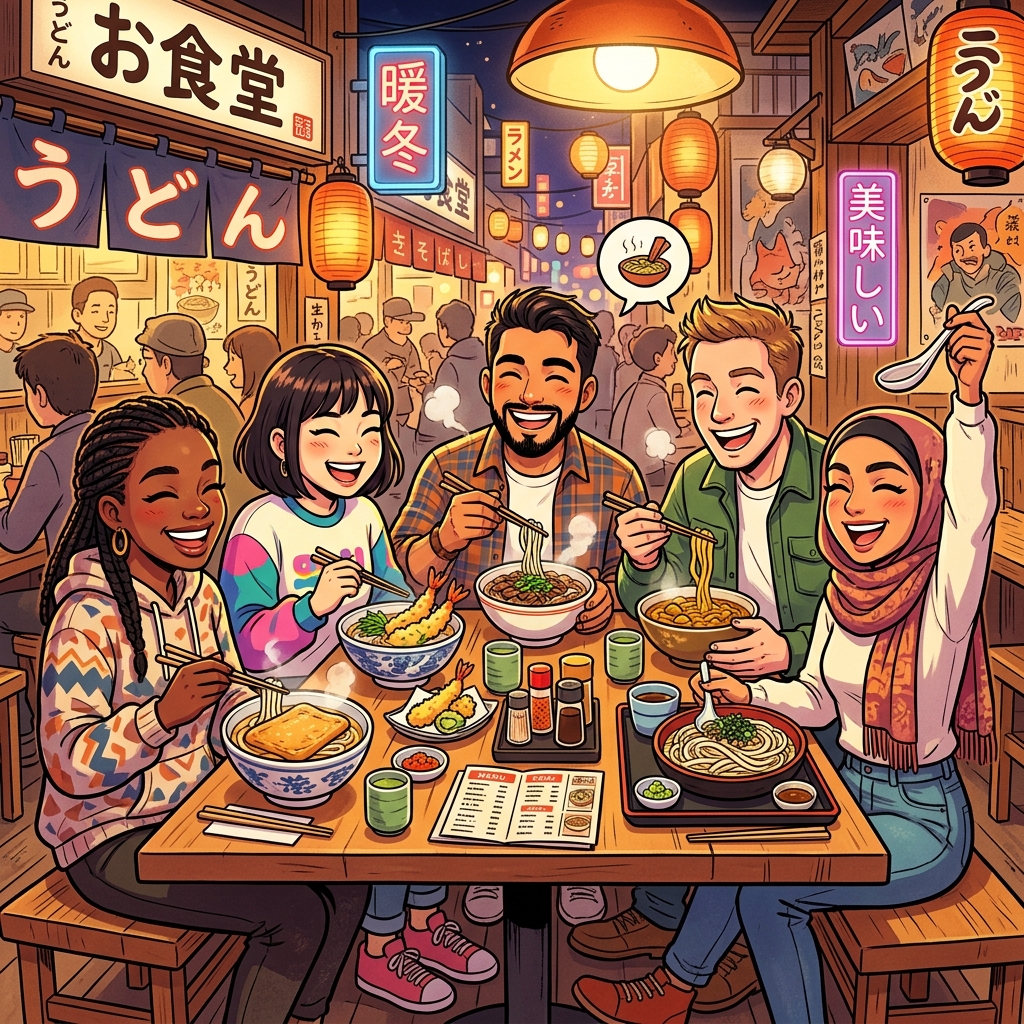
Whether you are looking for a quick 400-yen lunch or a photogenic culinary adventure, Tokyo’s udon scene has something for everyone. Grab a tray and start slurping!