- Why Ramen Is Japan’s Greatest Comfort Food
- The Four Pillars: Understanding Ramen Broth
- Regional Ramen Map: A Flavor Journey Across Japan
- Beyond the Bowl: Tsukemen, Abura Soba & Modern Styles
- How to Order Ramen Like a Pro
- Ramen Etiquette: What Every Visitor Should Know
- Useful Japanese Phrases for Ramen Shops
- Plan Your Ramen Pilgrimage
Why Ramen Is Japan’s Greatest Comfort Food
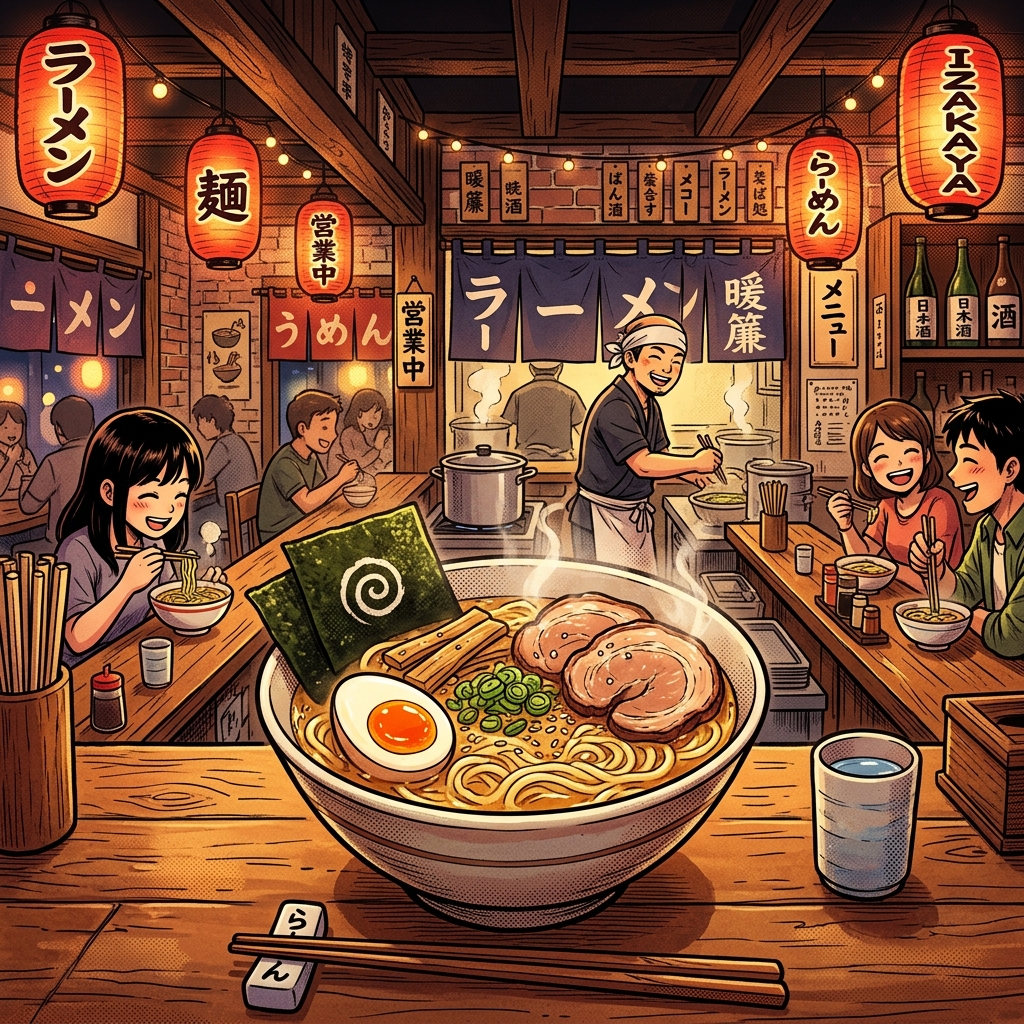
Ask any traveler what they are most excited to eat in Japan, and the answer is almost always the same: ramen. This steaming bowl of noodles, broth, and toppings has evolved from a simple Chinese-influenced street food into one of the most celebrated culinary art forms on the planet.
But here is the thing most visitors do not realize until they arrive: there is no single “Japanese ramen.” Every region, every city, and sometimes every neighborhood has its own signature style. The bowl you slurp in Sapporo tastes nothing like the one you devour in Fukuoka.
This guide breaks down the major ramen styles, teaches you how to navigate the ordering process like a local, and shares insider tips so you can eat your way across Japan with confidence.
The Four Pillars: Understanding Ramen Broth
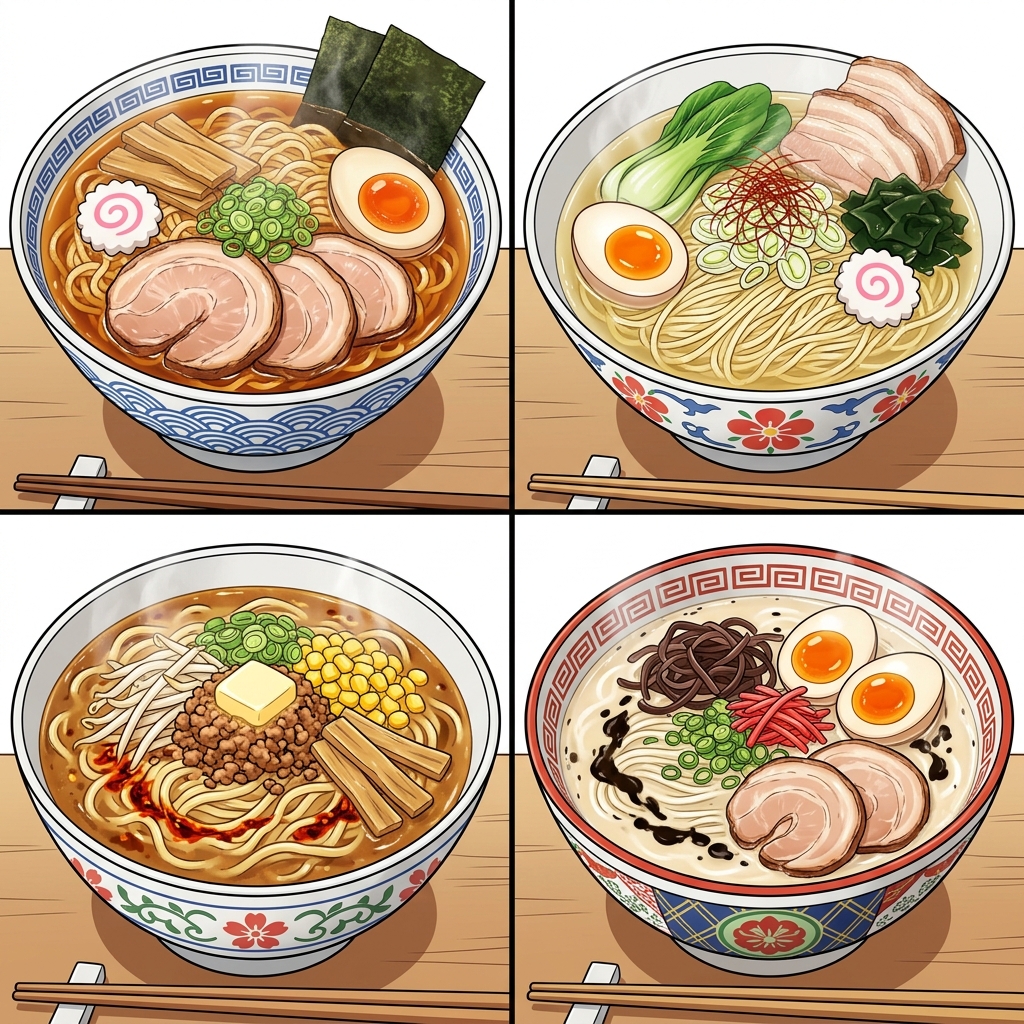
Every ramen bowl starts with two essential elements: the broth and the tare (seasoning base). Think of the broth as the body and the tare as the soul. Together, they define the flavor profile of every bowl you encounter.
Shoyu (Soy Sauce)
The original Tokyo classic. Shoyu ramen features a clear, amber-colored broth built on chicken or pork stock and seasoned with soy sauce. The result is savory, balanced, and deeply comforting. If ramen were music, shoyu would be jazz — timeless and endlessly versatile.
Look for it in: Tokyo, Yokohama, Kitakata (Fukushima)
Shio (Salt)
The lightest and most delicate of the four bases. Shio ramen lets the quality of the dashi stock shine through without the heaviness of soy sauce or miso. The broth is typically clear and pale gold, with a clean, mineral finish.
Look for it in: Hakodate (Hokkaido), upscale ramen shops in Tokyo
Miso
Born in Hokkaido’s freezing winters, miso ramen is rich, hearty, and warming. The fermented soybean paste gives the broth a complex, almost earthy sweetness. It is often served with butter, sweet corn, and bean sprouts — the ultimate cold-weather comfort bowl.
Look for it in: Sapporo (Hokkaido), Sendai, and increasingly all across Japan
Tonkotsu (Pork Bone)
This is the one that made ramen famous worldwide. Tonkotsu broth is created by boiling pork bones for 12 to 20 hours until the collagen breaks down into a creamy, milky-white soup. The flavor is rich, porky, and deeply satisfying. Thin, straight noodles are the standard pairing.
Look for it in: Hakata/Fukuoka, Kumamoto, Kagoshima — all across Kyushu
Regional Ramen Map: A Flavor Journey Across Japan
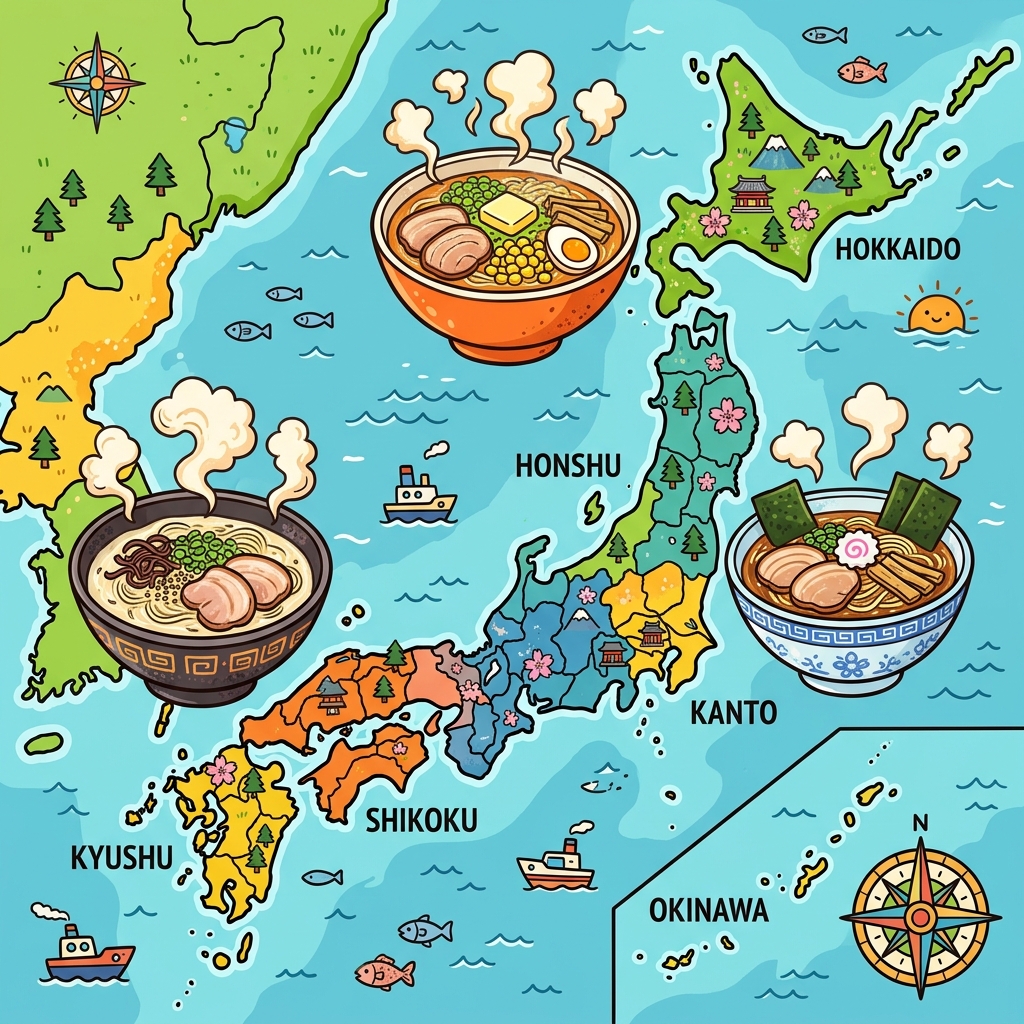
Japan has over 30 recognized regional ramen styles, each reflecting local ingredients, climate, and culture. Here are the most iconic ones every food-loving traveler should know.
Hokkaido
Sapporo Miso Ramen is the undisputed king of the north. Picture a steaming bowl of thick miso broth topped with stir-fried vegetables, sweet corn, a generous slab of butter, and chewy medium-thick noodles. Head to Sapporo’s famous Ramen Alley (Ramen Yokocho) in Susukino for the authentic experience.
Hakodate Shio Ramen offers the polar opposite: a crystal-clear salt broth that is elegant and simple. If Sapporo is a cozy sweater, Hakodate is a silk scarf.
Tohoku
Kitakata Ramen from Fukushima is one of Japan’s three great ramen cities. It features a light soy sauce broth and distinctively thick, flat, curly noodles with an incredibly chewy texture. Fun fact: Kitakata has more ramen shops per capita than any other city in Japan, and many open at 7 AM for “morning ramen.”
Tokyo & Kanto
Classic Tokyo Shoyu Ramen is where it all started in the modern era. A clean chicken-based broth seasoned with dark soy sauce, served with thin wavy noodles, chashu (braised pork), menma (bamboo shoots), nori (seaweed), and a soft-boiled egg. Simple, balanced, and endlessly satisfying.
Yokohama Iekei Ramen is a unique hybrid: tonkotsu-shoyu (pork bone meets soy sauce). It is thick, bold, and served with spinach and large sheets of nori. At Iekei shops, you customize your order across three axes: noodle firmness, broth richness, and fat level.
Chubu
Toyama Black Ramen is instantly recognizable by its jet-black broth, colored by an aggressive amount of dark soy sauce. It was originally created as a lunch for laborers who ate it with plain white rice. It is salty, intense, and absolutely unforgettable.
Kansai & Western Japan
Wakayama Ramen blends tonkotsu and shoyu into a rich, savory hybrid. Locals eat it with hayazushi (pressed mackerel sushi) on the side — a combination that sounds unusual but works perfectly.
Onomichi Ramen from Hiroshima Prefecture uses a soy sauce base enriched with pork backfat that floats in little droplets on the surface. It is like a flavor bomb on every spoonful.
Kyushu
Hakata Ramen from Fukuoka is the global superstar of tonkotsu. Ultra-thin, straight noodles swim in a creamy white pork bone broth. The key Hakata innovation: kaedama — when you finish your noodles but still have broth, you order a noodle refill for just 100 to 200 yen.
Kumamoto Ramen takes the Hakata template and turns up the garlic. A raw garlic chip or roasted garlic oil adds another dimension of flavor. Locals swear by it.
Beyond the Bowl: Tsukemen, Abura Soba & Modern Styles
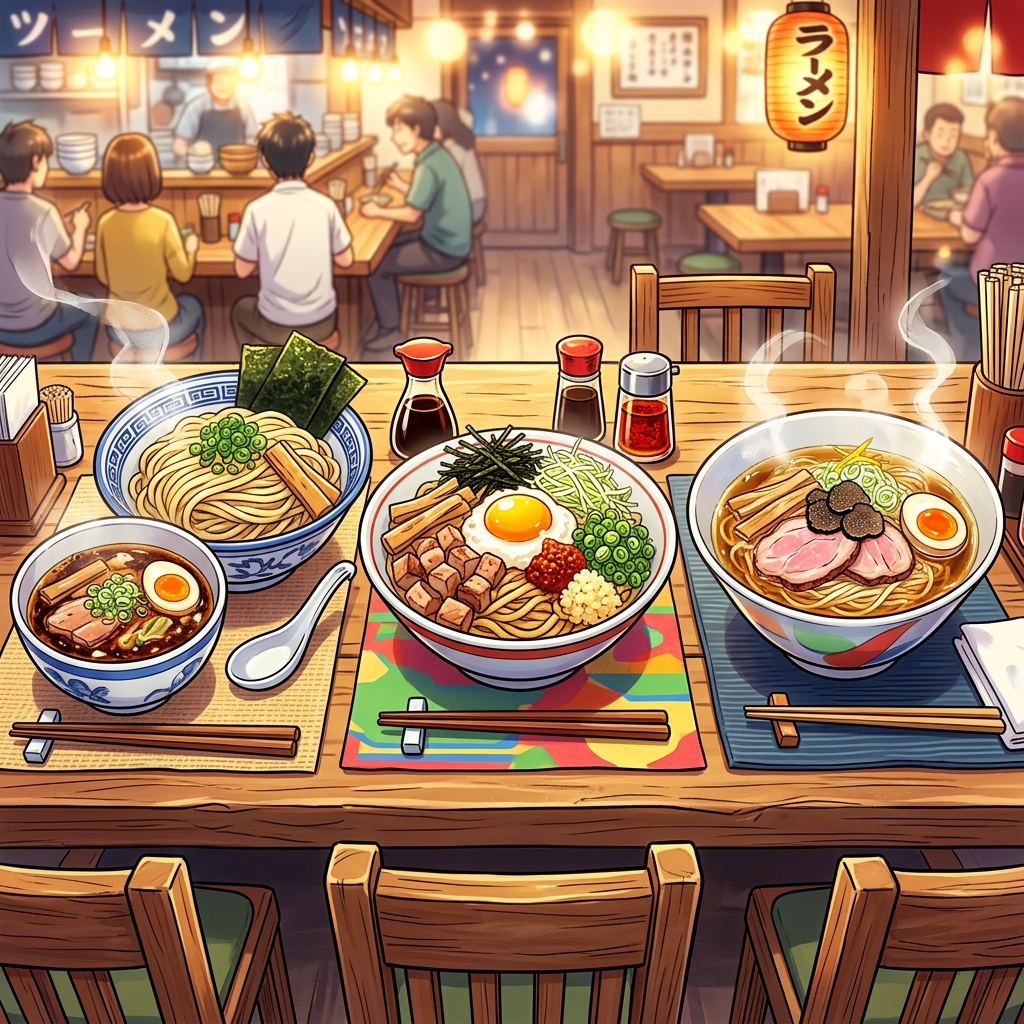
Traditional ramen is not the only game in town. Here are three popular variations you will encounter everywhere.
Tsukemen (Dipping Noodles)
Cold or room-temperature noodles are served separately from a small bowl of concentrated, thick dipping broth. You dip a few noodles at a time, controlling exactly how much flavor coats each bite. Tsukemen is especially popular in summer and originated in Tokyo.
Abura Soba (Oil Noodles)
No soup at all. The noodles sit in a small pool of seasoned oil and tare at the bottom of the bowl. You mix everything together before eating, along with toppings like chashu, egg, menma, and vinegar. Abura soba is lighter than regular ramen and a great option when you want noodles without feeling overly full.
Modern & Fusion Styles
In 2026, Tokyo’s ramen scene continues to push boundaries. Michelin-starred shops like Konjiki Hototogisu in Shinjuku serve clam and truffle shio soba. IRUCA Tokyo layers chicken, beef, and porcini mushroom into complex, restaurant-quality bowls. Vegan and halal ramen options are also expanding rapidly, especially in tourist-heavy areas like Shibuya and Asakusa.
How to Order Ramen Like a Pro
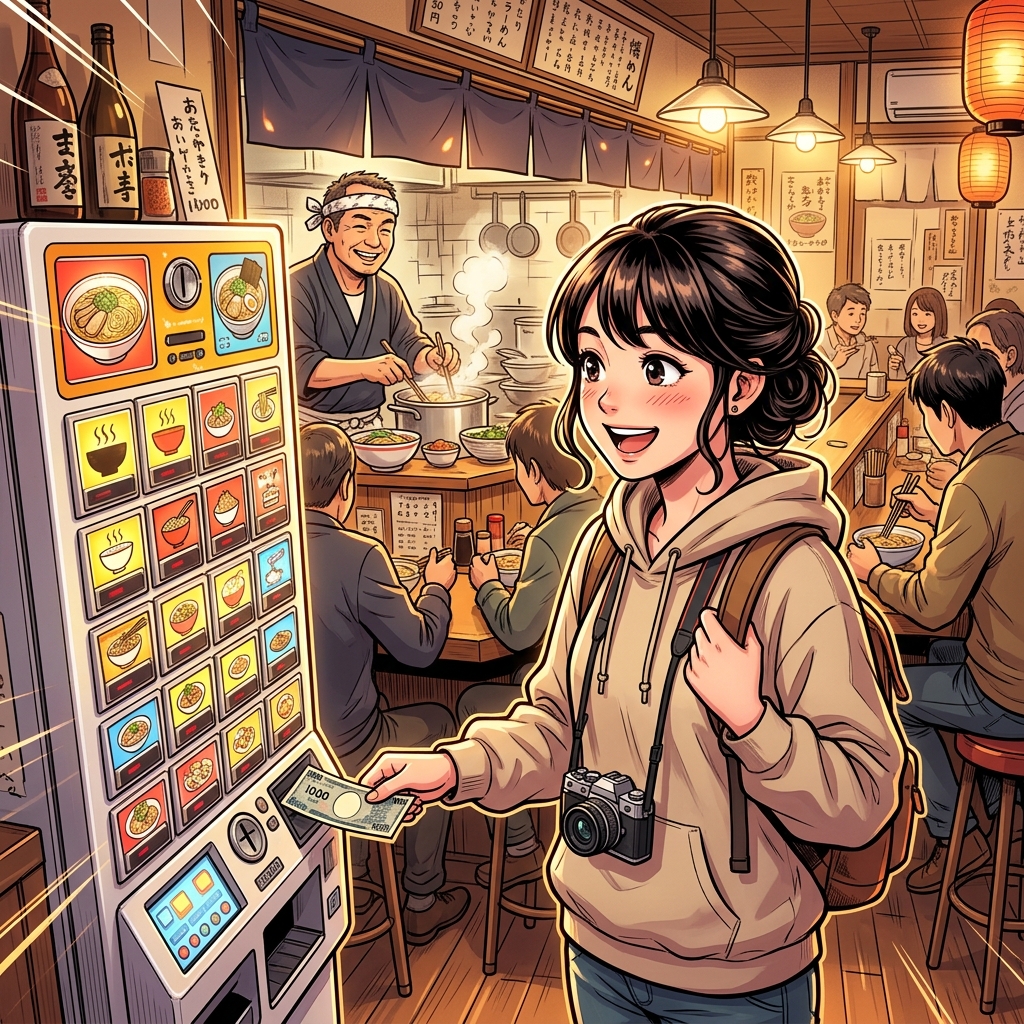
Walking into a ramen shop for the first time can feel intimidating, especially when there is no English menu and a line of hungry locals behind you. Here is your step-by-step survival guide.
Step 1: The Ticket Machine (Shokkenki)
Most ramen shops use a vending machine near the entrance. Insert cash (usually 1,000-yen bills or coins — many machines do not accept credit cards), press the button for your selection, and collect your ticket. Pro tip: the signature dish is almost always the top-left button.
Step 2: Hand Over Your Ticket
Take a seat at the counter (or a table if available) and hand your ticket to the staff. They may ask you about customization options.
Step 3: Choose Your Customization
Many shops, especially Hakata-style ones, let you customize three things:
- Noodle firmness: katame (firm), futsu (normal), yawarame (soft)
- Broth richness: kotteri (rich), assari (light)
- Fat level: more or less back fat
If you are not sure, just say “futsu” (normal) for everything.
Step 4: Eat Promptly and Slurp with Pride
Ramen waits for no one. The noodles start absorbing broth the moment they hit the bowl, so eat quickly. And yes, slurping is not just acceptable — it is expected. Slurping cools the noodles and is considered a sign that you are enjoying the meal.
Ramen Etiquette: What Every Visitor Should Know
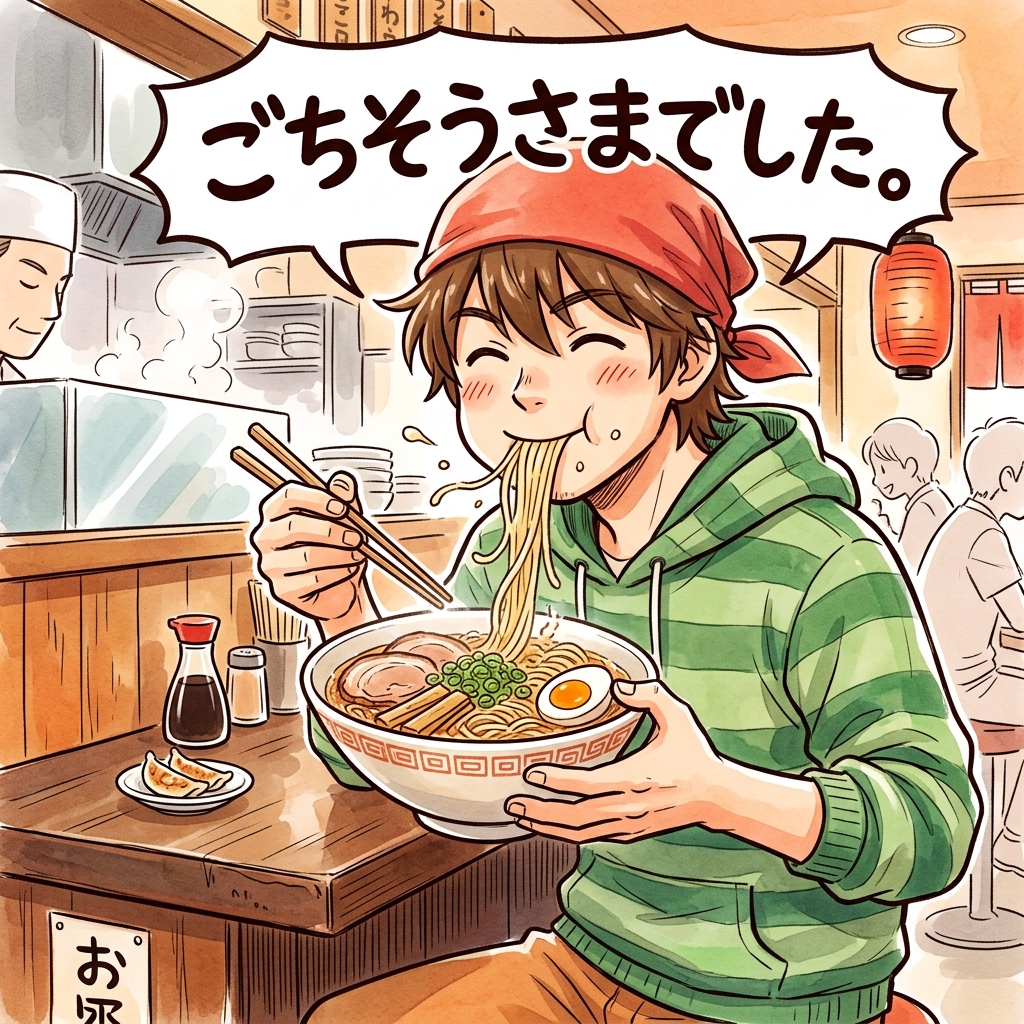
Ramen shops are fast, focused, and efficient. Understanding the unwritten rules will help you enjoy the experience and respect the culture.
- One bowl per person is the rule. Do not share a single bowl between two people.
- Eat within 15 to 20 minutes. Ramen shops are not places to linger over conversation.
- If the shop has counter seating only, groups may be split up. Do not try to rearrange furniture.
- Place your used tissues and napkins on your tray or inside your empty bowl when finished.
- Say “Gochiso-sama deshita” (thank you for the meal) when leaving. The staff will appreciate it.
- Many popular shops have long lines. Join the queue patiently and do not cut ahead to use the ticket machine.
Useful Japanese Phrases for Ramen Shops
You do not need to be fluent in Japanese to enjoy ramen, but knowing a few key phrases will make the experience smoother and earn you smiles from the staff.
- “Osusume wa dore desu ka?” — Which one do you recommend?
- “Futsu de onegaishimasu” — Normal, please (for customization questions)
- “Katame de” — Firm noodles, please
- “Kaedama kudasai” — One noodle refill, please (Hakata-style shops)
- “Onegaishimasu” — Please / Here you go (when handing your ticket)
- “Gochiso-sama deshita” — Thank you for the meal (when leaving)
- “Oishii!” — Delicious! (the ultimate compliment to the chef)
Plan Your Ramen Pilgrimage
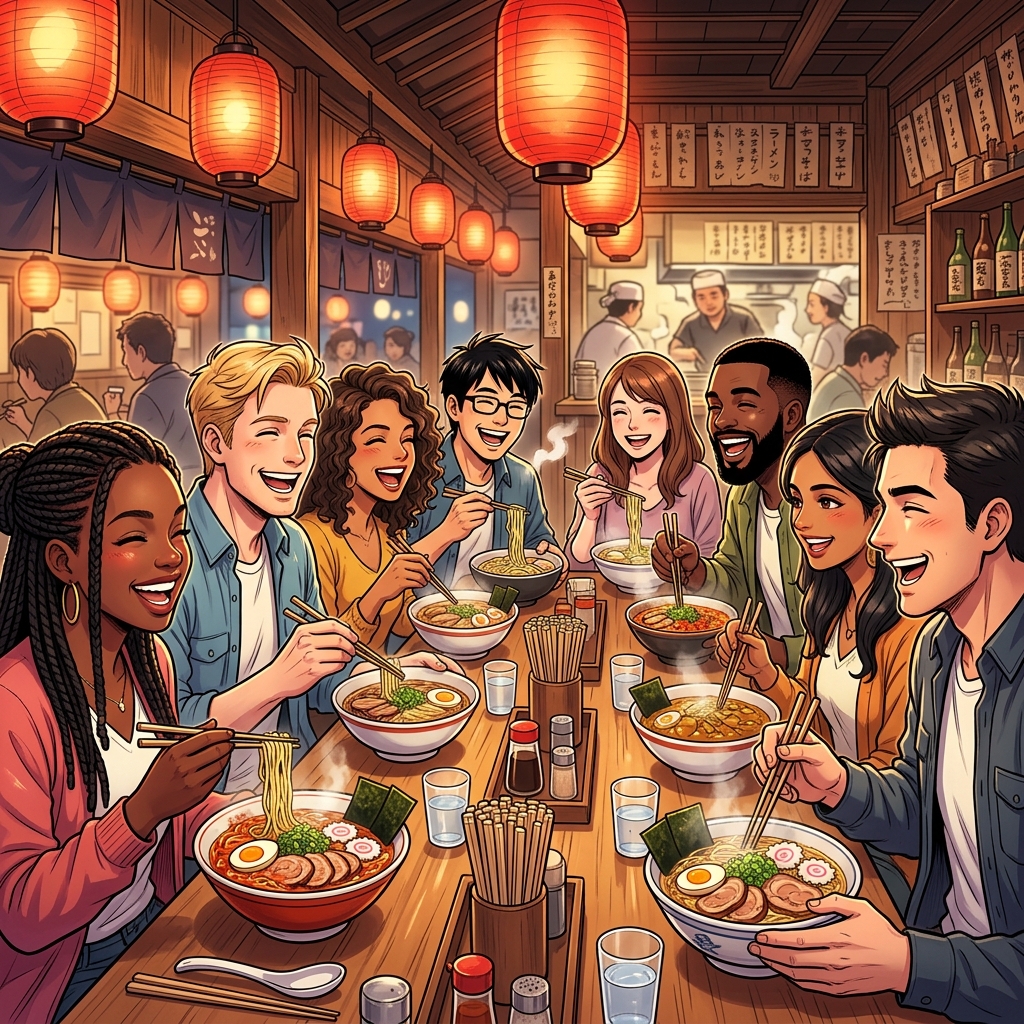
Whether you have one day in Tokyo or two weeks traveling the country, ramen can be the thread that ties your entire trip together. Every region tells its story through its broth. Sapporo speaks of harsh winters and hearty warmth. Hakata whispers of late nights and quick, porky perfection. Tokyo shouts of innovation, refinement, and endless reinvention.
So grab your chopsticks, pick a region, and start slurping. Your perfect bowl is out there waiting — and in Japan, it is never more than a few blocks away.