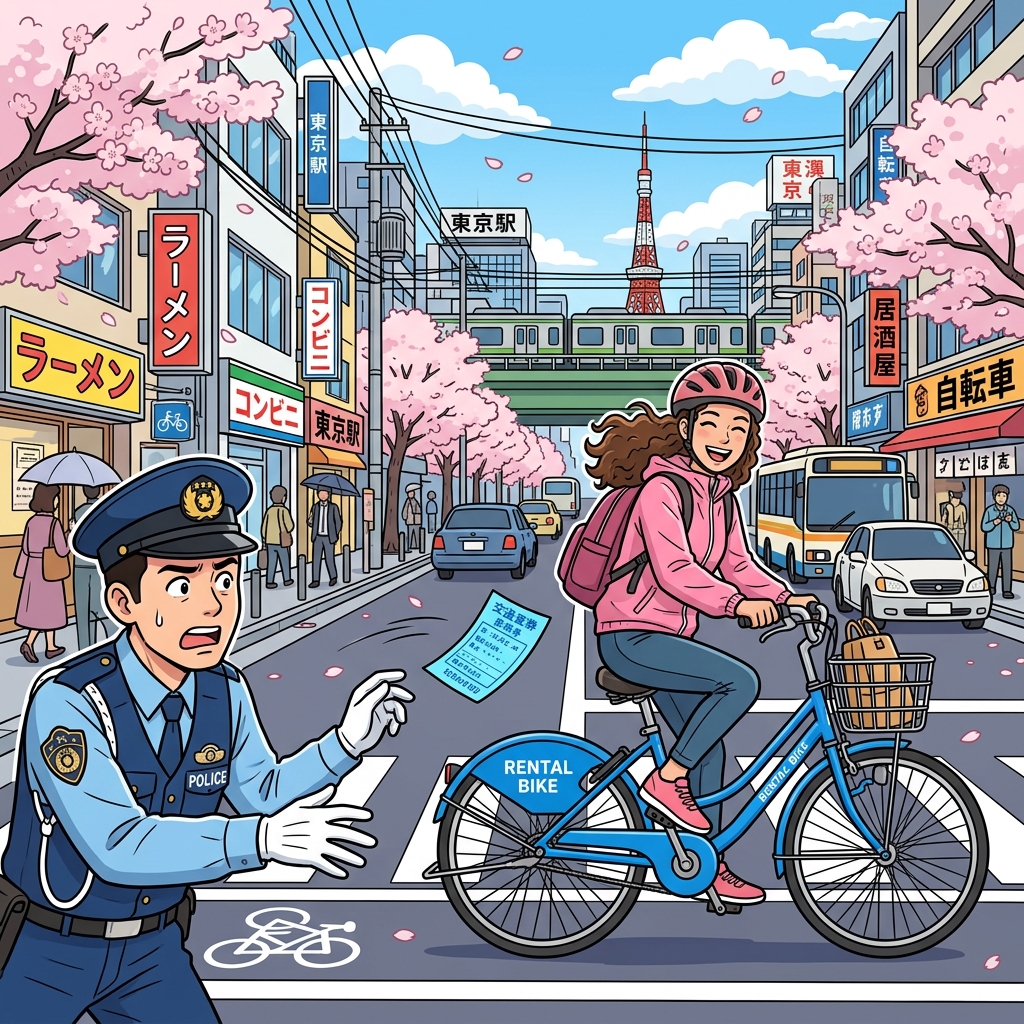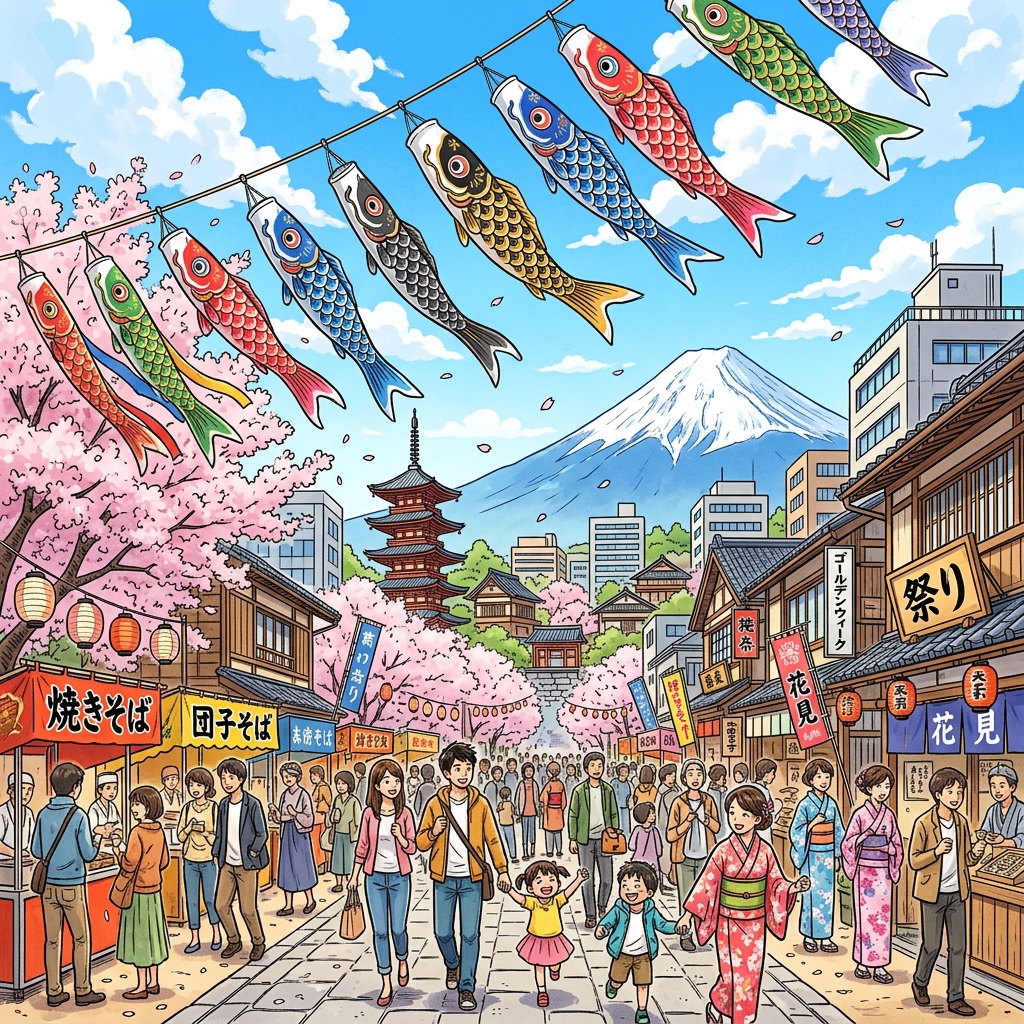
This article is illustrated with AI-generated manga-style artwork. All illustrations are created for educational and entertainment purposes.
Walk into any convenience store in your home country, and you know exactly what to expect — a few snacks, some drinks, maybe a lottery ticket.
Walk into a Japanese convenience store — a konbini (コンビニ) — and you might not leave for twenty minutes.
Japan’s convenience stores are, without exaggeration, one of the greatest achievements of modern civilization. They are cleaner than most restaurants, serve food that rivals casual dining, operate 24 hours a day every single day of the year, and can solve almost any problem you’ll encounter as a traveler. With over 55,000 locations across Japan — one for approximately every 2,300 people — there is almost certainly one within a five-minute walk of wherever you are standing right now.
This guide is your complete introduction. Let’s go inside.
- The Big Three: Which Chain Is Which?
- Spring 2026: What’s on Shelves Right Now
- Beyond Food: What Else Can a Konbini Do?
- The Hot Counter: Japan’s Best-Kept Secret
- Konbini Coffee: Surprisingly Excellent
- Konbini Etiquette: Do’s and Don’ts
- Your Spring Konbini Shopping List
- Final Thoughts: The Konbini is Japan in Miniature
- 🏭 Konbini Challenge — How Well Do You Know Japan’s Convenience Stores?
The Big Three: Which Chain Is Which?

Japan has three dominant convenience store chains, and loyal customers will argue passionately about which is best. Here’s what makes each one worth visiting.
7-Eleven Japan (セブン-イレブン)
Japan’s largest chain with over 21,000 locations. Don’t confuse it with the American version — they share only a name. Japan’s 7-Eleven is widely considered the gold standard of the konbini world.
What to try:
- The Tamago Sando (egg salad sandwich) — impossibly fluffy white bread, creamy egg filling. A cultural icon. Try it.
- Kara-age (fried chicken pieces from the hot counter)
- Onigiri — rice balls in a dozen flavors: tuna mayo, salmon, mentaiko (spicy cod roe), and more
- Seasonal desserts — during spring, look for cherry blossom and strawberry parfaits
Lawson (ローソン)
Known for arguably the best sweets in the konbini game, Lawson’s Uchi Café line sets the bar for convenience store desserts. The strawberry shortcake, mont blanc, and seasonal fruit parfaits are genuinely impressive.
What to try:
- Karaage-kun — bite-sized fried chicken nuggets sold near the register, available in rotating seasonal flavors
- Uchi Café desserts — seriously, don’t skip these
- NL (Natural Lawson) sub-brand stores for healthier options
FamilyMart (ファミリーマート)
FamilyMart is beloved for its iconic Famichiki — a thick, juicy fried chicken cutlet that has achieved cult status. It has been viral on social media multiple times for good reason.
What to try:
- Famichiki — the legendary fried chicken, always fresh, always crispy
- Mochi ice cream and various filled wagashi-style sweets
- FamilyMart’s coffee is widely considered the best among the big three
Spring 2026: What’s on Shelves Right Now
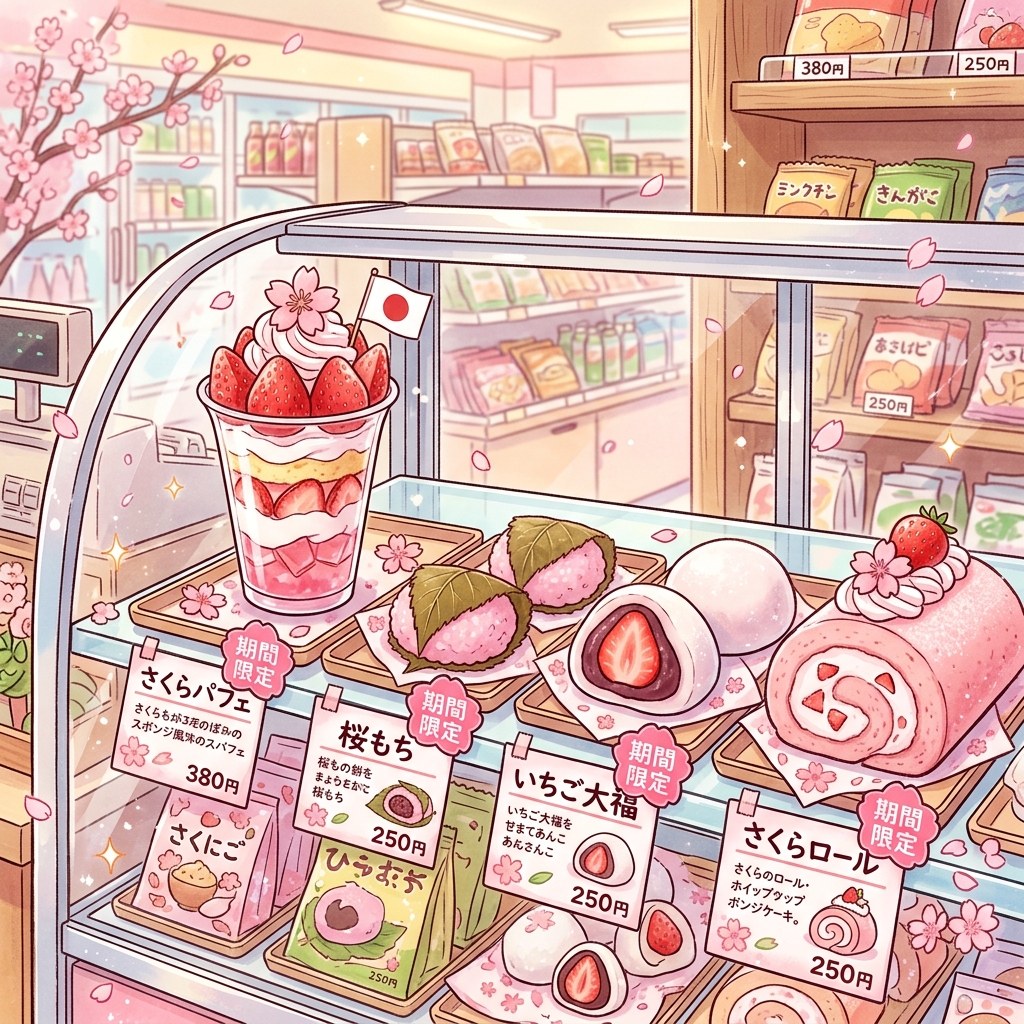
One of the most exciting things about konbini culture is the relentless rotation of seasonal, limited-time items. If you’re visiting Japan in April 2026, here’s what to look for.
Spring is sakura season, and the konbini embrace it completely. Expect to find:
- Sakura-flavored puddings, mochi, and parfaits — soft pink packaging, delicate cherry blossom flavor
- Strawberry and matcha combos — spring’s dominant flavor duo, appearing in everything from daifuku to layered mousse cups
- Sakura Kit-Kats — a classic collectible souvenir that only appears in spring
- Ichigo Daifuku (whole strawberry wrapped in bean paste and mochi) — seasonal favorite at every chain
- Seasonal onigiri fillings — bamboo shoot rice, spring clam rice, sakura shrimp
The key labels to look for:
- 「新」(shin / new) — just arrived
- 「期間限定」(kikan gentei) — limited time only
- 「季節限定」(kisetsu gentei) — seasonal limited
These labels are printed boldly on packaging. If you see them, don’t wait — they may be gone by your next visit.
Beyond Food: What Else Can a Konbini Do?
This is where most first-time visitors are genuinely surprised. The food is amazing — but the konbini is also a complete life-support system for travelers.
Money and Banking
- 7-Bank ATMs (in 7-Eleven) accept international Visa, Mastercard, and most major foreign cards
- Lawson and FamilyMart also have ATMs that work with foreign cards in many locations
- Available 24/7 — a lifesaver when banks are closed
Tickets and Reservations
- The multi-function copy machines (Loppi at Lawson, Famiport at FamilyMart) can print tickets for concerts, theme parks, and transport
- You can even pay for online shopping orders and government fees at these terminals
Shipping and Post
- Send packages via Yamato (Kuroneko) or Sagawa courier service directly from the konbini counter
- This is perfect for sending luggage ahead to your next hotel (called takuhaibin forwarding) — a very common travel hack in Japan
Printing and Photocopying
- Print documents, photos, or scan items at the self-service machines
- You can upload files from your phone and print on the spot
Paying Bills
- Locals pay utility bills, insurance, and tax payments at the konbini register
- As a tourist, this is less relevant — but it shows how deeply embedded these stores are in daily Japanese life
The Hot Counter: Japan’s Best-Kept Secret

Near the register at every konbini, you’ll find a heated display case — the hot counter (hotsunaku or just the counter area). This is where the magic happens.
Common items you’ll find here:
- Oden — a traditional Japanese winter/spring hot pot dish: fish cakes, tofu, daikon radish, and boiled eggs simmered in dashi broth. Cheap, warming, and deeply Japanese.
- Nikuman — steamed pork buns, soft and fragrant. Perfect for a cold spring morning.
- Karaage chicken pieces — crispy on the outside, juicy inside
- American dogs — corn dogs on a stick, a nostalgic Japanese fast food staple
- Croquettes and spring rolls — grab and go
Prices range from ¥100 to ¥250 for most items. You can eat a full, warm, satisfying meal for under ¥600 (about $4). This is one of Japan’s great travel secrets.
Konbini Coffee: Surprisingly Excellent
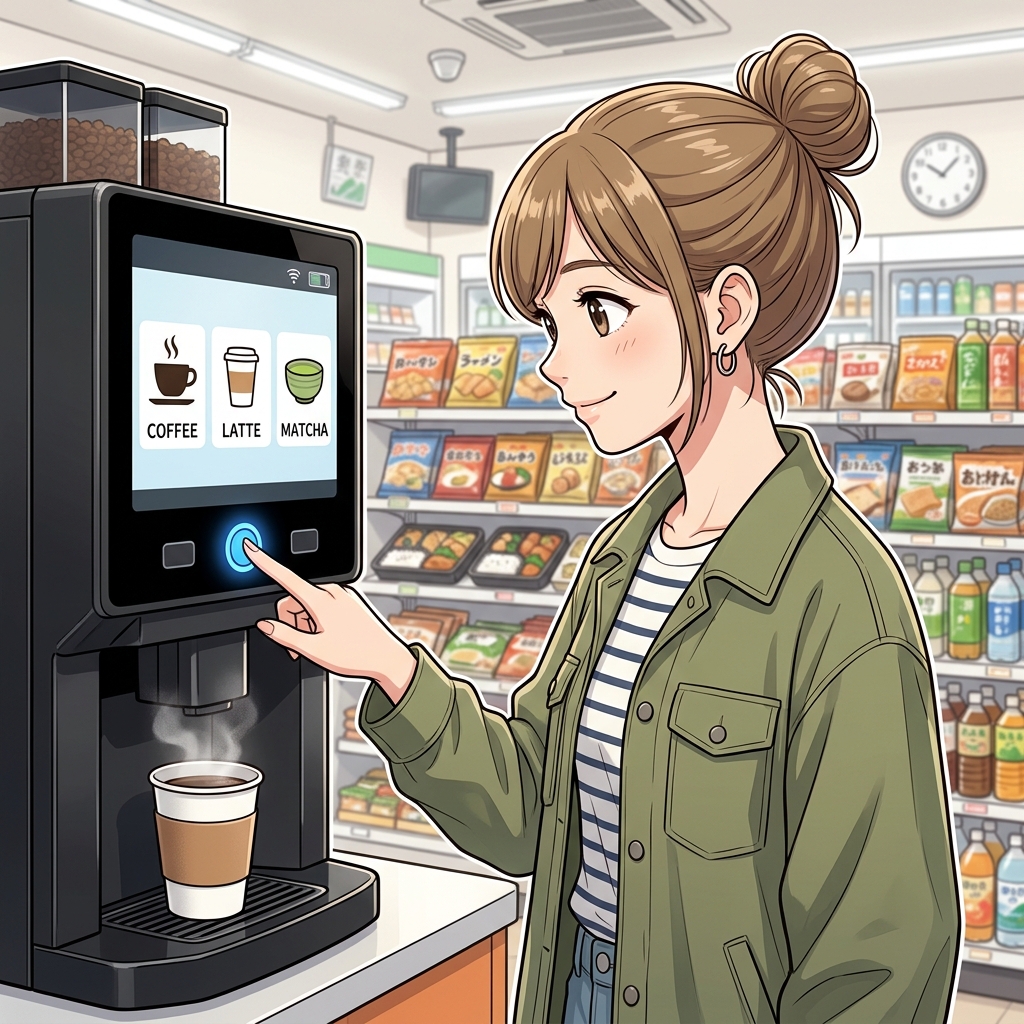
Every major konbini chain now has a self-serve coffee machine. You select your size and type, pay at the register, and press the button yourself. The result is genuinely good.
- A regular black coffee runs about ¥110–¥160 depending on size
- Options include drip coffee, café latte, matcha latte, and seasonal drinks
- FamilyMart is widely considered to have the best konbini coffee
- Some locations offer specialty drinks like caramel latte or hojicha latte
Skip the expensive tourist-area cafés for your morning coffee and head to the nearest konbini instead. Your wallet will thank you.
Konbini Etiquette: Do’s and Don’ts
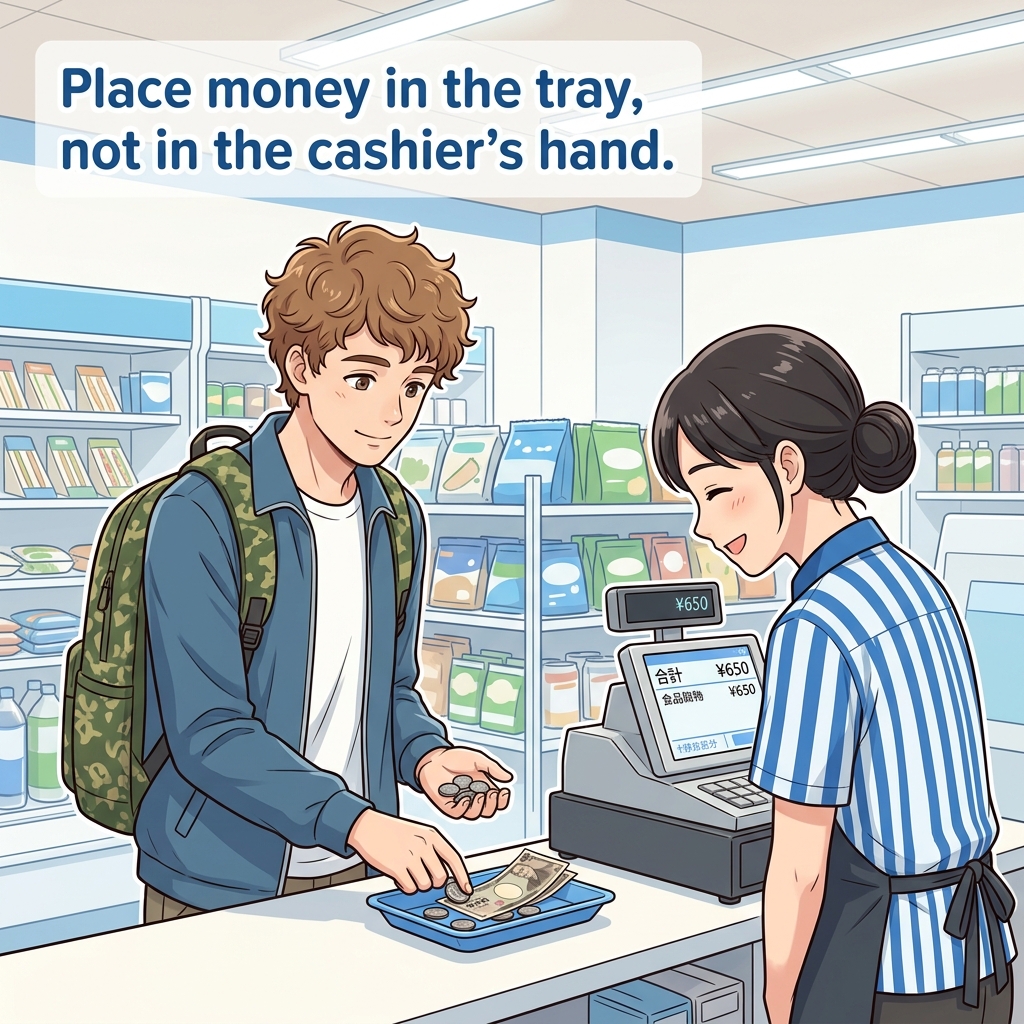
Japanese convenience stores are orderly, efficient, and polite — and so should you be. Here’s a quick guide to blending in:
Do:
- Line up quietly and wait your turn at the register
- Have your payment ready (cash, IC card, or mobile pay)
- Say arigato gozaimasu (thank you) to the staff — it’s appreciated even if not always expected
- Use the small basket near the register to place your items when checking out
- Use the designated eating area (if available) or eat outside
Don’t:
- Don’t eat while walking around inside the store
- Don’t put money directly into the cashier’s hand — place it in the small tray on the counter
- Don’t hang around the hot counter area for too long without ordering — the staff needs to serve others
- Don’t take photos of staff without permission
Your Spring Konbini Shopping List
Not sure where to start? Here’s a curated must-try list for a spring 2026 Japan trip:
- Tamago sando (7-Eleven egg salad sandwich)
- Famichiki (FamilyMart fried chicken cutlet)
- Karaage-kun (Lawson fried nuggets)
- Sakura parfait or mochi (any chain, spring limited)
- Ichigo daifuku (strawberry mochi, in season now)
- Oden from the hot counter (try the daikon and fish cake)
- Nikuman (steamed pork bun, from the hot case)
- A cup of konbini coffee at FamilyMart
- Sakura Kit-Kat (limited spring release — great souvenir)
- Onigiri with spring filling (bamboo shoot, sakura shrimp, or clam)
Final Thoughts: The Konbini is Japan in Miniature
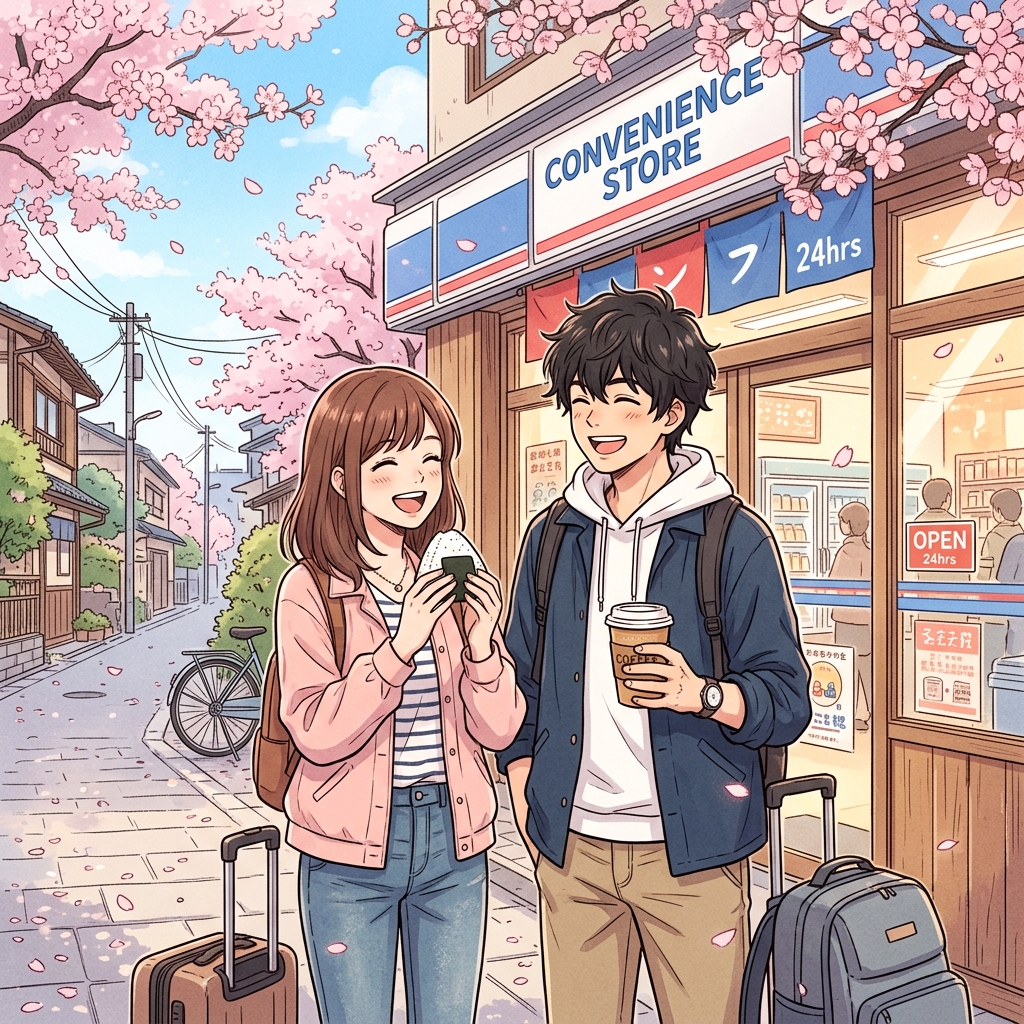
There’s a reason why so many travelers rank Japan’s convenience stores among their favorite travel discoveries. The konbini embodies everything that makes Japan unique: beautiful design, obsessive attention to quality, extraordinary efficiency, and an intuitive understanding of what people actually need — at any hour, in any weather, every single day.
Go in with curiosity. Try something you’ve never heard of. Look for the “new” and “limited” labels. And don’t be surprised if you find yourself stopping at the konbini three times a day.
That’s not a problem. That’s the point.
Safe travels — and happy snacking. 🍙
⚠️ Note: Menu items, seasonal offerings, and store services rotate frequently. Prices and availability may vary by location. Always check in-store for the latest offerings.
🏭 Konbini Challenge — How Well Do You Know Japan’s Convenience Stores?
Think you know your way around a Japanese convenience store? Test yourself with this quick quiz!
Konbini Knowledge Quiz
How well do you know Japan’s legendary convenience stores?
📌 Your Konbini Cheat Sheet
- 7-Eleven: Famous for the Tamago Sando (egg salad sandwich) — a must-try.
- Lawson: Best convenience store sweets via the Uchi Café line.
- FamilyMart: The legendary Famichiki fried chicken cutlet + best konbini coffee.
- Look for 「期間限定」(limited time) labels — spring brings sakura & strawberry specials.
- Hot counter oden = cheap, warm, and deeply Japanese. Try the daikon & fish cake.
- Place money in the small tray at the register — don’t hand it directly to the cashier.
- 7-Bank ATMs (in 7-Eleven) accept most international cards, 24 hours a day.
#JapanTravel #Konbini #JapanFood #TokyoFood #JapanCulture #VisitJapan #TravelJapan #JapanFoodie #Onigiri #JapanLife #SevenEleven #Lawson #FamilyMart #SpringJapan #JapanTips