If you’re planning a trip to Japan in late May or June, you might be scratching your head over what to pack. One day it’s sunny and warm; the next, the skies open up and it’s suddenly cool and damp. Navigating this tricky transition into Japan’s rainy season (tsuyu) is an art form—one that the Japanese have been practicing for over a thousand years through a tradition called Koromogae.
Let’s dive into what Koromogae is, and how its ancient wisdom can help you pack the perfect suitcase for your early summer Japan adventure.
Japan June Packing Quiz! ☔️
Question 1 of 8
Quiz Complete!
The Tradition of Koromogae (衣替え)
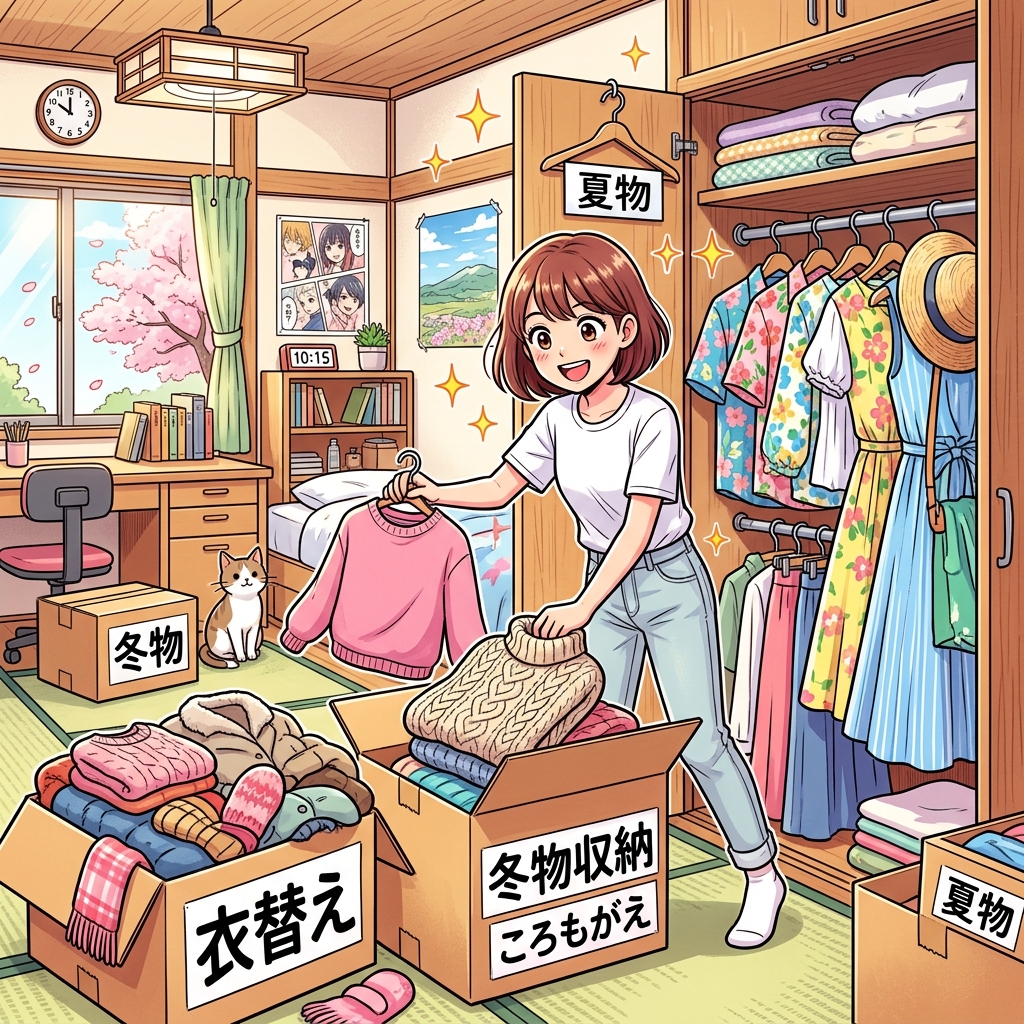
Literally translating to “changing clothes,” Koromogae is the traditional Japanese custom of switching one’s wardrobe to mark the change of seasons. Historically dating back to the Heian period (794–1185), this practice was adopted by the imperial court from China. Today, it remains a deeply ingrained cultural milestone.
Every year on June 1st and October 1st, students across Japan switch between their winter and summer uniforms. Corporate workers similarly transition their office wear. For travelers, June 1st serves as a massive cultural hint: the crisp spring air is officially over, and the hot, humid, and rainy season is about to begin.
Understanding May & June Weather in Japan
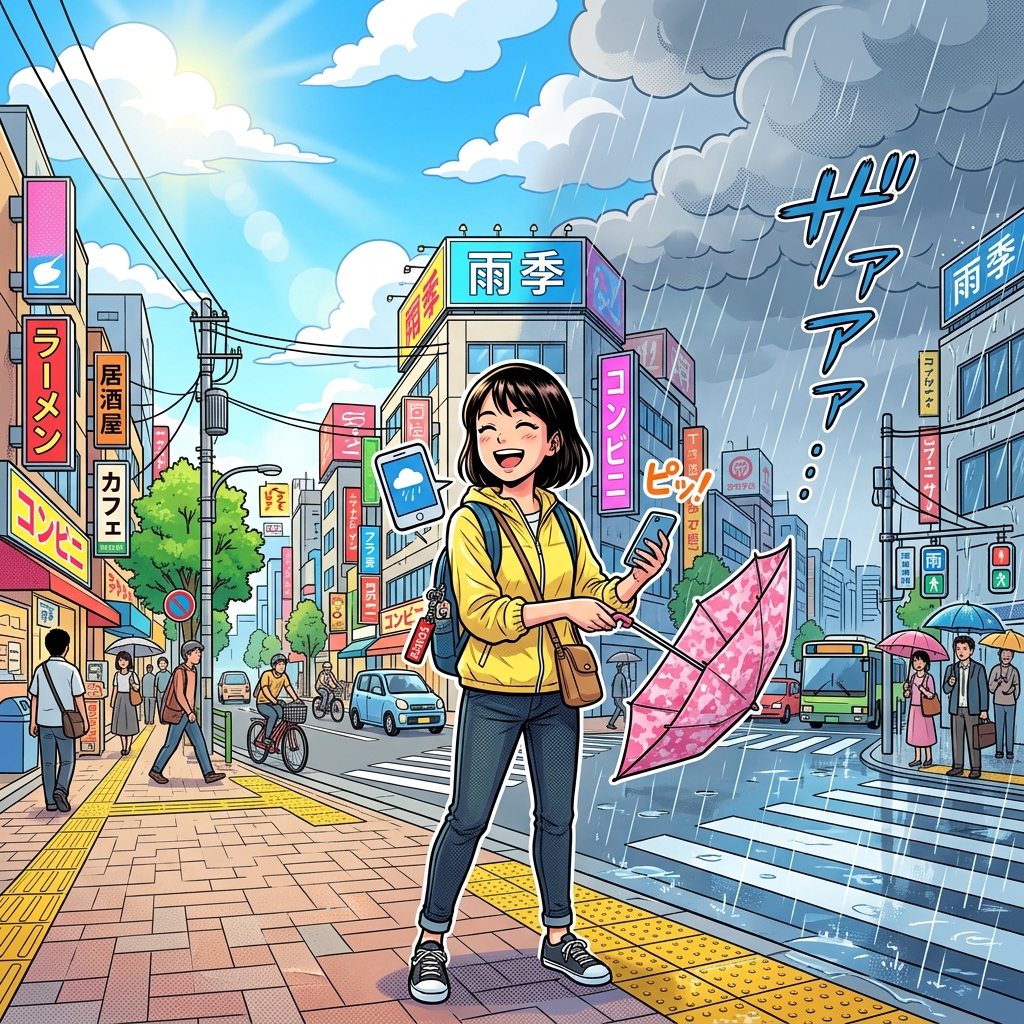
Late May is often a sweet spot for travel—temperatures in Tokyo, Kyoto, and Osaka hover around a pleasant 20°C to 25°C (68°F–77°F). However, as the calendar flips to June, the humidity skyrockets and the rainy season (tsuyu) sets in across most of the country (excluding Hokkaido, which thankfully escapes the rainy season entirely).
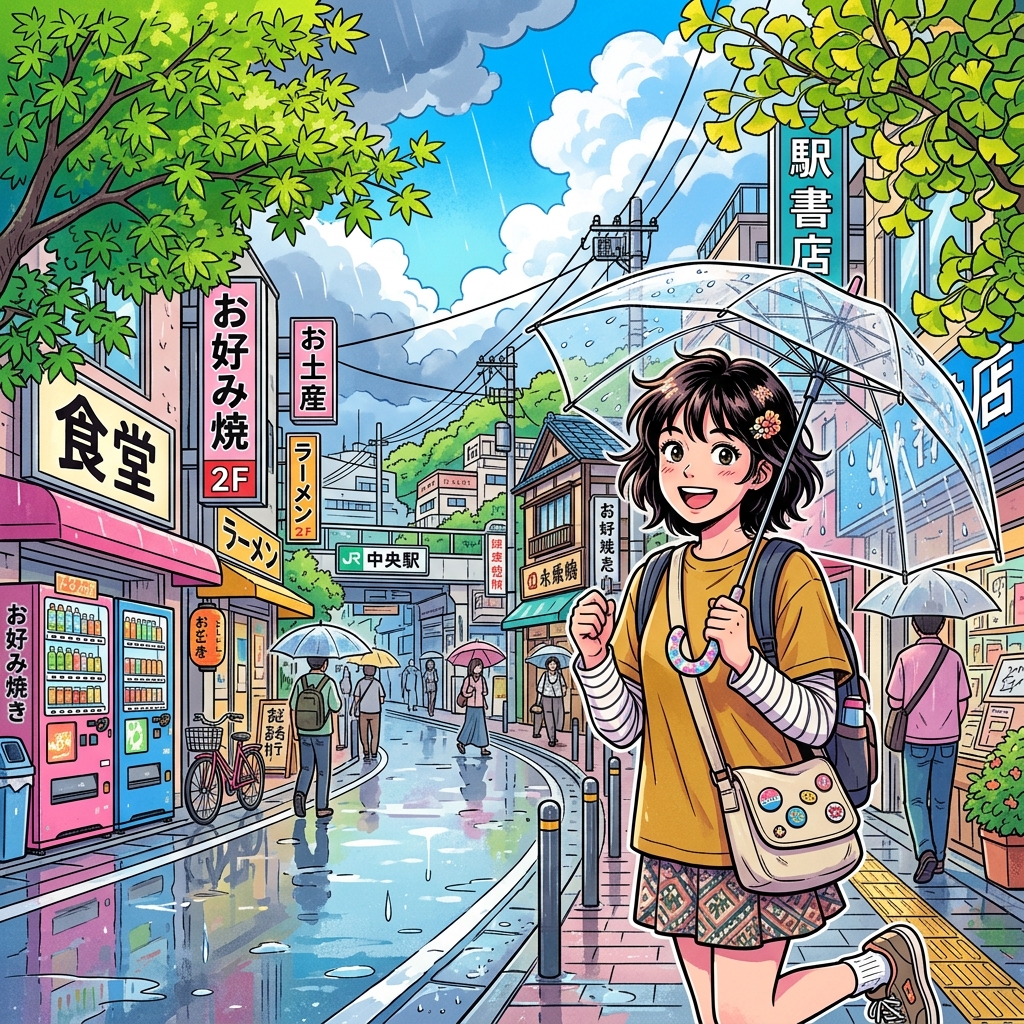
During tsuyu, you shouldn’t expect constant torrential downpours, but rather frequent, unpredictable showers and overcast, muggy days. This means your wardrobe needs to be highly adaptable.
Packing Rule #1: The Art of Layering
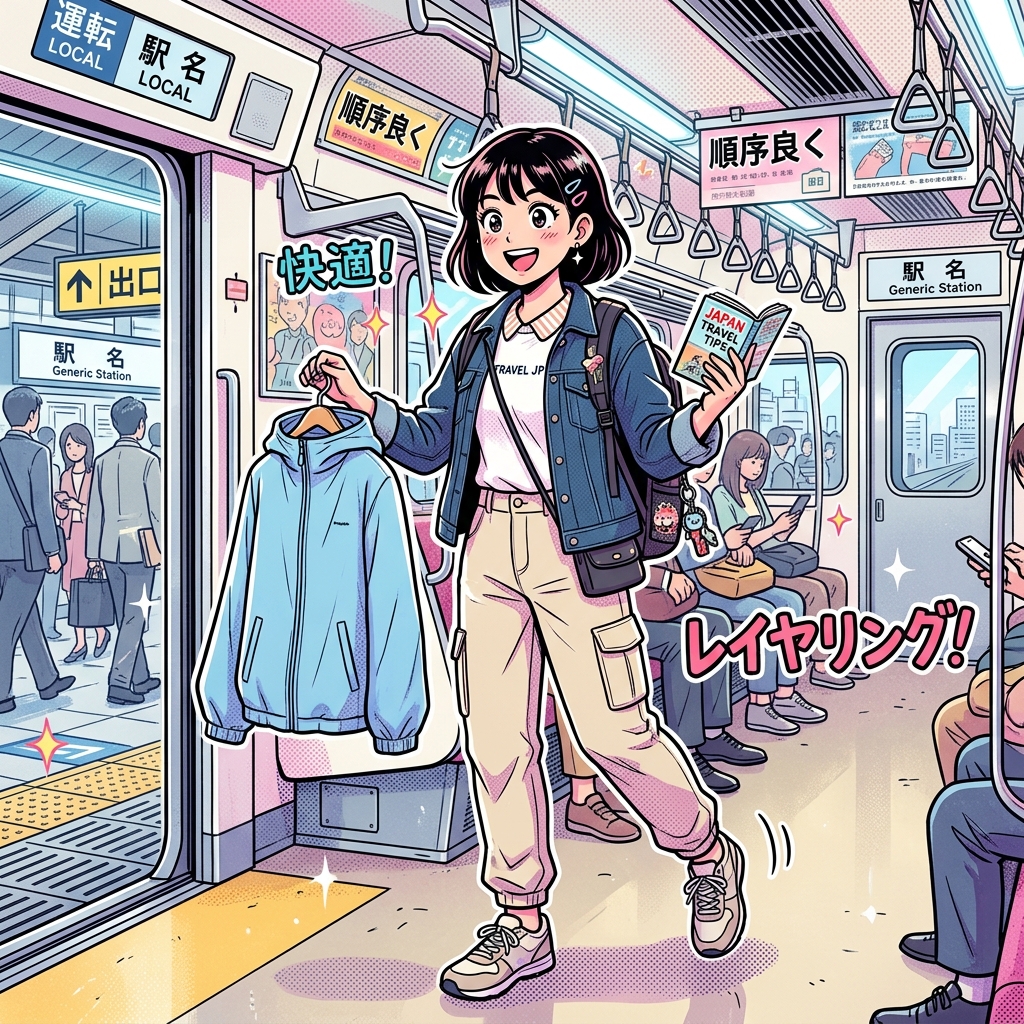
Just as Koromogae teaches the importance of seasonal adaptation, your packing strategy should revolve around smart layering.
Breathable Base Layers: With the humidity rising in June, cotton, linen, and moisture-wicking synthetic fabrics (like Uniqlo’s AIRism) are your best friends. Avoid heavy synthetics that trap heat.
The “Indoor/Outdoor” Dilemma: While the streets might feel like a sauna, Japanese trains, department stores, and restaurants are heavily air-conditioned. Always carry a lightweight, easily packable cardigan, long-sleeve shirt, or windbreaker in your day bag.
Packing Rule #2: Footwear Strategy (The “Two-Pair” Rule)
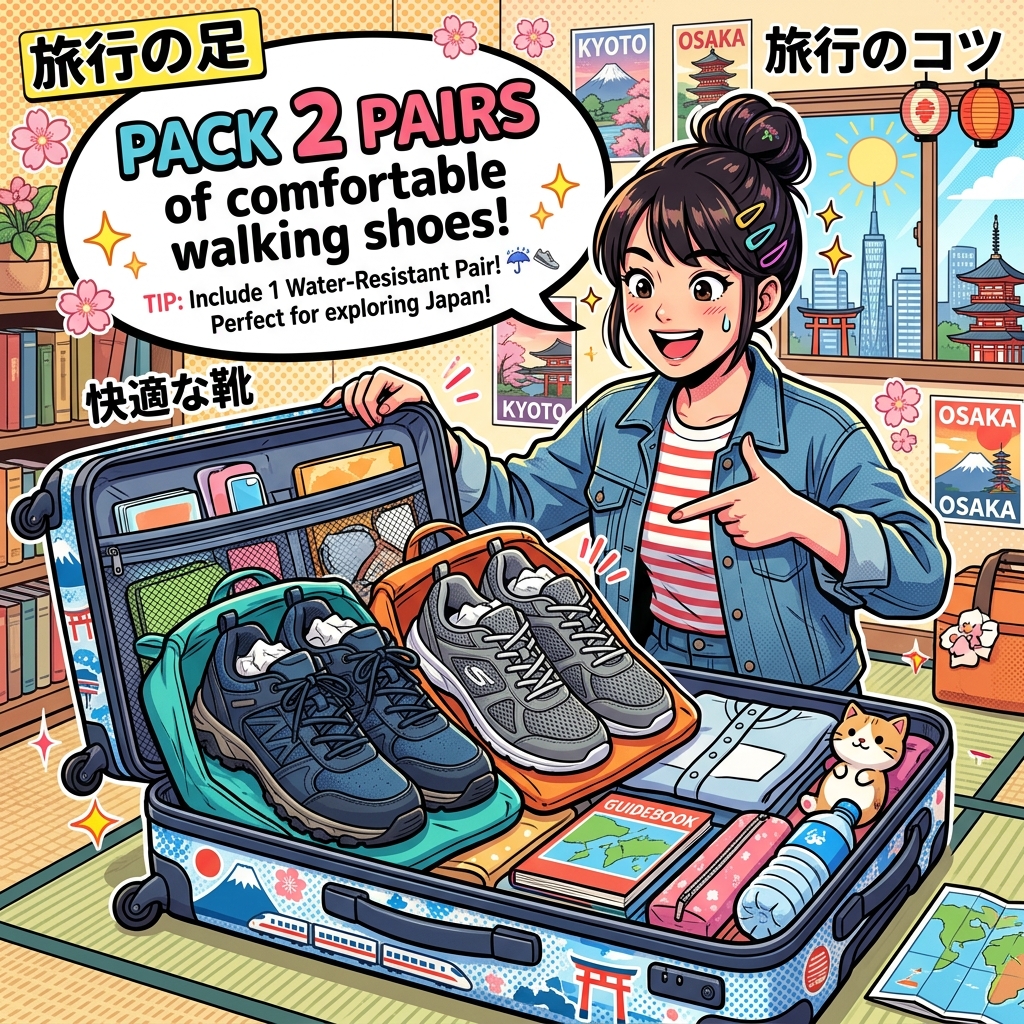
If there’s one thing that can ruin a travel day, it’s walking 20,000 steps in soggy socks.
Bring Two Pairs of Walking Shoes: This is crucial for June. If one pair gets soaked during a sudden downpour, it can take up to two days to fully dry in a humid hotel room. You need a backup pair ready to go.
Water Resistance vs. Breathability: Avoid full-mesh sneakers as they will soak through instantly in a puddle. Opt for water-resistant materials, treated leather, or even lightweight GORE-TEX sneakers. Heavy rain boots are overkill and take up too much luggage space.
Easy On, Easy Off: Remember that you will be taking your shoes off frequently in Japan—at temples, traditional ryokan inns, and many restaurants. Leave the complicated lace-up boots at home!
Packing Rule #3: Rain Gear & The Konbini Hack
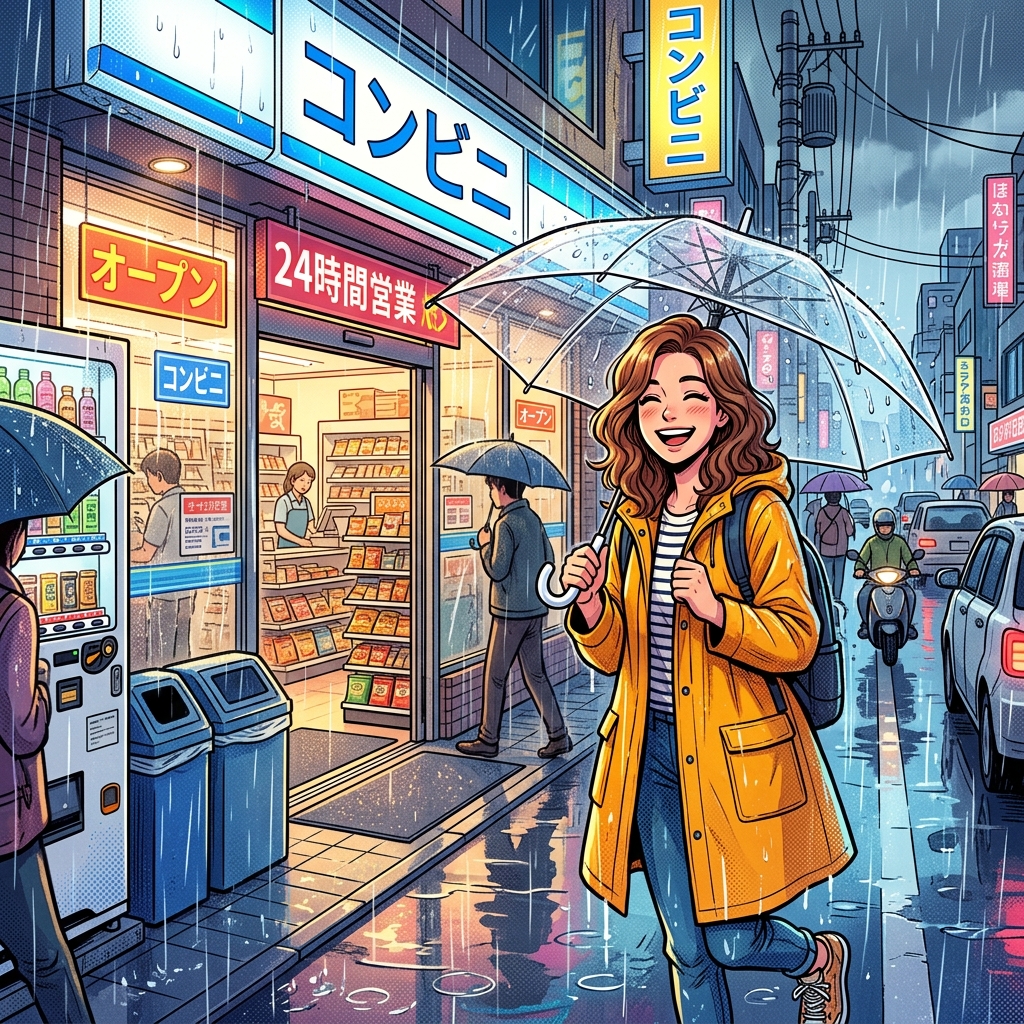
You might be tempted to pack a heavy-duty, windproof umbrella from home. Don’t.
The Convenience Store Umbrella: Japan’s convenience stores (konbini like 7-Eleven, FamilyMart, and Lawson) sell excellent, durable, and cheap umbrellas (around 500 to 1,000 yen). The iconic clear plastic konbini umbrella is a staple of Japanese city life. If it breaks or you leave it on a train, you can easily replace it at the next corner.
Travel Umbrella & Parasol: If you do bring one, pack a highly compact travel umbrella. Even better, look for a higasa (parasol) that offers both rain protection and UV blocking, as the June sun can be fierce between rain clouds.
Packable Rain Jacket: A thin, breathable waterproof shell that stuffs into its own pocket is highly recommended over a bulky raincoat.
Small Essentials You’ll Be Glad You Packed
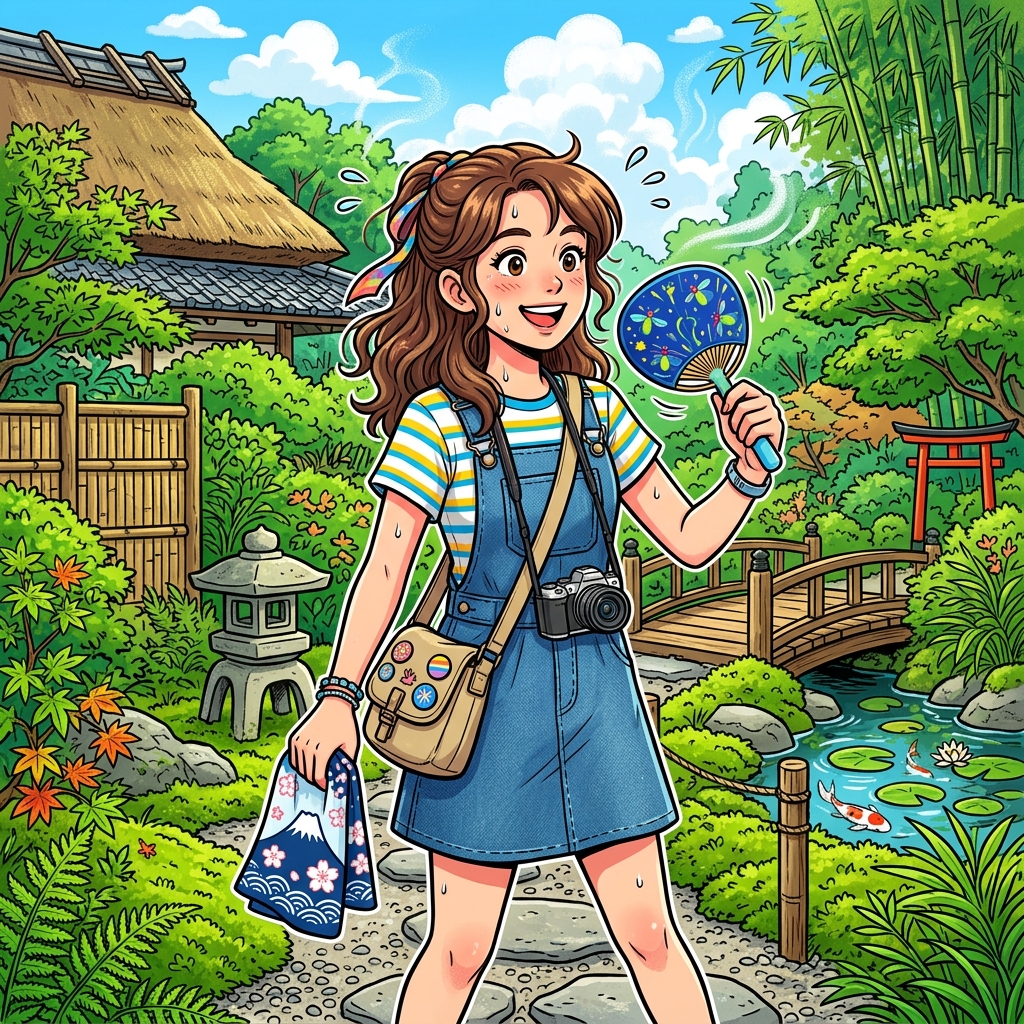
To truly master the Japanese summer transition, throw these small items into your bag:
A Hand Towel (Tenugui/Hankachi): Public restrooms in Japan often do not have paper towels or hand dryers. Carrying a small cloth towel in your pocket is standard practice for locals.
Extra Socks: Keep a spare pair of socks in your daypack. Changing into dry socks mid-afternoon on a rainy day is a massive morale booster.
Portable Fan: A small, battery-operated handheld fan will be your savior while waiting for trains on humid platforms.
Embrace the Change of Seasons
The spirit of Koromogae is not just about changing clothes; it’s about acknowledging and harmonizing with nature’s rhythms. By packing smart, bringing the right shoes, and knowing when to rely on a local konbini, you can comfortably enjoy the beautiful, lush green landscapes that Japan’s early summer has to offer.