The Roaring Energy and History of Sanja Matsuri
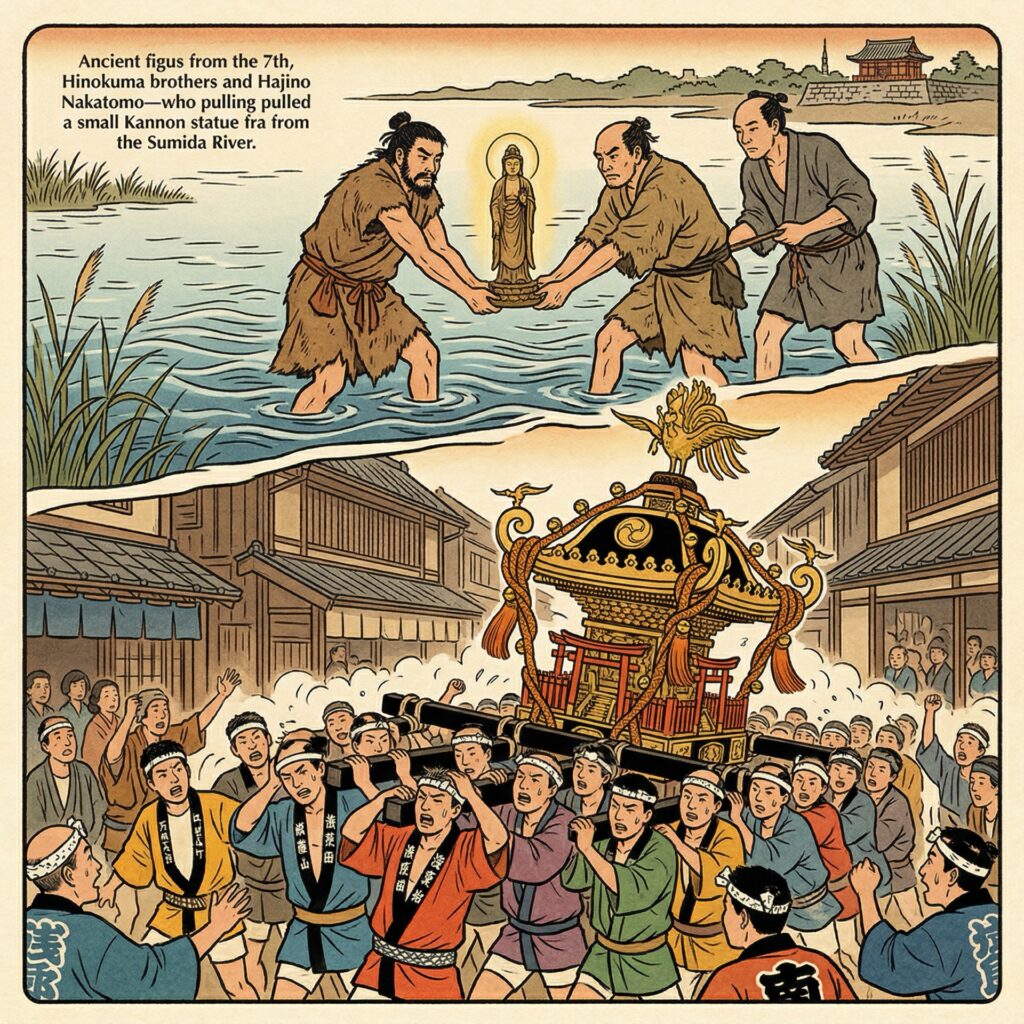
Every May, the historic district of Asakusa transforms into a sea of pure, vibrant energy during the Sanja Matsuri. Known as one of Tokyo’s largest and wildest festivals, it holds over 700 years of history. “Sanja” translates to “Three Shrines,” honoring the three ordinary fishermen and a village chief who founded Senso-ji Temple in the 7th century after discovering a sacred statue of the Kannon goddess in the nearby Sumida River.
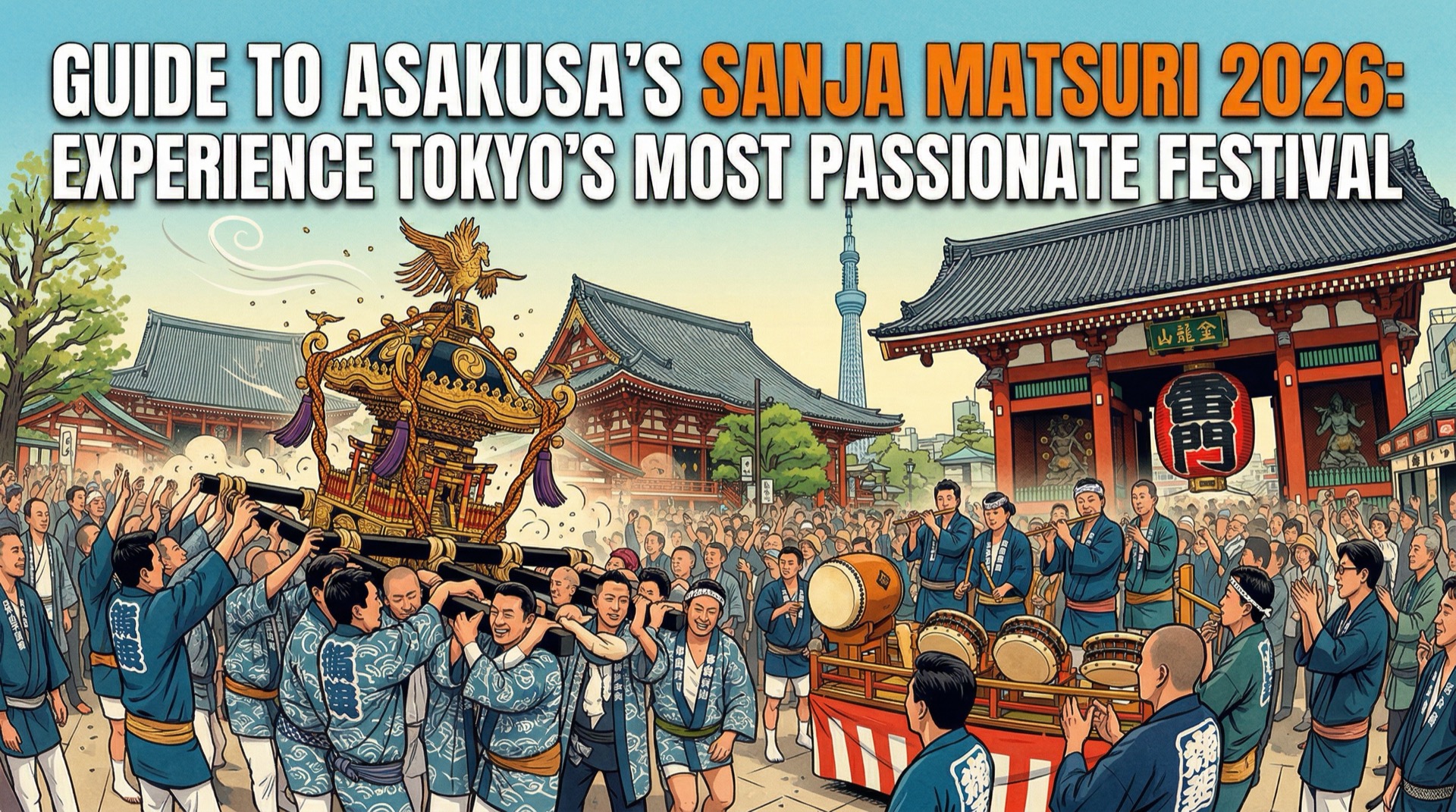
The streets echo with the rhythmic beats of taiko drums and the sharp melodies of traditional bamboo flutes, known as “ohayashi.” The true highlight of the festival is the parade of over 100 “mikoshi” (portable shrines) carried by locals representing their respective neighborhoods, dressed in striking traditional “happi” coats.
These massive, ornate golden shrines are forcefully bounced, tossed, and swayed through the streets in a dynamic ritual called “Tamafuri.” This violent shaking is traditionally believed to invigorate the spiritual power of the deities inside, spreading luck and prosperity to the community. Even as an onlooker, the intense heat, chanting, and passionate atmosphere of the downtown “shitamachi” spirit will leave you completely mesmerized.
Exploring Classic Asakusa Highlights and Edo Culture
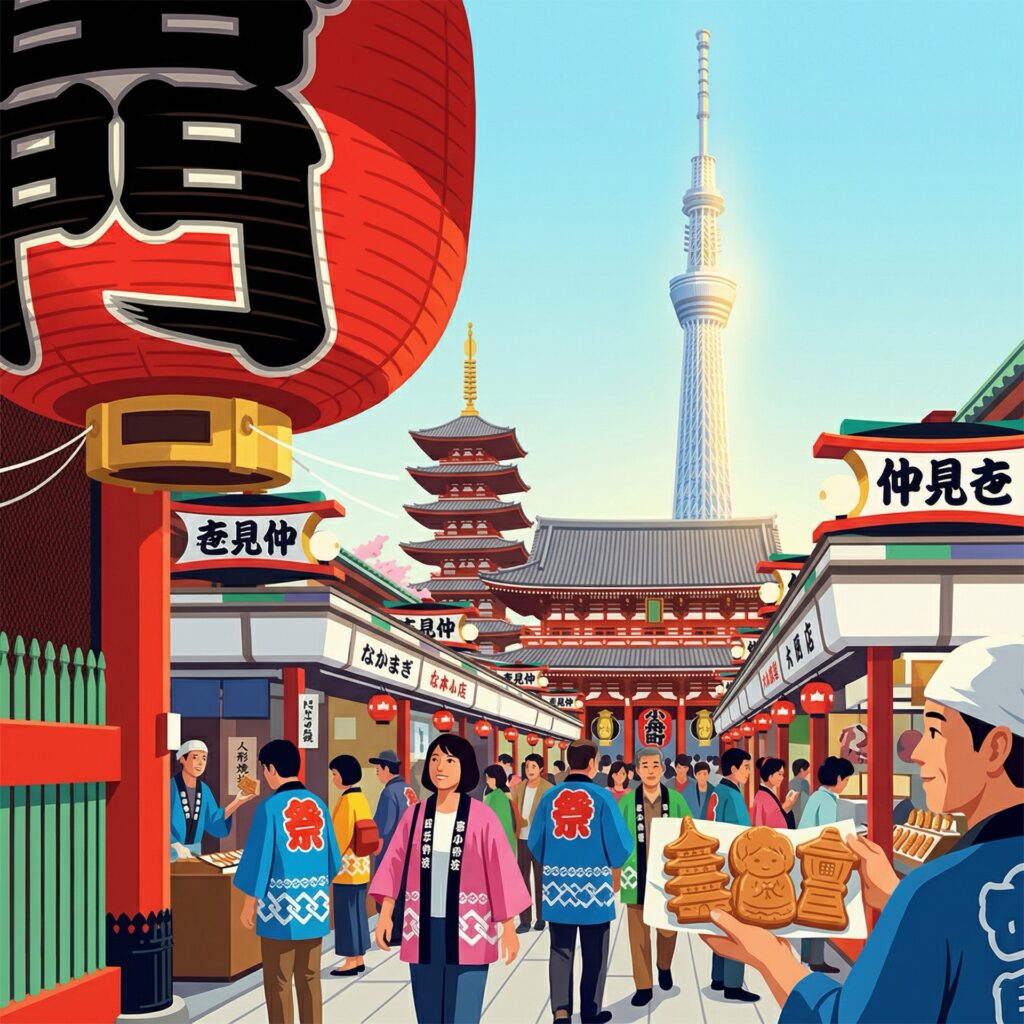
Asakusa offers an incredible cultural experience far beyond the festival itself, serving as Tokyo’s best-preserved snapshot of the Edo period. You can start your journey by walking under the iconic Kaminarimon, the “Thunder Gate,” guarded by powerful statues of the Fujin (Wind) and Raijin (Thunder) gods.
From there, stroll down the Nakamise shopping street, which dates back to the late 17th century, making it one of Japan’s oldest shopping arcades. Originally established for pilgrims visiting the temple, it is now the perfect place to sample freshly baked “ningyoyaki” (sweet red bean cakes shaped like local landmarks) or pick up authentic, historical souvenirs like folding fans, tenugui (cotton towels), and traditional wooden combs.
After exploring the main hall of Senso-ji, Tokyo’s oldest Buddhist temple founded in 628 AD, take a peaceful break from the bustling streets. Head up to the observation deck of the Asakusa Culture Tourist Information Center across the street. It offers a stunning, free panoramic view of the ancient temple grounds contrasted with the ultra-modern Tokyo Skytree shining in the spring sky.
⛩️ Draw Your Asakusa Omikuji
Shake the fortune box to reveal your festival luck & travel hack!
大吉
Your energy perfectly matches the roaring Sanja Matsuri!
Essential Hack: Hands-Free Sightseeing in Crowds

Visiting Asakusa during May—especially around the Golden Week holidays and festival dates—means navigating massive crowds. The biggest mistake tourists make is dragging large suitcases through these packed, historic streets.
To stay agile and comfortable, utilize Japan’s incredibly reliable luggage forwarding services, often called “Takkyubin.” You can send your large bags directly from the airport to your hotel, or from one hotel to another, for a very reasonable fee.
If you just need temporary storage for a few hours, skip the physical search for coin lockers. Use modern web services like “ecbo cloak” or smart locker apps to reserve your luggage space at cafes or stations in advance. Sightseeing hands-free is the ultimate Tokyo travel hack.
Festival Survival Tips: Cash and Hydration
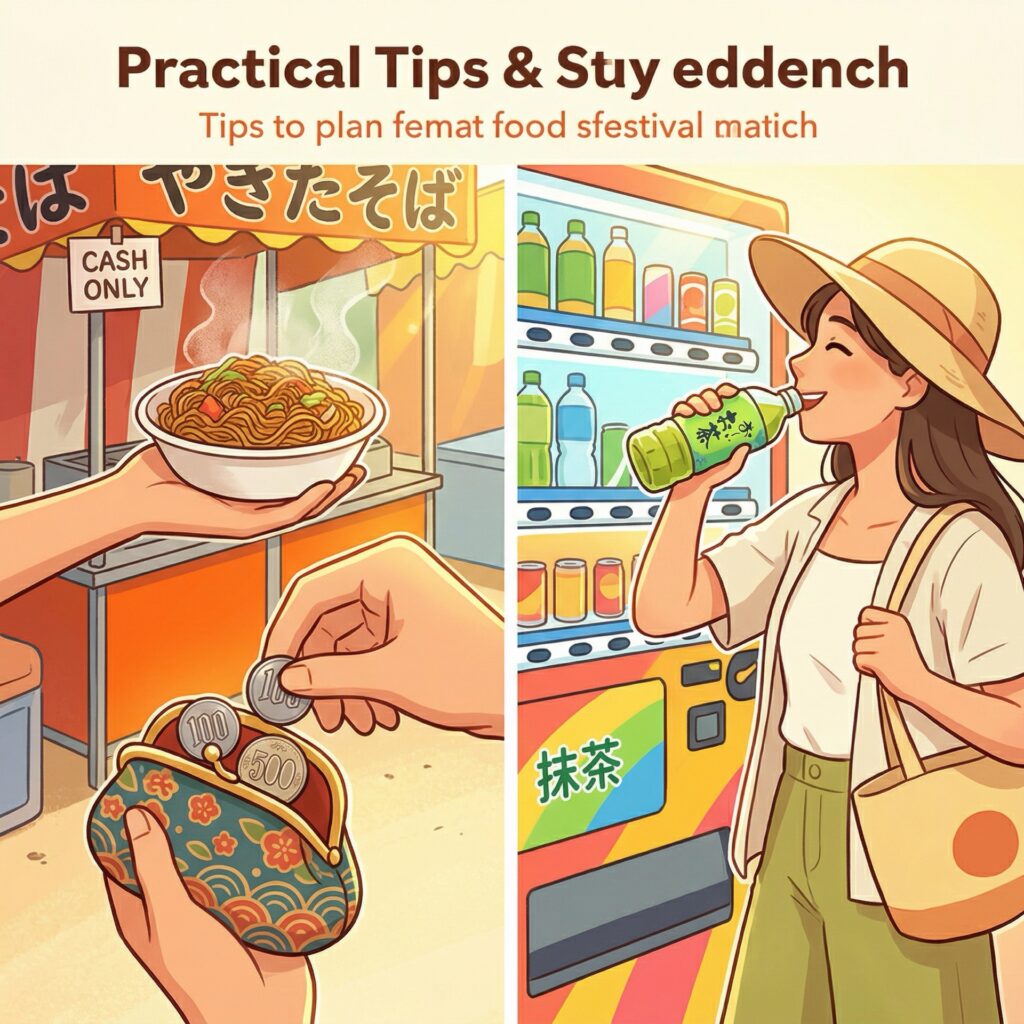
While Japan is rapidly adopting cashless systems, traditional street food stalls (“yatai”) appearing during the festival operate almost entirely on cash.
Make sure to carry a dedicated coin purse filled with 100-yen and 500-yen coins. This allows for quick, smooth transactions when buying yakisoba noodles, shaved ice, or traditional sweets from the vendors.
Additionally, late May in Tokyo can be surprisingly hot and sunny. Take advantage of the ubiquitous Japanese vending machines to grab cold unsweetened green tea or sports drinks, and remember to take short breaks in the shaded areas around the temple gardens to enjoy the festival safely.
#Asakusa #SanjaMatsuri #TokyoTravel #JapanHacks #SpringInJapan