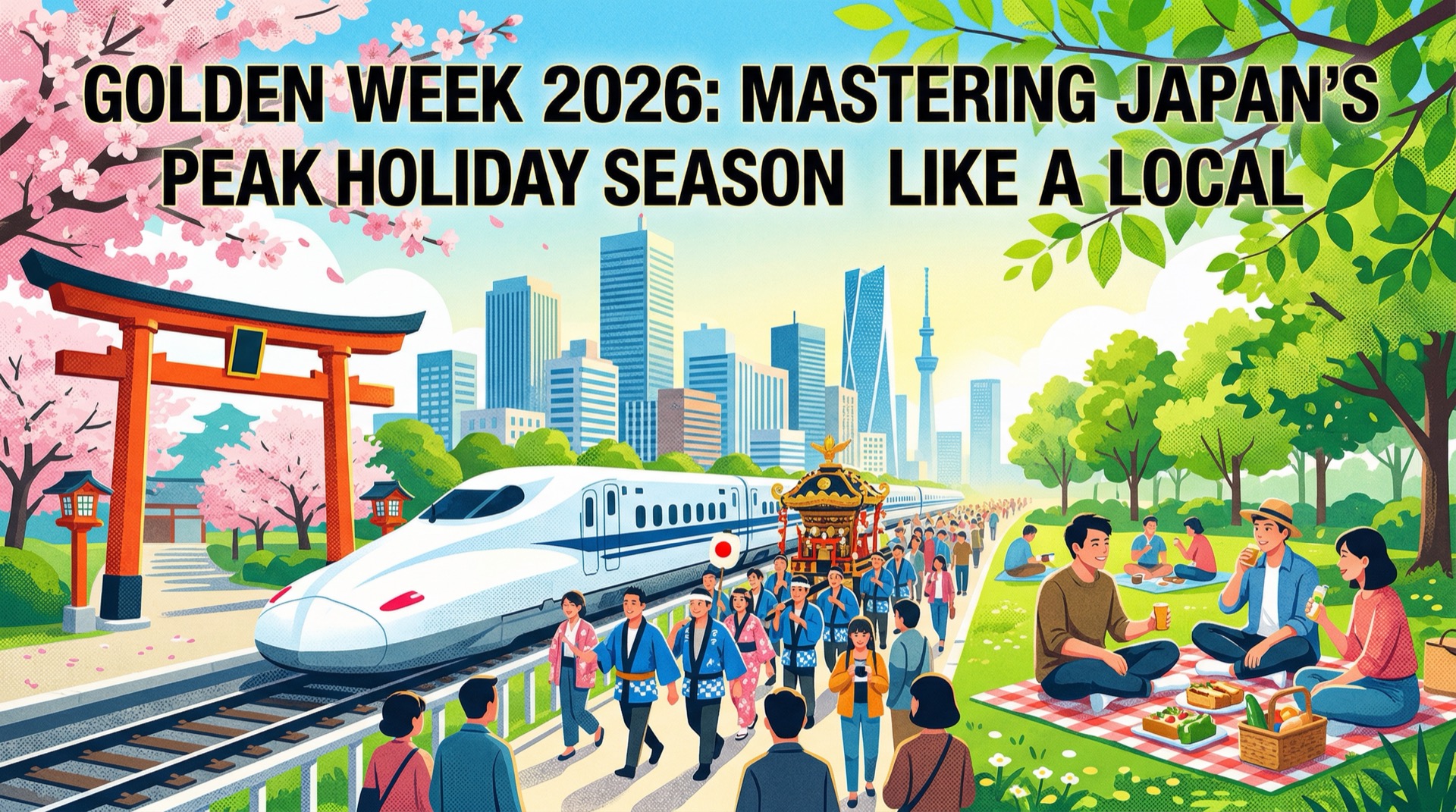
If you are planning a trip to Japan between late April and early May, you will inevitably encounter “Golden Week.”
In 2026, this major cluster of national holidays runs from Wednesday, April 29 to Wednesday, May 6, creating a massive, nationwide vacation period.
Understanding how Japanese people spend this week is the absolute key to navigating the crowds, sidestepping skyrocketing hotel prices, and turning a potentially stressful trip into a magical, immersive adventure.
How Locals Actually Spend Golden Week
While international tourists flock to the classic landmarks of Kyoto, Mount Fuji, and Asakusa, Japanese locals have their own distinct Golden Week rituals.
For many urbanites, this holiday is an opportunity to return to their hometowns or embark on domestic road trips. However, a growing trend among locals is the “micro-tourism” concept—enjoying their immediate surroundings to avoid exhausting traffic jams.
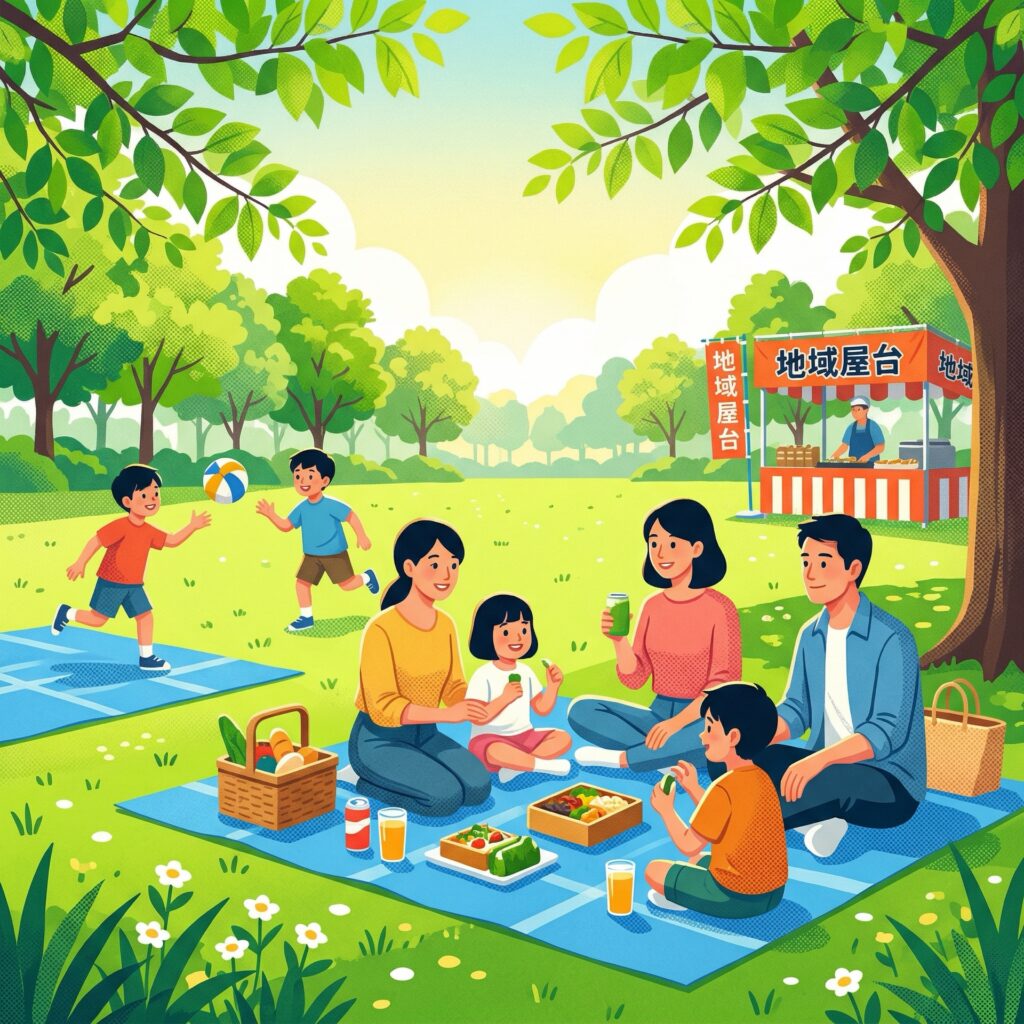
You will see young couples and families laying out picnic sheets in vast metropolitan parks like Tokyo’s Yoyogi Park or Showa Kinen Park, soaking in the phenomenal spring sunshine.
Regional food festivals, craft markets, and local shrine events spring up everywhere, transforming ordinary neighborhoods into vibrant hubs of community celebration.
By mirroring this local approach and leaning into these community-centric events, you can experience a lively, authentic side of Japan that far exceeds the standard tourist itinerary.
Smart Strategies for Skyrocketing Accommodations
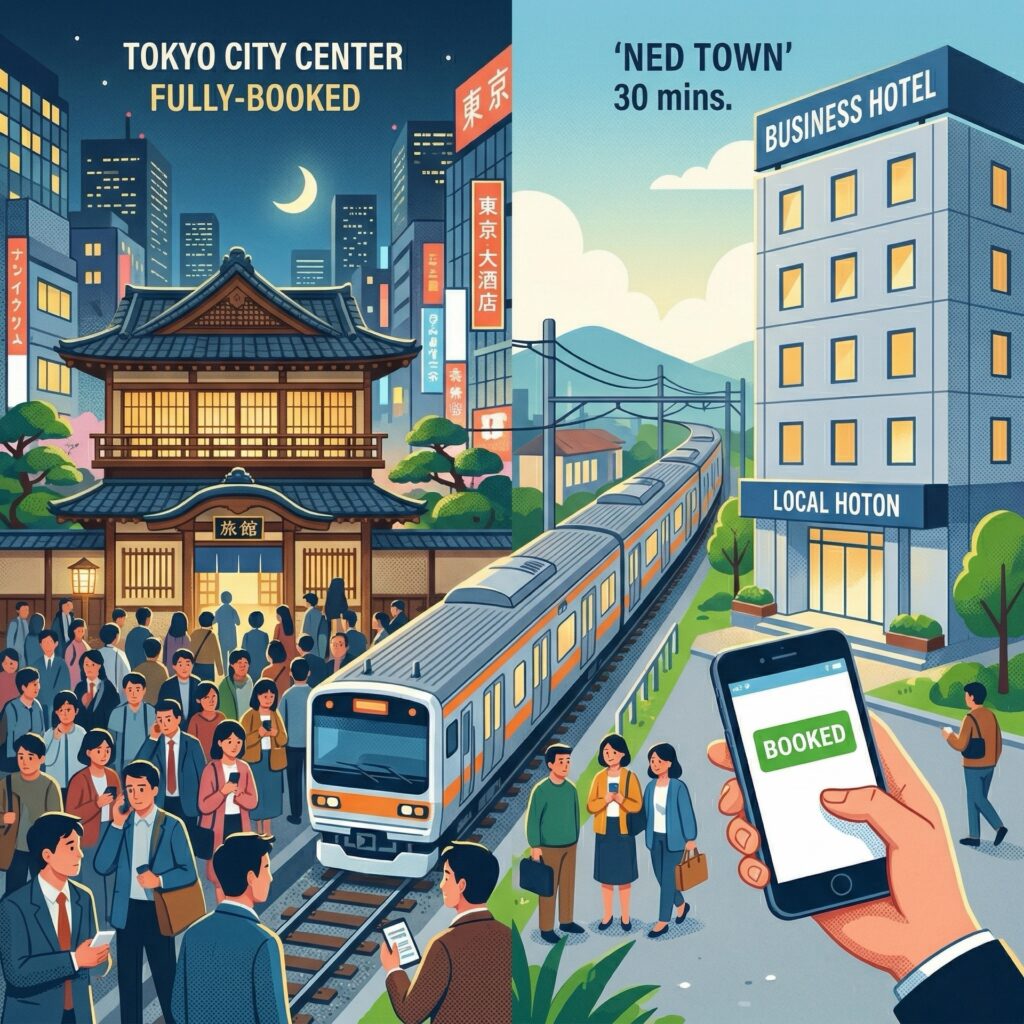
One of the most daunting aspects of Golden Week is the sheer cost and scarcity of hotel rooms. Famous ryokans and resort areas are often fully booked months in advance, with prices doubling or tripling.
The ultimate local hack for this is to look beyond the city center and embrace the “bed town” strategy.
Cities located just 30 to 45 minutes by rapid train from commercial hubs—such as Kawasaki, Omiya, or Tachikawa near Tokyo, and Otsu or Amagasaki near Kyoto and Osaka—offer excellent business hotels at a fraction of the cost.
These commuter towns boast immense convenience, great local dining without the tourist markup, and seamless train access to main attractions.
Alternatively, for solo travelers or couples wanting a uniquely Japanese experience, modern “evolution” capsule hotels and luxury public bathhouses (super sento) that offer overnight stay plans provide incredibly affordable, clean, and culturally enriching shelter when traditional hotels are overwhelmed.
Navigating the Transit Rush with Precision

Traveling from city to city during Golden Week requires surgical precision. Bullet trains (Shinkansen) and domestic flights will be operating at absolute maximum capacity.
A crucial piece of recent travel knowledge is that during major peak seasons like Golden Week, the Nozomi Shinkansen (the fastest train on the Tokaido line between Tokyo and Kyoto/Osaka) transitions to fully reserved seating—meaning you cannot simply show up and hop into an unreserved car.
Reserving your tickets as far in advance as the system allows is strictly mandatory.
A favorite local tactic to bypass the midday rush is to travel extremely early in the morning—often boarding the first train around 6:00 AM—or traveling quite late at night.
Health and Comfort Hacks for the Japanese Spring

While the early May weather in Japan is broadly considered spectacular, it comes with a few environmental quirks that locals are intimately familiar with.
The shift from crisp mornings to warm, intensely sunny afternoons means the temperature fluctuation can be jarring. Adopting a multi-layered clothing strategy using lightweight, packable layers is essential to staying comfortable throughout long days of exploring.
Furthermore, spring in Japan is notoriously synonymous with hay fever (Kafunsho), driven by cedar and cypress pollen. Even if you don’t typically suffer from allergies at home, the unique Japanese pollen might surprise your immune system.
Fortunately, Japanese drugstores are treasure troves of high-quality, over-the-counter remedies that do not require a prescription.
You can easily purchase sophisticated, non-drowsy allergy medications such as Allegra FX, along with excellent pollen-blocking glasses and moisturizing masks that make the springtime breeze feel crisp and refreshing rather than irritating.
Finding Serenity in the Heart of the Hype

Ultimately, enjoying Golden Week is entirely about knowing where to place your attention.
If you accept that certain mega-attractions will be crowded and pivot toward the less-heralded pathways, the holiday becomes a joyous spectacle.
While everyone else is fighting for elbow room at the most famous temples, you can join the locals in discovering hidden botanical gardens, enjoying a peaceful afternoon at an independent neighborhood cafe, and viewing the newly emerged green foliage (shinryoku) that makes this season so deeply cherished in Japan.
By adopting local rhythms and strategic planning, you can experience the vibrant peak of the Japanese spring completely on your own terms.