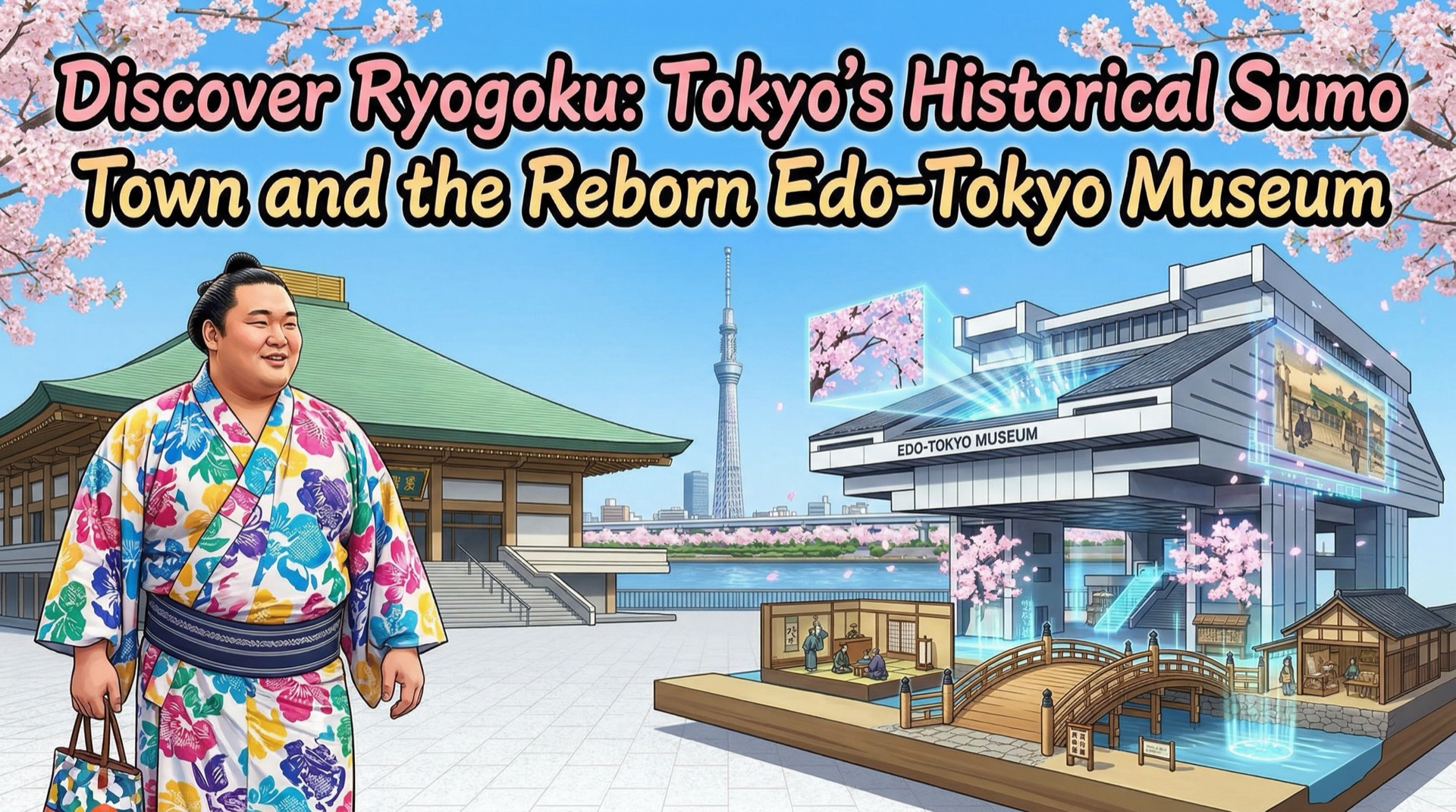
Spring in Tokyo is a time of renewal, making it the perfect opportunity to dive into Japan’s vibrant history and traditions. If you’re looking to explore the old soul of the city while taking advantage of modern comforts, Ryogoku is the place to be. Situated along the scenic Sumida River, it is not uncommon to see towering sumo wrestlers (rikishi) strolling the streets in their traditional cotton yukata robes. Known globally as the heart of professional sumo, this historic district is currently buzzing with an exciting development for 2026: the highly anticipated reopening of the Edo-Tokyo Museum!
Let’s explore how you can spend an unforgettable day in Ryogoku, blending massive traditional hot pot meals with incredibly immersive ancient culture.
The Heart of Sumo: Ryogoku Kokugikan
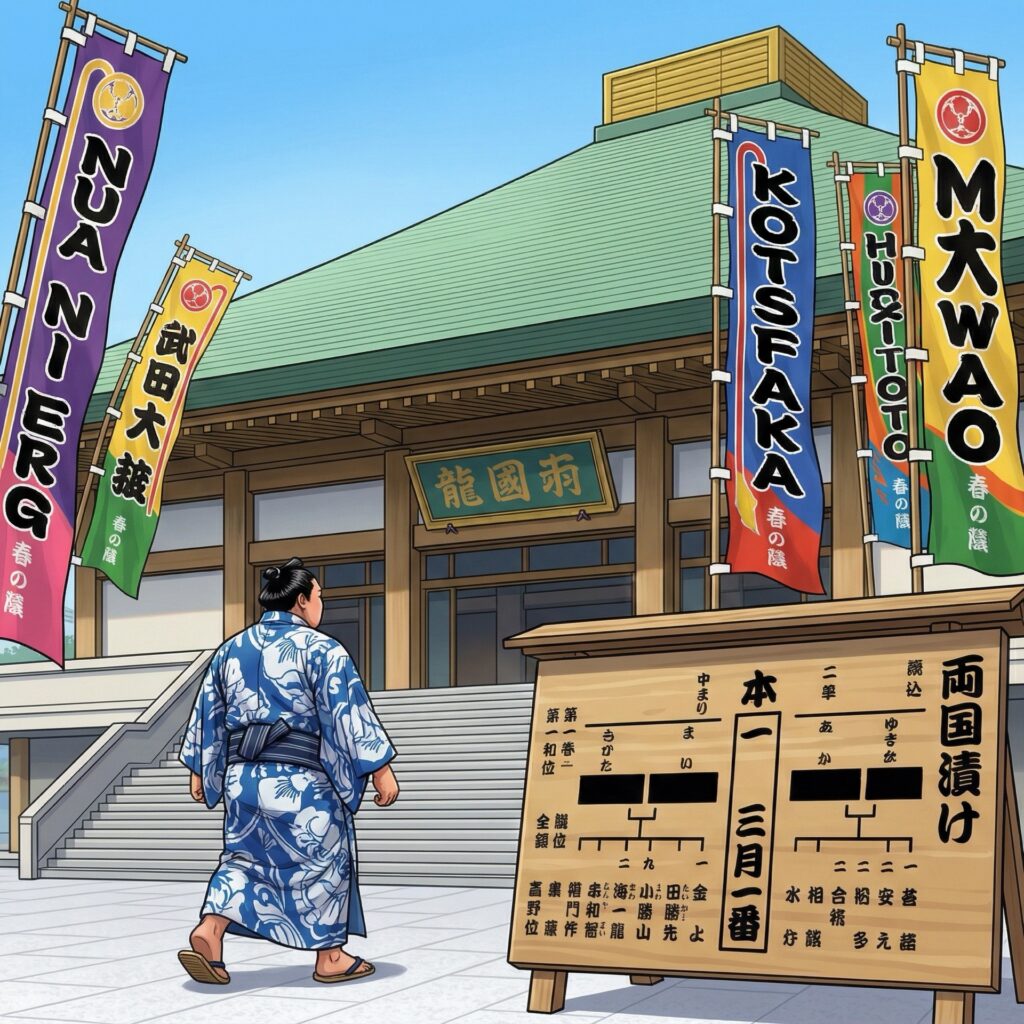
As soon as you arrive at Ryogoku Station, you can feel the spirit of sumo in the air. The absolute centerpiece of this neighborhood is the Ryogoku Kokugikan, a massive indoor arena featuring a distinctive green roof. This arena is legendary, serving as the host for three of the six official Grand Sumo Tournaments (honbasho) each year.
Even if you visit outside of the tournament months (January, May, and September), the Kokugikan remains a fantastic cultural landmark. You can visit the free Sumo Museum located on the first floor to see historic woodblock prints, colorful ceremonial aprons (kesho-mawashi), and ancient official rankings (banzuke) dating back centuries. Surrounding the arena, you’ll often find colorful banners (nobori) adorned with famous wrestlers’ names fluttering in the spring breeze, setting the perfect stage for exploring this traditional hub.
The Edo-Tokyo Museum Returns!
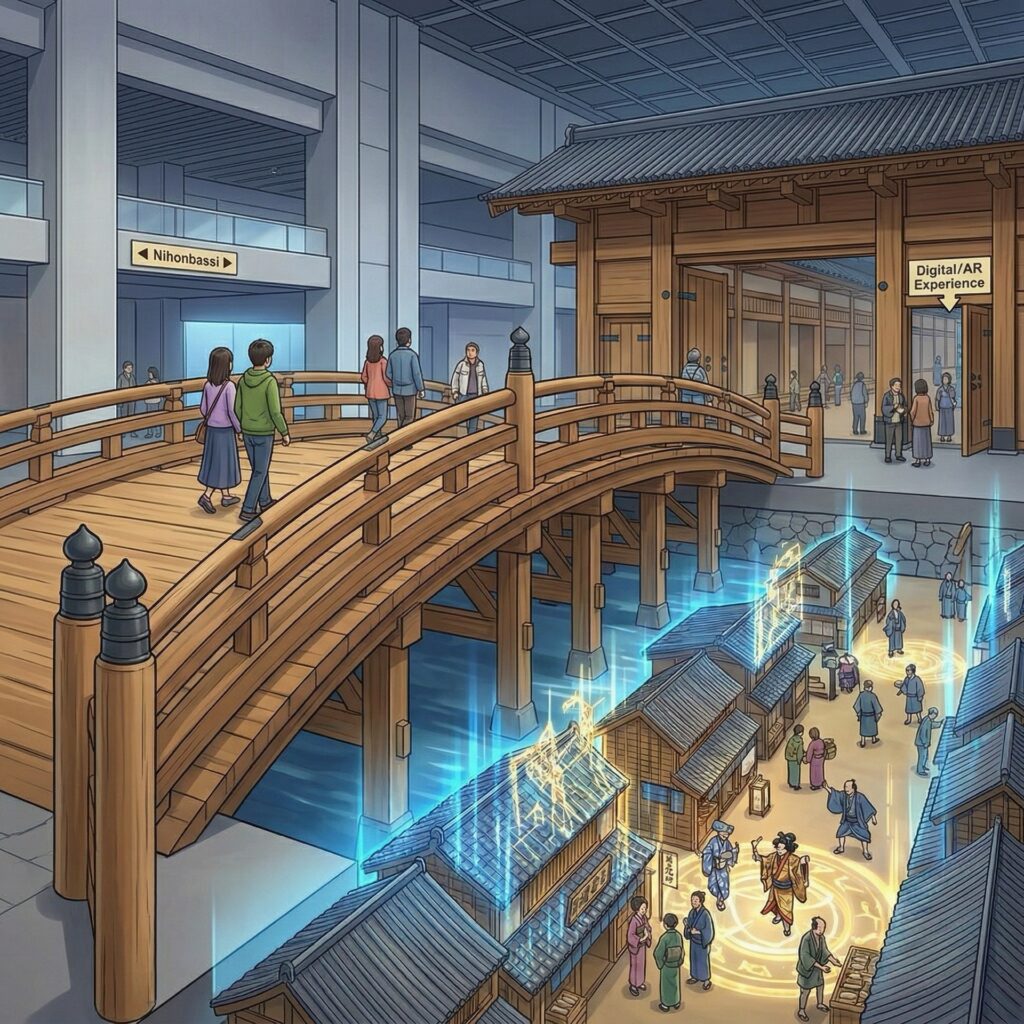
After undergoing an extensive multi-year renovation, the beloved Edo-Tokyo Museum finally reopened its doors in March 2026. Housed in a massive, unique building designed to resemble an ancient elevated storehouse (kurazukuri), this facility is an absolute must-visit for anyone curious about how a small fishing village named Edo transformed into the neon-lit metropolis of modern Tokyo.
Your journey essentially begins the moment you step onto the museum’s breathtaking, life-sized replica of the wooden Nihonbashi bridge. From there, you can peer down into immaculately detailed miniature dioramas of historic neighborhoods, daimyo (feudal lord) mansions, and vibrant Kabuki theaters from the Edo period. The 2026 renovations have taken these exhibits to the next level, introducing cutting-edge digital projection mapping and AR (Augmented Reality) elements to make the historical reproductions feel truly alive. You can now experience the sights and sounds of Edo craftsmen and merchants as if you traveled back in time.
Travel Tip: Be sure to book your tickets in advance online. The “no reservation, no entry” trend has become very common for major attractions in Japan since 2026, and you definitely don’t want to miss out!
Eat Like a Champion: The Ultimate Chanko Nabe
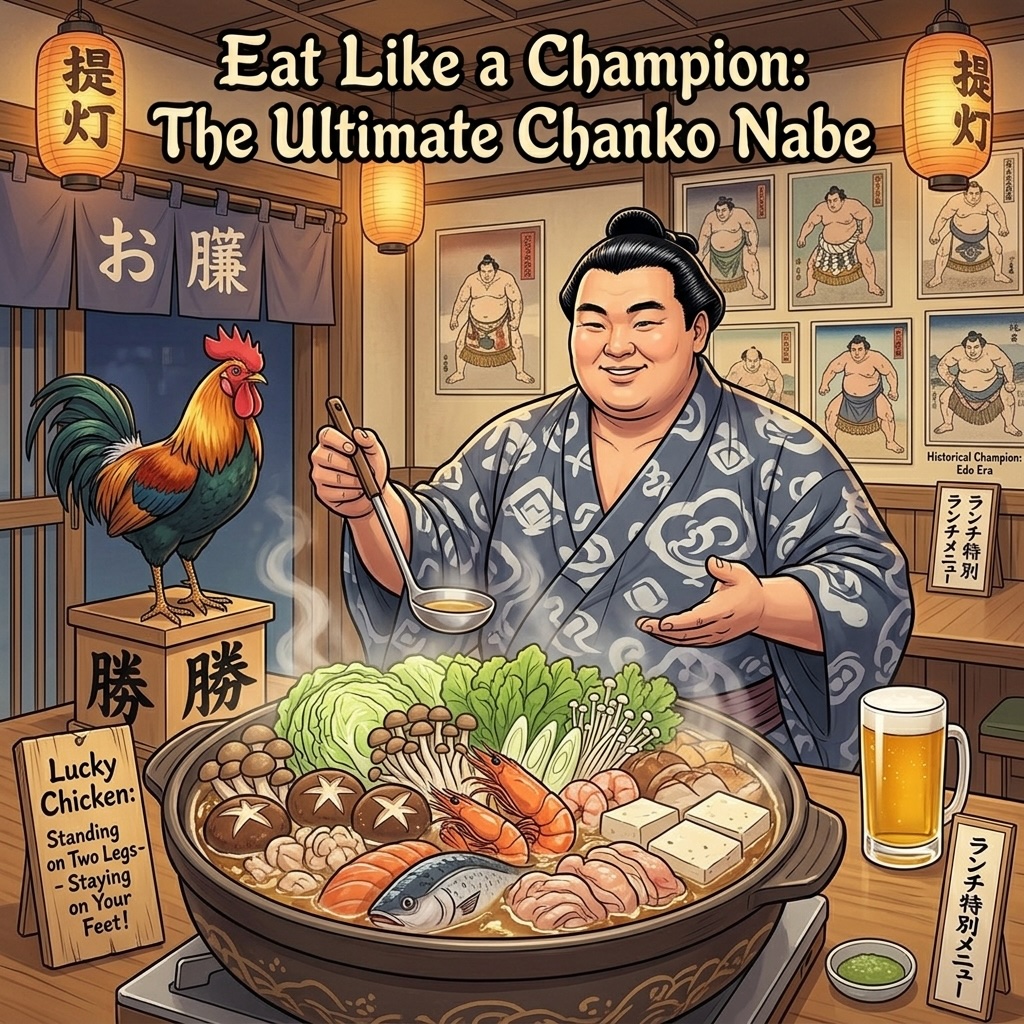
You simply cannot visit Ryogoku without trying its most famous culinary export: Chanko Nabe. In the sumo world, “chanko” refers to any meal prepared and eaten by wrestlers, but it is most famously associated with this massive, nutrient-packed hot pot designed to help combat sports athletes build staggering size and strength.
Despite its reputation for building massive physiques, Chanko Nabe is actually incredibly healthy and nutritious. A bubbling pot usually contains a rich, savory chicken or seafood broth loaded with mountains of fresh cabbage, mushrooms, tofu, and assorted meats.
Fascinating Sumo Trivia: Traditionally, chicken is the preferred meat for Chanko Nabe before a big tournament. Why? Because a chicken stands on two legs. In sumo, touching the ground with your hands (meaning you have four limbs on the mat) results in an instant loss. Therefore, eating a two-legged animal is considered a lucky charm for staying on your feet!
You’ll find authentic Chanko restaurants dotted all around the Ryogoku Kokugikan. Many of these establishments are proudly owned by former sumo wrestlers or stablemasters (oyakata). While dining here in the evening is a lively comfort food experience, visiting during lunch hours can often score you incredibly generous portions at a fraction of the dinner price. Pair it with a crisp Japanese draft beer, and you will truly eat like a champion!
Enjoy your time in Ryogoku, where the past and present seamlessly collide!
#JapanTravel #Tokyo2026 #Ryogoku #SumoWrestling #ChankoNabe #EdoTokyoMuseum #ExploreJapan