- What Is a Depachika? Welcome to Japan’s Most Delicious Secret
- Why Depachika Are Unlike Anything You’ve Seen Before
- The Five Depachika Categories You Need to Know
- Top Depachika to Visit in Tokyo
- Depachika Etiquette: The Unwritten Rules
- Pro Tips: How to Depachika Like a Local
- Beyond Tokyo: Depachika Worth a Detour
- Depachika and the Changing Travel Landscape in 2026
- Your Depachika Adventure Awaits
What Is a Depachika? Welcome to Japan’s Most Delicious Secret
Beneath the polished marble floors of Japan’s grand department stores lies a world that most travel guides barely mention — yet it may be the single greatest food experience you’ll have in the country.
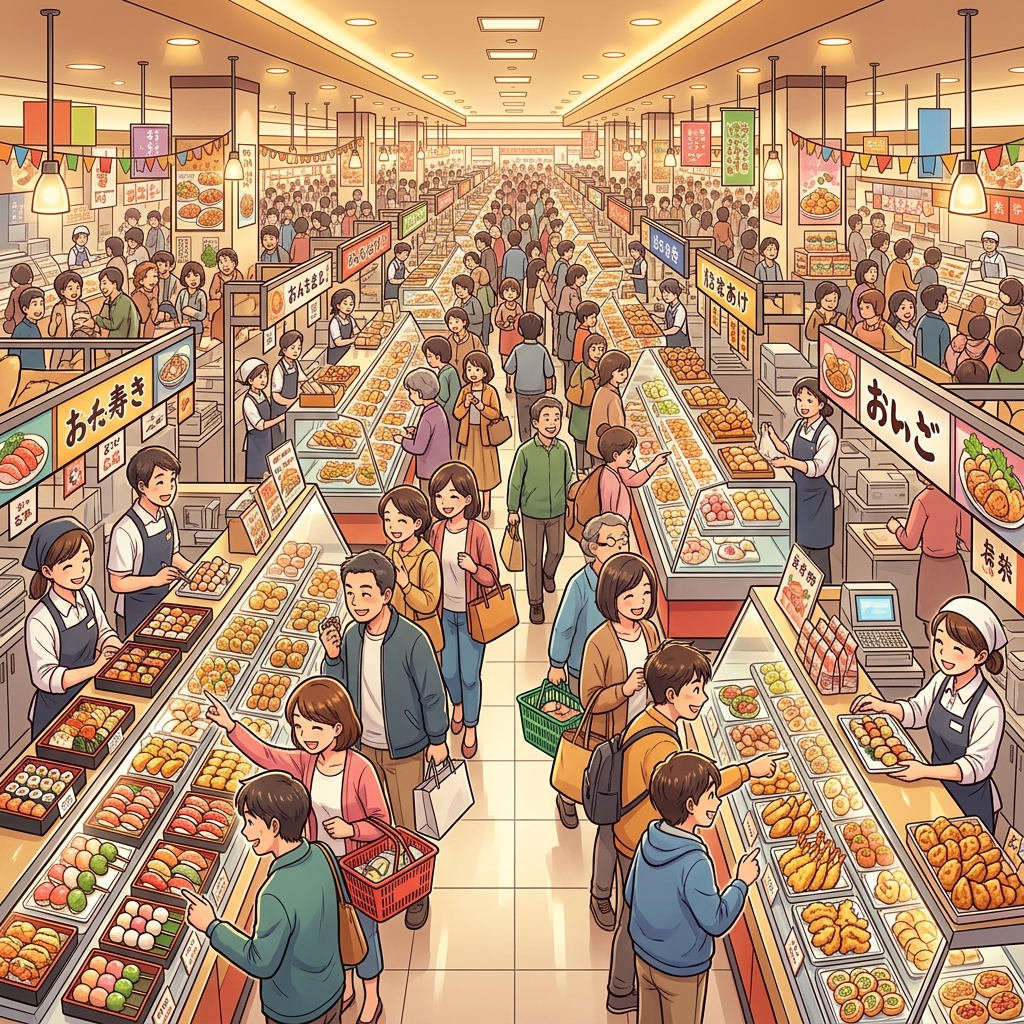
It’s called a depachika (デパ地下), a portmanteau of depāto (department store) and chika (basement). And once you descend those escalators, you’ll step into a sprawling, immaculate food hall that puts any Western gourmet market to shame.
Imagine hundreds of glass-fronted counters stretching endlessly in every direction. Jewel-like wagashi (traditional Japanese confections) arranged with the precision of a museum exhibit. Glistening bento boxes assembled like edible art. The warm, buttery fragrance of freshly baked croissants mingling with the earthy scent of premium matcha. Welcome to the underground food wonderland of Japan.
Why Depachika Are Unlike Anything You’ve Seen Before
If you’ve been to Harrods Food Hall in London or the basement of Galeries Lafayette in Paris, you have a rough idea — but the Japanese depachika takes the concept to an entirely different level.
Japan has roughly 200 major department stores, and nearly every single one features a sprawling basement food floor. These aren’t grocery stores. They aren’t food courts. They are curated, high-end culinary experiences where presentation, quality, and seasonal sensitivity reign supreme.
Here’s what makes them special:
First, the sheer variety. A single depachika can house over 100 individual vendors, each specializing in one thing: one shop does nothing but yokan (sweet bean jelly), another sells only premium Wagyu beef croquettes, and yet another offers 30 varieties of pickled vegetables.
Second, the visual artistry. Every item is displayed and packaged as if it were a luxury gift — because in Japan, it often is. The wrapping paper, the ribbons, the seasonal motifs on the boxes — all of it is part of the experience.
Third, the freshness obsession. Many items are made on-site throughout the day. You’ll see chefs rolling sushi, assembling layered cakes, or hand-molding mochi right behind the counter.
The Five Depachika Categories You Need to Know
1. Wagashi and Western Sweets
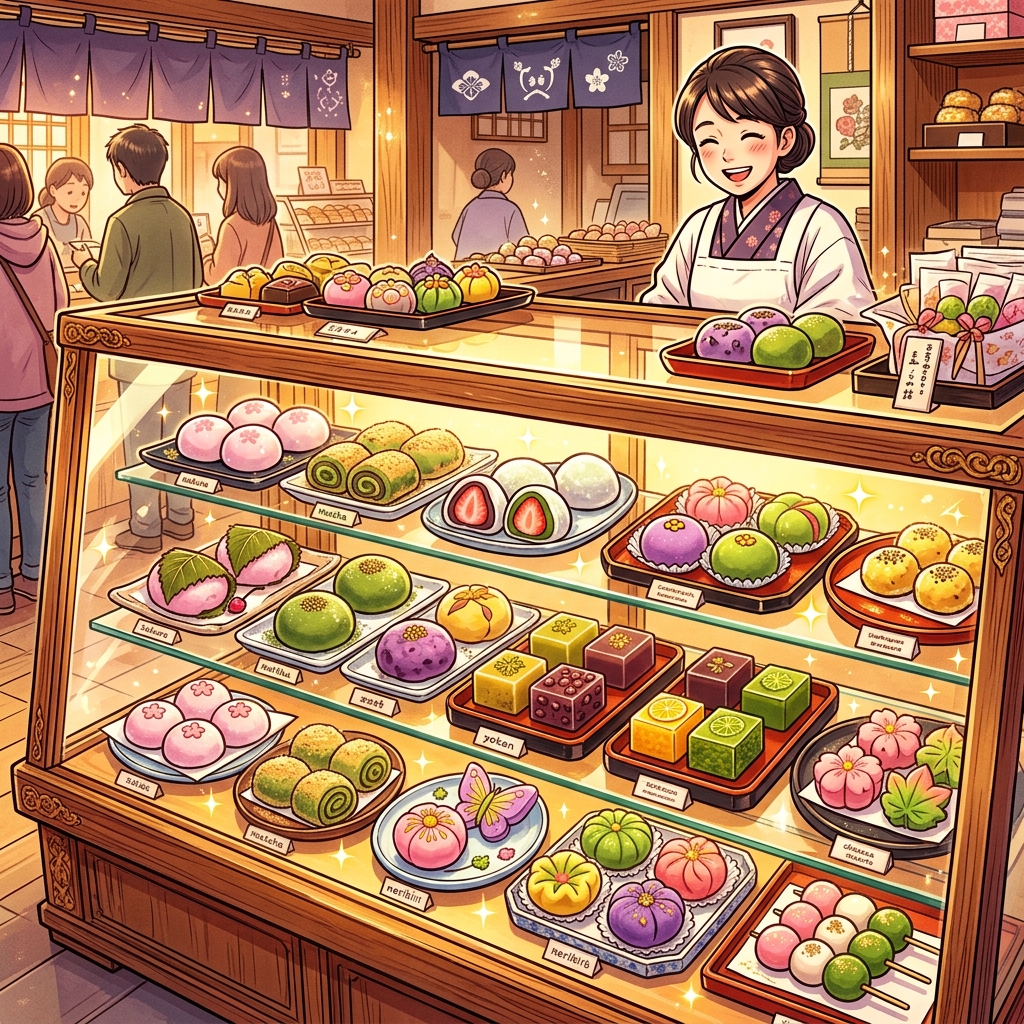
This is the crown jewel of any depachika. Traditional Japanese wagashi — delicate confections made from mochi, azuki bean paste, and seasonal ingredients — sit alongside French-inspired patisserie. Many shops offer limited-edition seasonal flavors that change monthly or even weekly.
Look for: sakura mochi in spring, kuzu manju in summer, chestnut yokan in autumn, and strawberry daifuku in winter.
2. Bento Boxes and Deli Items
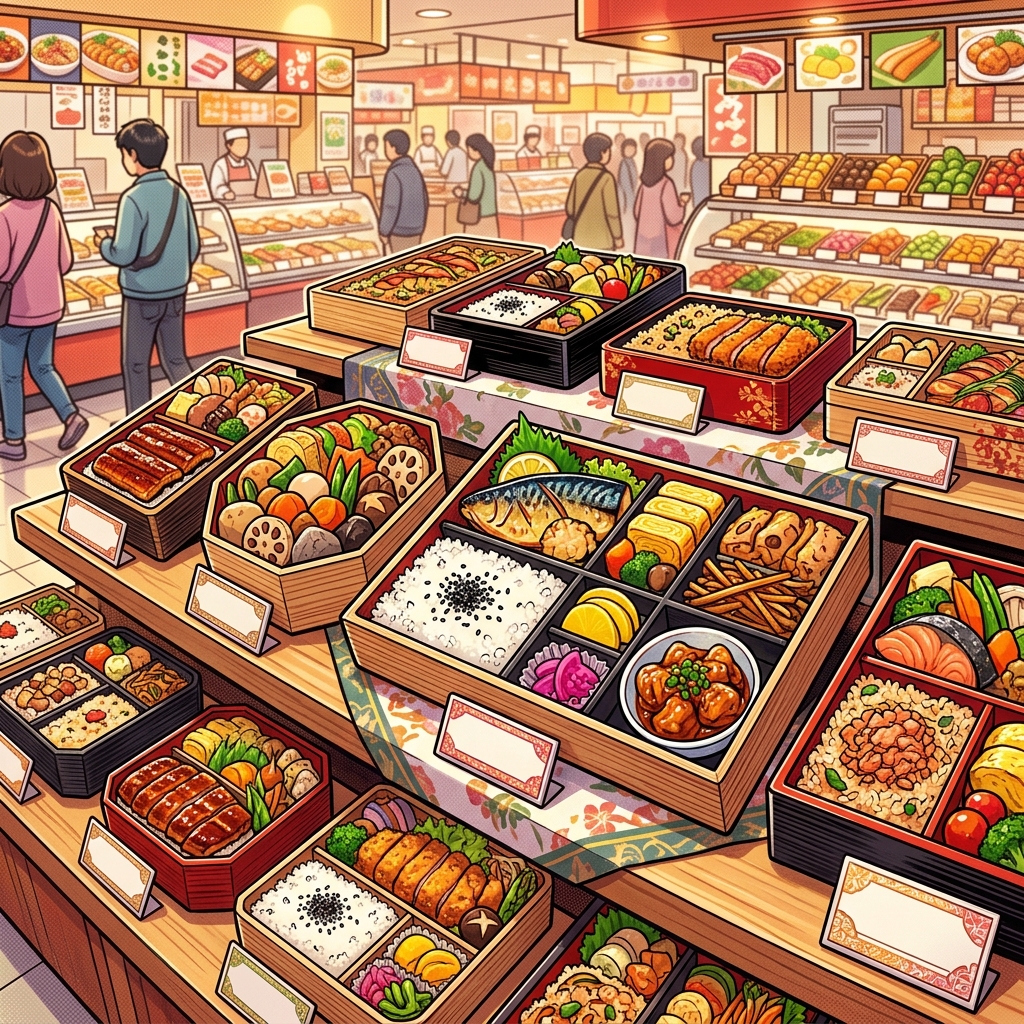
The bento section of a depachika is a revelation. These aren’t the convenience store bento you might be used to. These are multi-compartment works of art containing grilled fish, simmered vegetables, premium rice, and pickled accompaniments — all for around 1,000 to 2,500 yen.
Also look for individual deli items like korokke (croquettes), karaage (fried chicken), and elaborate salads built with ingredients you’d find in a fine-dining restaurant.
3. Fresh Produce and Premium Ingredients
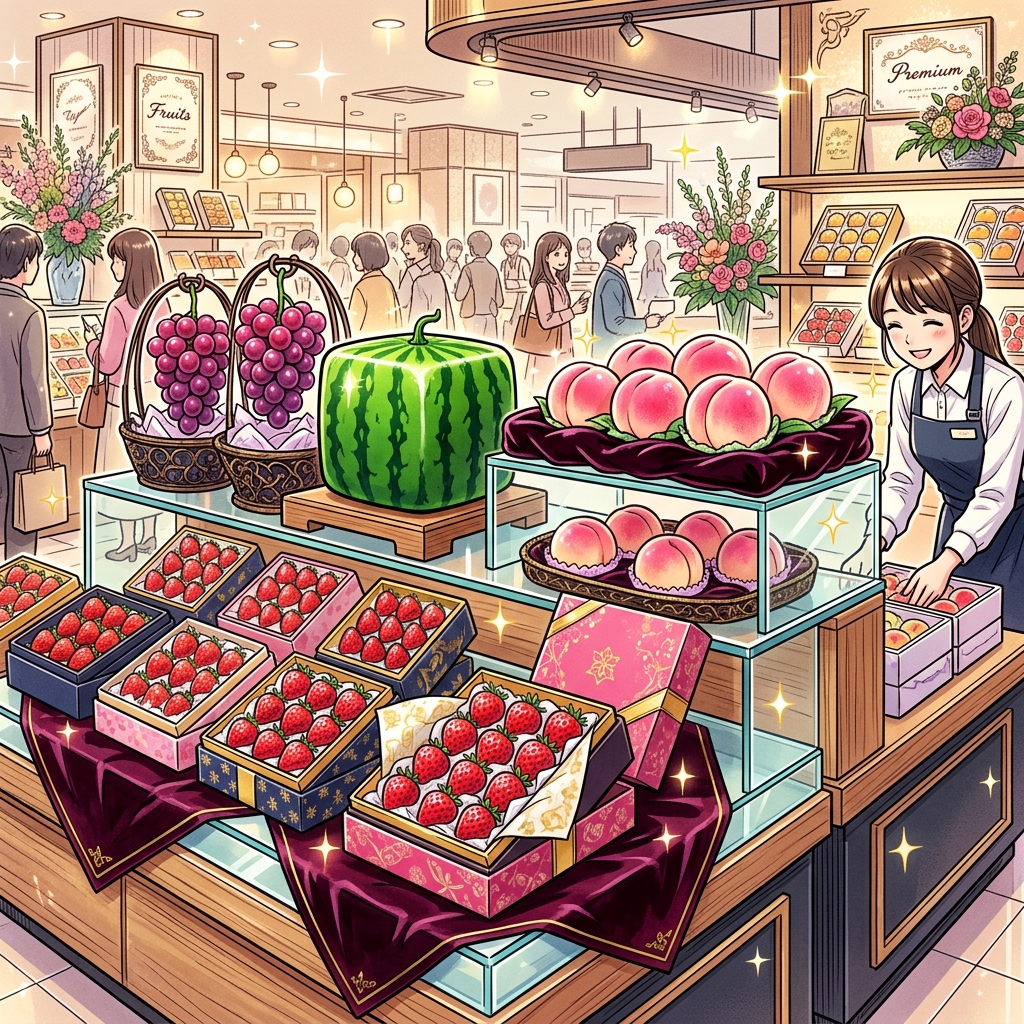
The fruit section alone is worth the visit. Japan is famous for its luxury fruit culture, and this is where you’ll find perfectly square watermelons, individual strawberries in padded gift boxes, and bunches of grapes where each grape has been individually inspected.
You’ll also find premium wagyu beef (marbled like a Renaissance painting), fresh sashimi-grade fish, artisanal tofu, and imported cheeses that rival anything in Europe.
4. Sake, Tea, and Beverages
Many depachika feature dedicated sake corners with knowledgeable staff who can guide you through regional varieties. You’ll also find premium matcha, hojicha, and sencha teas, often with tasting opportunities.
5. Omiyage — The Art of Edible Souvenirs
The omiyage (souvenir gift) section is perhaps the most uniquely Japanese part of the depachika. In Japan, bringing back edible gifts for colleagues, friends, and family after any trip is a deeply ingrained cultural practice.
This is why you’ll find entire sections dedicated to beautifully boxed regional specialties — cookies shaped like Mount Fuji, matcha-flavored langues de chat, individually wrapped financiers, and much more. These make perfect souvenirs for your trip home too.
Top Depachika to Visit in Tokyo
Isetan Shinjuku (B1F)
Widely considered the king of all depachika. Isetan’s basement floor is a trendsetter, regularly rotating in pop-up shops and limited-edition collaborations. It’s particularly strong in patisserie and wagashi, with several shops that exist nowhere else in the world. The store also employs food concierges who can help you navigate the maze and select the perfect gift.
Access: Direct connection to Shinjuku-sanchome Station (Tokyo Metro Marunouchi and Fukutoshin Lines).
Daimaru Tokyo Station (B1F)
If you’re catching a Shinkansen, this is your depachika. Located directly inside Tokyo Station, it’s the perfect place to grab an exquisite bento box for your bullet train journey. The store curates an enormous selection of Tokyo-exclusive omiyage, making last-minute souvenir shopping effortless.
Access: Inside Tokyo Station Yaesu North Exit area.
Nihombashi Mitsukoshi (B1F)
Japan’s oldest department store (founded in 1673) brings gravitas and tradition to its food floor. The wagashi selection here is legendary, with many Kyoto-based brands maintaining permanent counters. It’s a quieter, more refined experience compared to the Shinjuku crowds.
Access: Direct connection to Mitsukoshimae Station (Tokyo Metro Ginza and Hanzomon Lines).
Shibuya Tokyu Food Show (B1F-B2F)
Recently renovated and expanded, this depachika spreads across two basement floors and skews younger and trendier. You’ll find more international flavors, creative fusion bento, and Instagram-worthy sweets here. It’s directly connected to Shibuya Station, making it incredibly convenient.
Access: Direct connection to Shibuya Station (JR, Tokyo Metro, Tokyu Lines).
Takashimaya Nihombashi (B1F)
Housed in a designated Important Cultural Property building, Takashimaya Nihombashi offers a “Meika Hyakusen” (Famous Confections Top 100) corner — a curated selection of the best regional sweets from across Japan, all in one place. Perfect for efficient souvenir shopping when you can’t visit every prefecture.
Access: 5-minute walk from Nihombashi Station (Tokyo Metro Ginza and Tozai Lines).
Depachika Etiquette: The Unwritten Rules
Sampling (Shishoku) Manners
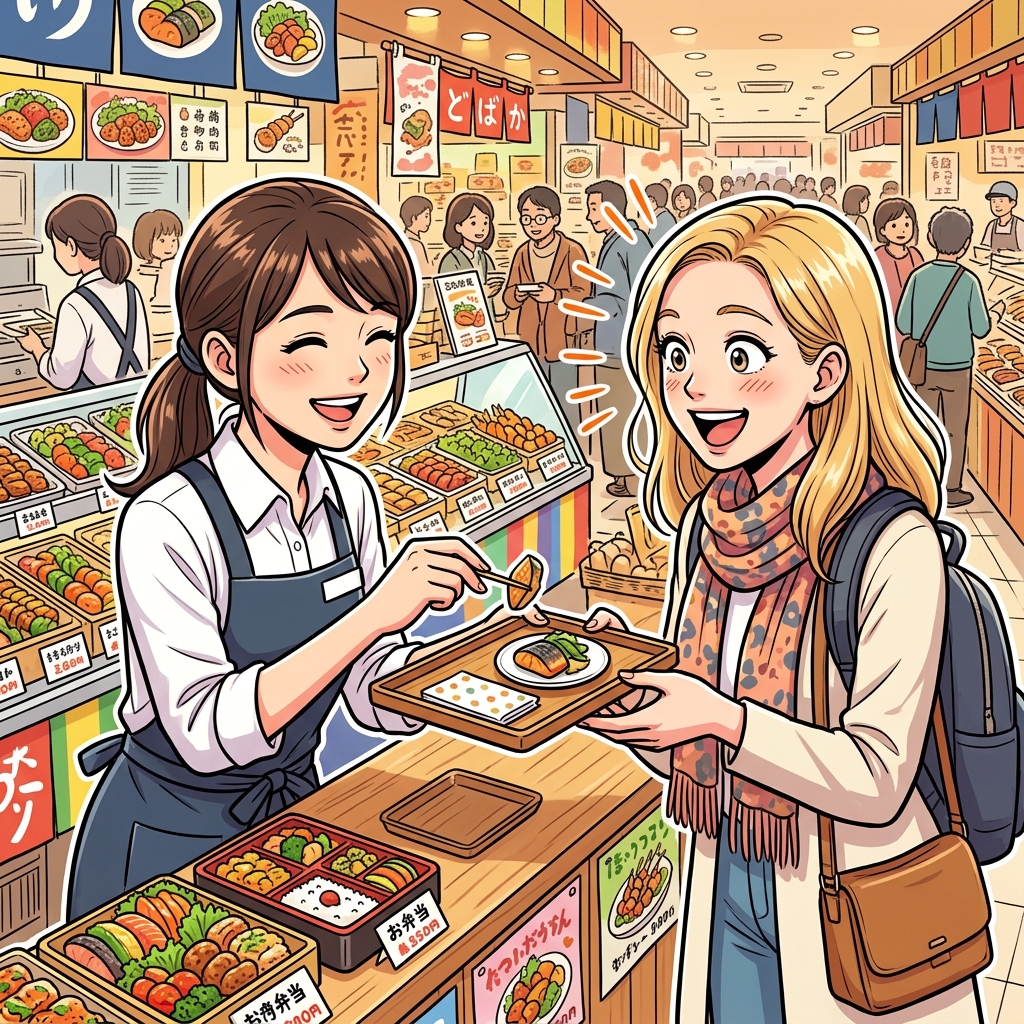
Many vendors offer free samples, and trying them is absolutely encouraged. However, there are some unwritten rules to follow:
Take only one sample per person. Stay near the counter while you eat it — never walk away while chewing. Dispose of any toothpicks or small containers in the provided waste box. If a staff member offers you a sample directly, a smile and a simple “Arigatou gozaimasu” goes a long way.
If you try something and decide not to buy, that’s perfectly fine. Just say “Kekkou desu” (I’m fine, thank you) with a polite nod. There is never any pressure to purchase.
No Walking While Eating
This applies throughout Japan, but especially in the refined environment of a depachika. If you purchase a snack, find a bench or a designated eating area. Walking through the aisles while munching on a croquette will draw disapproving looks.
Don’t Touch the Merchandise
Unless an item is clearly self-serve, avoid handling products directly. If you want a closer look or want to ask about ingredients, point to the item or ask the staff. This is especially important for unpackaged foods and fresh produce.
Photography
Many depachika have a general “no photography” policy, especially of products and staff. Always check for signage, and when in doubt, ask before shooting. A quick “Shashin ii desu ka?” (May I take a photo?) is all you need.
Pro Tips: How to Depachika Like a Local
The Evening Discount Hack
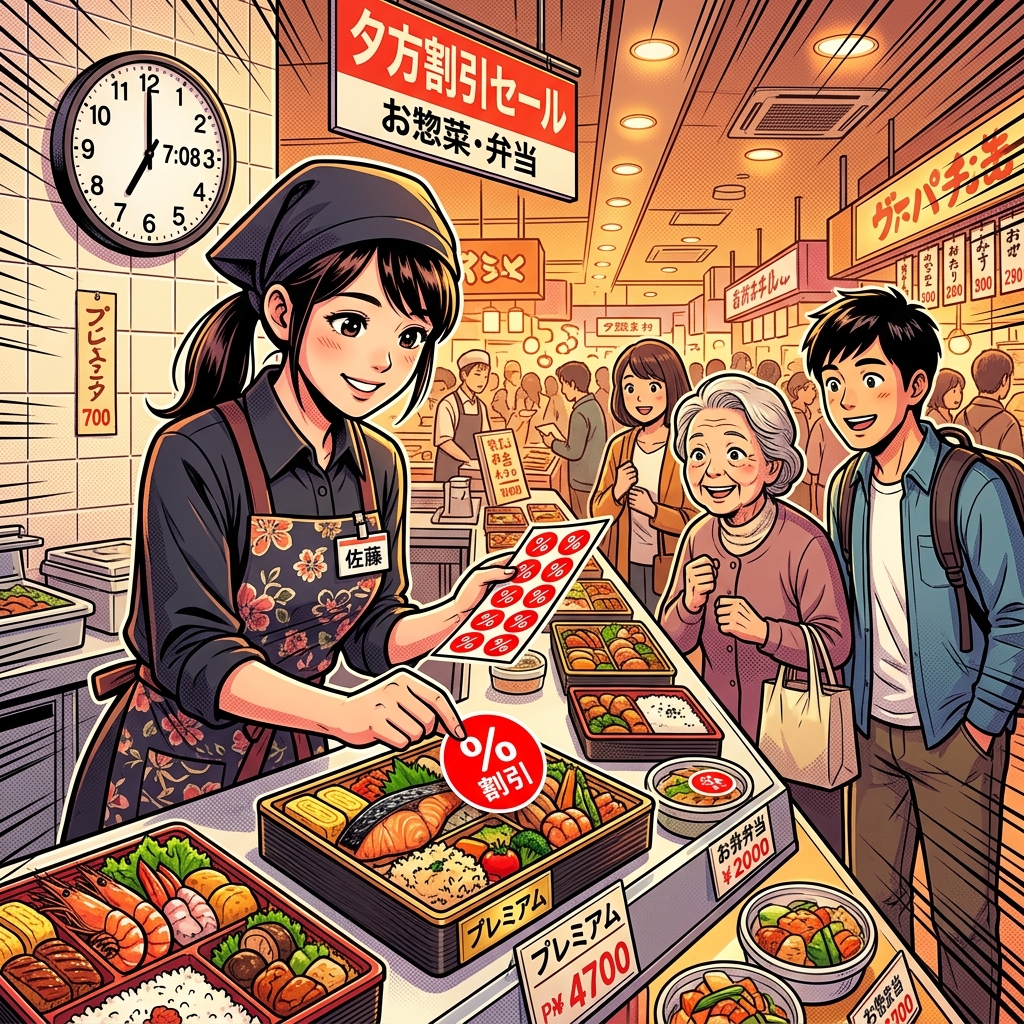
Here’s a secret that every budget-savvy Tokyo resident knows: visit the bento and deli section after 6:00 or 7:00 PM. As closing time approaches (usually 8:00 PM), staff begin placing discount stickers — typically 20% to 50% off — on prepared foods and bento boxes that need to be sold that day.
This is not a shameful practice. It’s a beloved ritual. You’ll see well-dressed office workers and elderly locals lined up alongside you, waiting for the magic sticker to appear. A 2,000-yen luxury bento for 1,000 yen? That’s the evening depachika experience.
Make It a Luxury Picnic
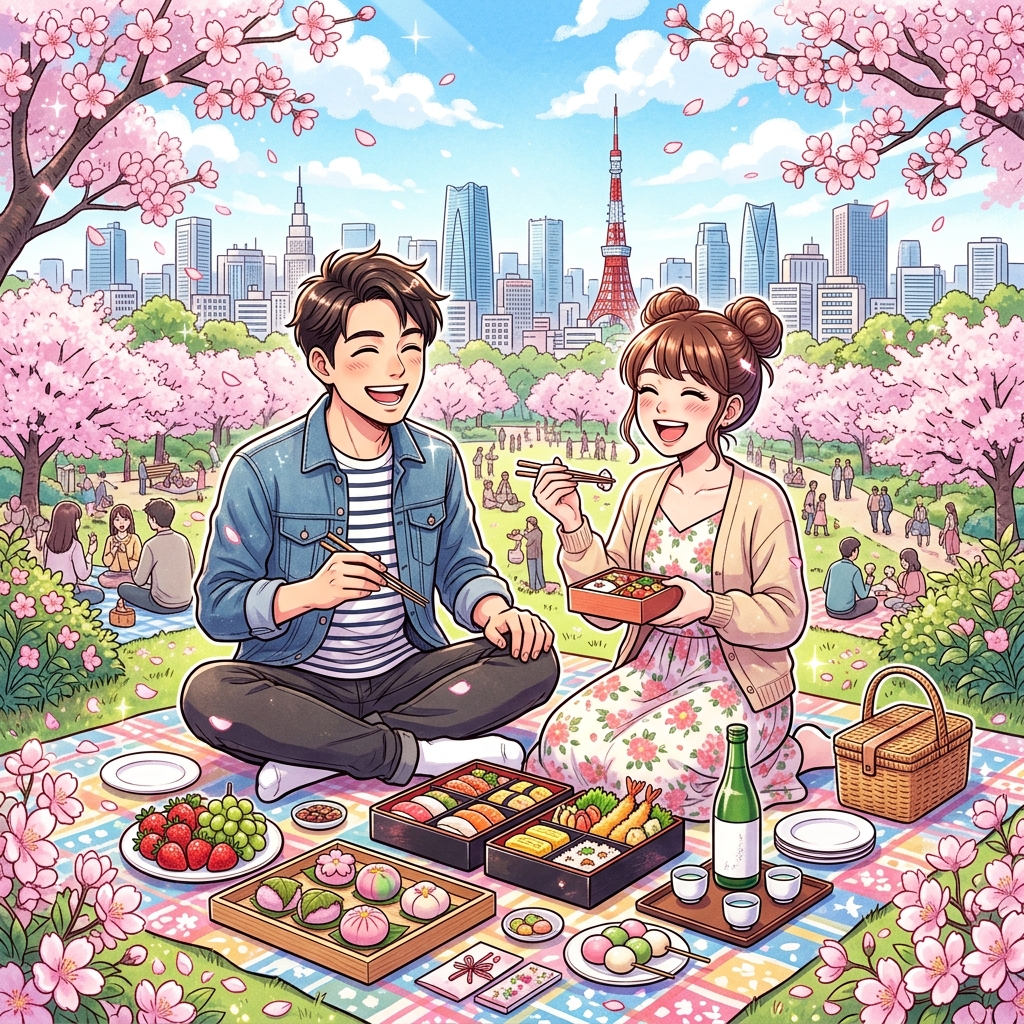
One of the best ways to enjoy depachika food is to assemble a “luxury picnic.” Buy an assortment of items — a premium bento, some fruit, a couple of wagashi, perhaps a small bottle of sake — and take it all to a nearby park. Shinjuku Gyoen, Ueno Park, or the Imperial Palace East Gardens are all perfect spots.
Seasonal Limited Editions
Japanese food culture revolves around the seasons, and depachika reflect this intensely. Each month brings new flavors, ingredients, and packaging designs. If you visit in spring, look for cherry blossom-themed everything. In autumn, it’s all about chestnut, sweet potato, and persimmon. These seasonal items sell out fast, so visit early in the day for the best selection.
Ask for Recommendations
Don’t be shy about asking staff for help. Many department stores now employ multilingual staff or provide translation devices. Phrases like “Osusume wa nan desu ka?” (What do you recommend?) can unlock personalized suggestions you’d never discover on your own.
Beyond Tokyo: Depachika Worth a Detour
While Tokyo dominates the depachika scene, other cities have their own gems:
In Osaka, the Hanshin Department Store Umeda is legendary for its “Ika-yaki” (squid pancake) stand — locals queue for it daily. Osaka’s depachika tend to be more casual and street-food-influenced, reflecting the city’s “kuidaore” (eat until you drop) culture.
In Kyoto, the Takashimaya and Daimaru depachika on Shijo-dori feature an incredible concentration of traditional Kyoto confections, including yatsuhashi and nama-yatsuhashi, the city’s most famous souvenirs.
In Fukuoka, the Iwataya and Hakata Hankyu depachika showcase Kyushu’s distinct food culture — mentaiko (spicy cod roe), Hakata ramen kits, and local shochu selections.
Depachika and the Changing Travel Landscape in 2026
A few practical notes for visitors in 2026:
Japan’s tax-free shopping system is scheduled for a major overhaul in November 2026, shifting to an airport-based refund model. Until then, the current system remains in place — but note that most food items at depachika are consumable goods and may have different tax-free thresholds. Check with the department store’s tax-free counter (usually on an upper floor) for current rules.
Also, if you’re visiting during Golden Week (April 29 – May 6), expect depachika to be busier than usual as Japanese families stock up on omiyage for their travels. The upside? Even more seasonal limited-edition items will be available.
Finally, many department stores now accept major international credit cards, and some even offer WeChat Pay and Alipay. Cash is still king at a few traditional vendors, so keep some yen on hand just in case.
Your Depachika Adventure Awaits
A visit to a Japanese depachika is not just about food — it’s about experiencing a culture that elevates everyday eating into an art form. It’s about watching a craftsman hand-fold a wagashi with the same reverence a jeweler would handle a diamond. It’s about discovering that a simple bento box can be as visually stunning as a gallery painting.
So the next time you’re in a Japanese city, skip the elevator to the fashion floors. Take the escalator down instead. Follow the crowds, follow the aromas, and prepare to be amazed.
Your stomach — and your Instagram feed — will thank you.