What Exactly Is a Matsuri?
If you walk through any neighborhood in Tokyo between late April and mid-May, there is a good chance you will hear the deep pulse of a taiko drum echoing through the streets before you see anything at all.
That sound is the heartbeat of a matsuri.
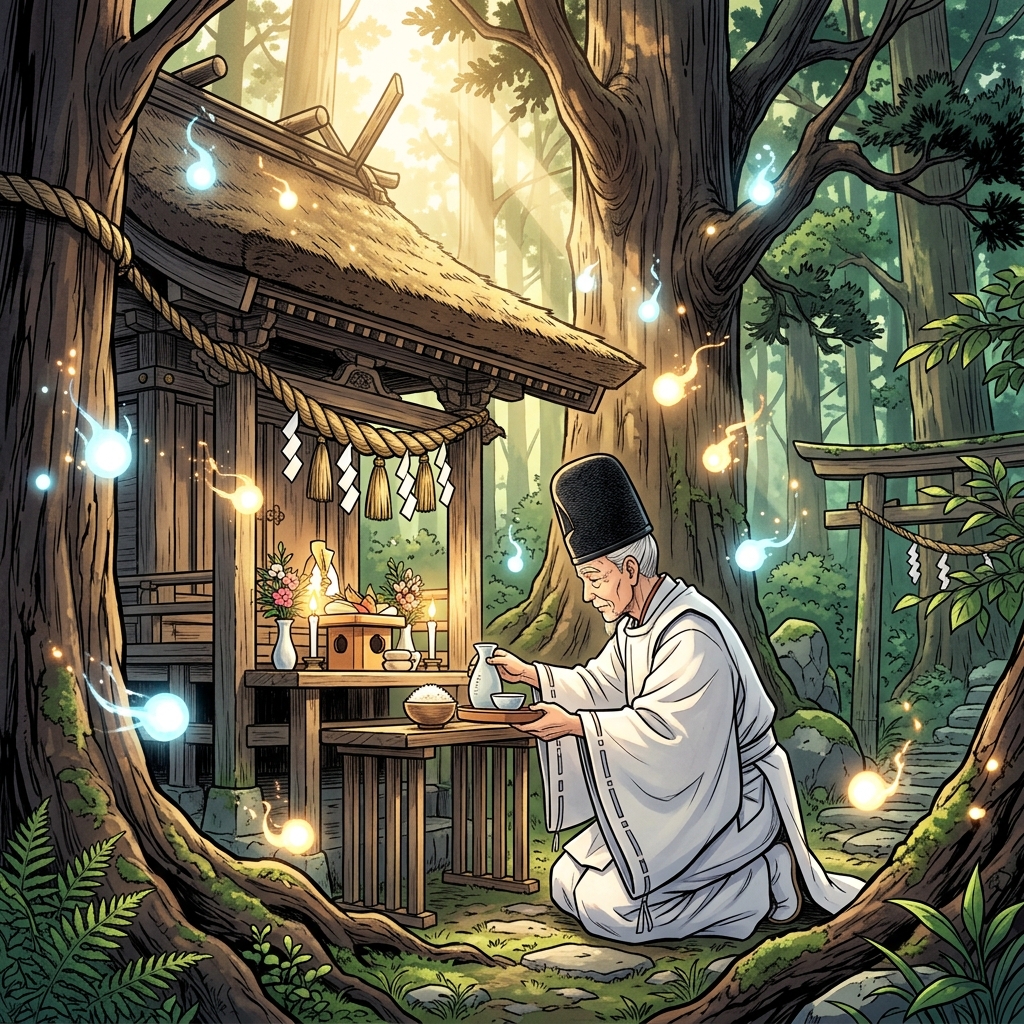
The word “matsuri” (祭り) comes from the verb “matsuru” (祀る), meaning “to worship” or “to serve the gods.” At its root, every matsuri is a conversation between people and the kami — the spirits of Shinto belief that are thought to dwell in nature, in rivers, mountains, ancient trees, and even certain rocks.
Thousands of years ago, communities across Japan held rituals to pray for good harvests in spring and give thanks for the crops gathered in autumn. Music, dance, and offerings of rice and sake were presented to please the kami and strengthen the bond between the human world and the divine.
In fact, the ancient Japanese word for “government” was matsurigoto (政) — literally “the affairs of the festival.” Governing and worshipping were one and the same.
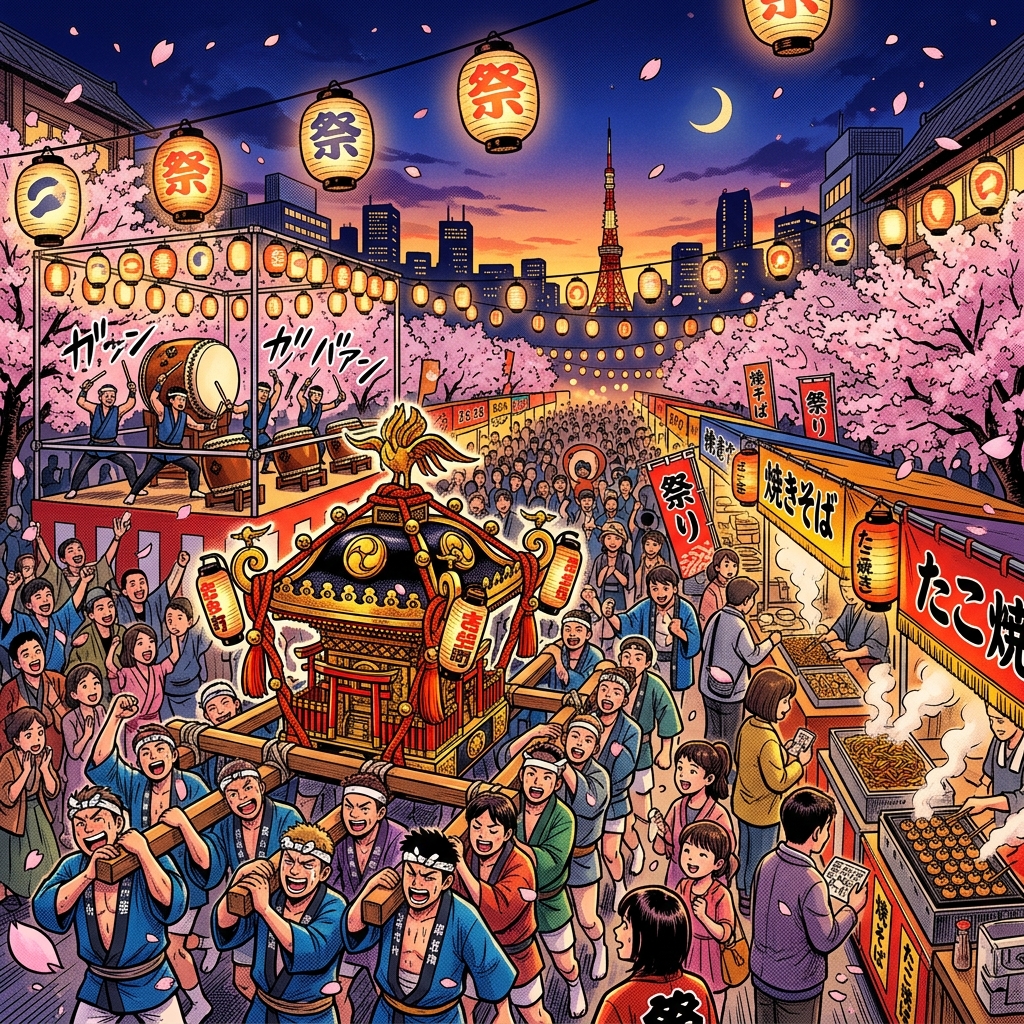
Over centuries, these sacred rituals grew into the spectacular community celebrations we see today: parades of portable shrines called mikoshi, towering festival floats called dashi, thundering taiko drums, and streets lined with food stalls called yatai.
But here is the key thing most visitors miss: every matsuri still has two layers. There is the solemn, sacred ritual performed by Shinto priests — purification, offerings, and prayers that take place quietly, often out of public view. And then there is the joyous, exuberant celebration designed not just for the community, but for the entertainment of the kami themselves. The gods, the Japanese believe, enjoy a good party too.
How Matsuri Are Changing — And Why That Matters to You
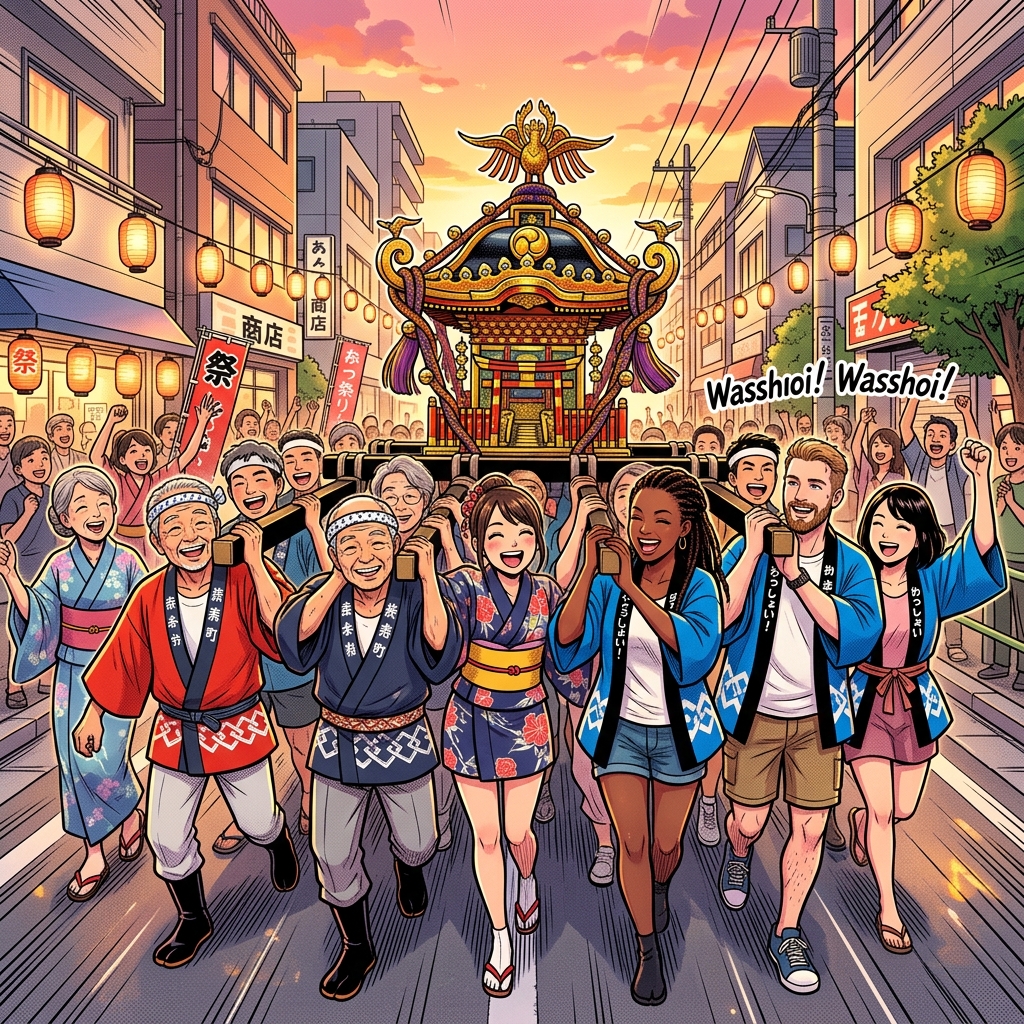
Japan’s festivals are in the middle of a quiet revolution, and understanding it will make your experience far richer.
For decades, Japan’s rural communities have faced a slow crisis: young people move to cities, populations shrink, and the people who once carried the mikoshi and organized the rituals grow older. Finding enough “担ぎ手” (担ぎ手, mikoshi carriers) has become a genuine struggle for many neighborhoods.
The result? Festivals that existed for centuries face the real possibility of disappearing.
But instead of fading away, many communities have responded with remarkable openness. Rules that once limited participation — including age, gender, and residency requirements — are being relaxed. Women are now carrying mikoshi in communities where it was traditionally forbidden. Festivals that once fell on strict calendar dates have shifted to weekends so more people can attend.
And increasingly, international visitors are being welcomed not just as spectators, but as participants.
In 2025 and 2026, programs like Fukuoka Prefecture’s “Regional Festival Support Squad” (地域伝統行事お助け隊) began matching volunteers — including foreign residents and visitors — with festivals that need extra hands. Several Tokyo neighborhoods now offer multilingual instructions so that visitors can join in carrying the mikoshi safely.
This is not tourism. This is cultural preservation through shared experience. When you join a matsuri today, you are not watching a museum exhibit — you are helping to keep a living tradition alive.
Your Spring Festival Calendar: Late April to Mid-May 2026
Tokyo’s matsuri season starts heating up in late April and reaches a crescendo through Golden Week and into mid-May. Here are the festivals you should not miss.
Kurayami Matsuri — The Darkness Festival (April 30 – May 6)
Location: Okunitama Shrine, Fuchu, Tokyo
Access: Keio Line to Fuchu Station (about 30 minutes from Shinjuku)
Admission: Free
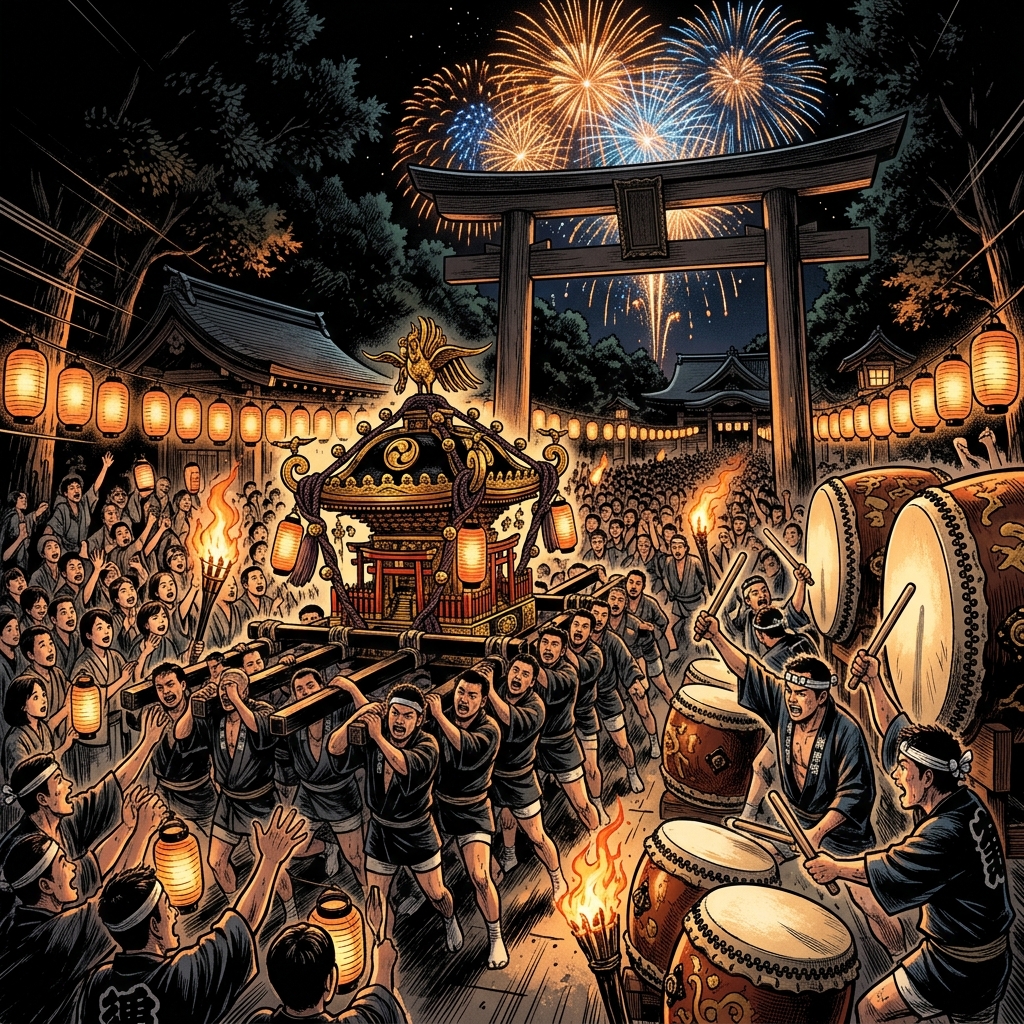
Kurayami Matsuri is one of the oldest festivals in the Kanto region, and its name alone tells a story. “Kurayami” means “darkness.” Historically, the portable shrines were moved in total darkness so that no human eye could gaze upon the kami. Today, the processions are illuminated, but the atmosphere remains deeply spiritual and thrilling.
The festival runs for a full week, but the main events for visitors are concentrated between May 3 and May 5:
May 3: A grand float parade through the streets (18:00–20:00), followed by traditional horseback demonstrations around 20:00.
May 4: The Mando lantern performance (12:30–14:00), the dramatic Drumming Ceremony (17:00–18:00), and another float parade (18:00–21:00).
May 5 (the main event): Eight massive mikoshi are carried through the shrine grounds starting at 18:00, accompanied by earth-shaking taiko drums. Fireworks signal the start. This is the night to be there.
May 6: The closing ceremony takes place at dawn, starting as early as 04:00.
Pro tip: Fuchu is outside central Tokyo, so the crowds are a fraction of what you will find at Asakusa festivals, yet the spectacle is every bit as powerful.
Meiji Jingu Spring Grand Festival (Late April – May 3)
Location: Meiji Jingu Shrine, Harajuku, Shibuya
Access: JR Yamanote Line to Harajuku Station
Admission: Free
While other festivals explode with noise and energy, the Meiji Jingu Spring Grand Festival offers something more contemplative. Set within the vast, forested grounds of one of Tokyo’s most important shrines, this festival features traditional performing arts on an open-air stage.
You can watch Noh theater, Kyogen comedy, and Bugaku — the ancient court dance of the Japanese imperial household — all performed in the fresh spring air beneath towering camphor trees. These are art forms that predate most Western theater traditions, and seeing them here, in their spiritual context, is an experience that no concert hall can replicate.
Because it falls during the early days of Golden Week, the atmosphere is relaxed and almost meditative. Combine your visit with a walk through the shrine’s iris garden (at its best in early May) for a morning that feels a world away from the Harajuku crowds just outside the gate.
Sanja Matsuri — Tokyo’s Wildest Festival (May 15–17)
Location: Asakusa Shrine and surrounding streets, Taito-ku
Access: Tokyo Metro Ginza Line or Toei Asakusa Line to Asakusa Station
Admission: Free
If Kurayami Matsuri is spiritual and Meiji Jingu is elegant, Sanja Matsuri is pure, unfiltered energy. This is Tokyo’s most famous neighborhood festival, and it draws nearly two million people over three days.
The festival honors the three founders of Senso-ji Temple — the same ancient temple that anchors the Asakusa neighborhood. Every year, its 44 neighborhood associations bring out their own mikoshi for blessing and parading through the streets.
Friday (May 15): The festival begins with the Daigyoretsu Parade — a spectacular procession featuring people in Edo-period costumes, traditional musicians, and geisha.
Saturday (May 16): Nearly 100 mikoshi from Asakusa’s neighborhoods are carried to the shrine for blessing before being paraded through packed streets.
Sunday (May 17): The climax. The three main mikoshi belonging to Asakusa Shrine itself are carried out at dawn and paraded through the district until evening. The energy is extraordinary — shouting crews, swaying shrines, and crowds pressing in from every side.
Sanja Matsuri is the festival that best captures the raw, communal spirit of Tokyo. It is loud, sweaty, overwhelming, and completely unforgettable.
Festival Survival Kit: What to Know Before You Go
What to Bring
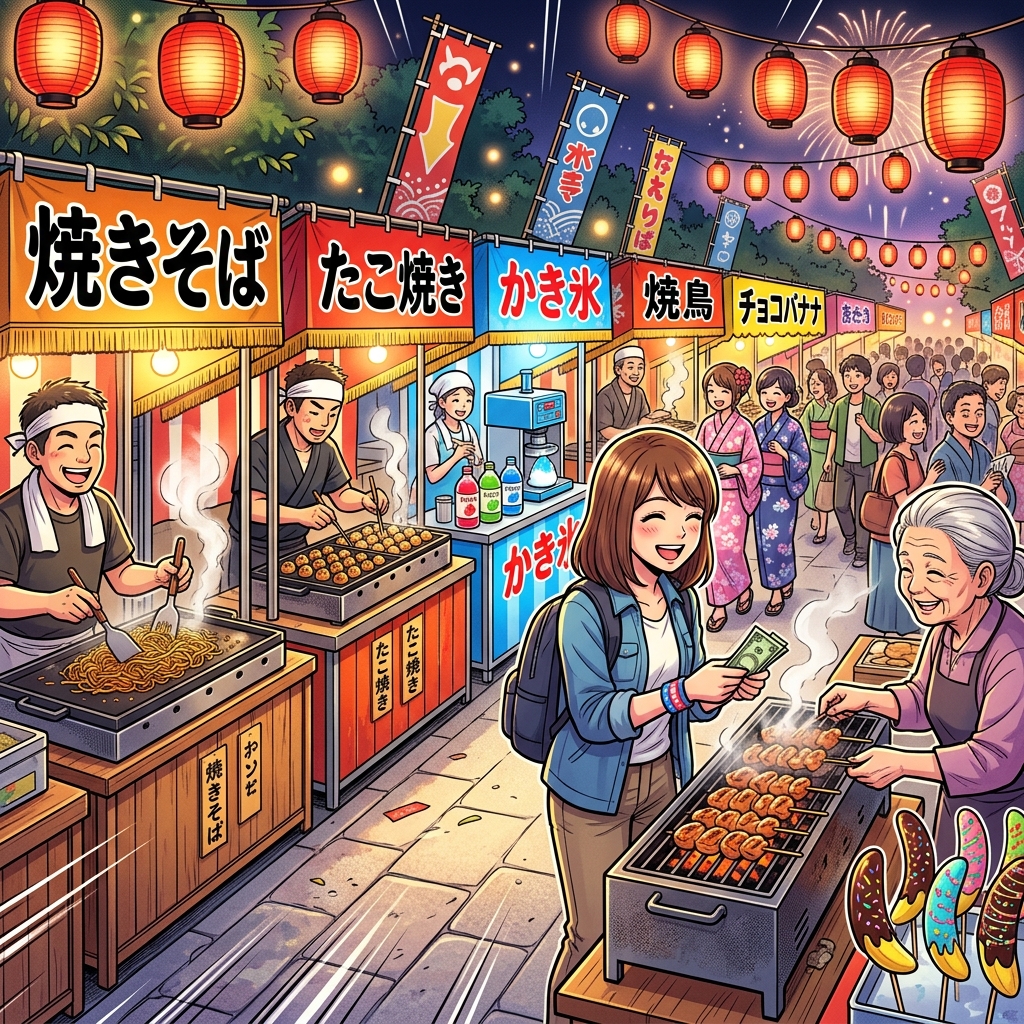
Cash. Many yatai (food stalls) do not accept credit cards or IC cards. Bring at least 3,000–5,000 yen in small bills and coins.
A light towel or tenugui (手ぬぐい). These traditional cotton cloths serve as sweat rags, sun protection, and even headbands during festivals. You can buy them at convenience stores or 100-yen shops.
Comfortable shoes. You will be on your feet for hours, often on uneven ground. Skip the fashionable footwear and bring your most reliable sneakers.
A portable phone charger. Maps, translations, and train schedules will drain your battery fast in crowded festival areas.
Sunscreen and a hat. Late April and May can be surprisingly warm in Tokyo, especially when you are standing in direct sunlight for extended periods.
What to Eat
Festival yatai are half the fun. Look for these classic street foods:
Yakisoba (焼きそば) — stir-fried noodles with savory sauce, the quintessential festival food.
Takoyaki (たこ焼き) — crispy-on-the-outside, molten-on-the-inside octopus balls from Osaka that show up at every matsuri.
Kakigori (かき氷) — shaved ice drenched in syrup. The strawberry and melon flavors are classics.
Yakitori (焼鳥) — grilled chicken skewers with tare sauce or salt. Follow the smoke.
Choco-banana (チョコバナナ) — a frozen banana dipped in chocolate and covered in sprinkles. It looks ridiculous and tastes perfect.
Etiquette That Matters
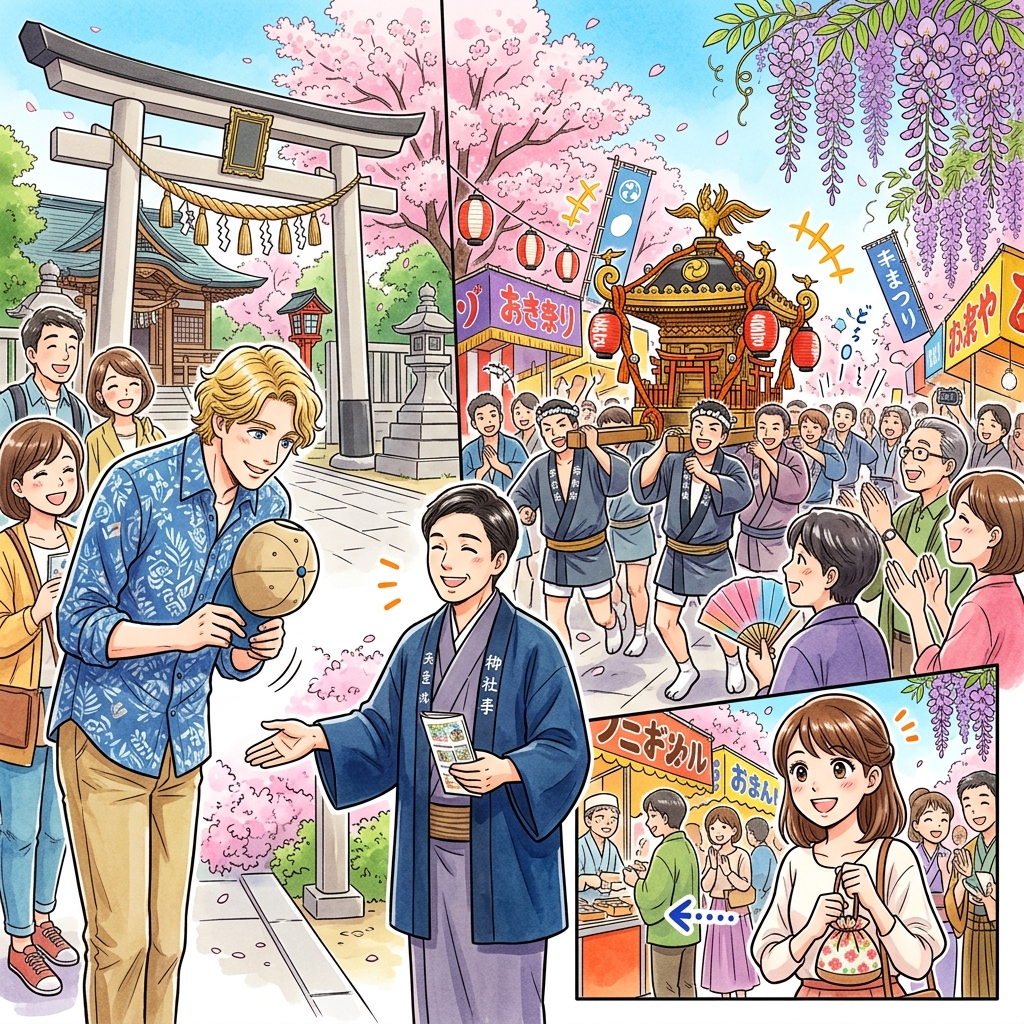
Watch from the sides. Never step in front of a mikoshi or block a procession path. The carriers are moving heavy shrines at speed, and the momentum is dangerous.
Follow festival staff instructions. They are there for safety and are usually easy to spot in happi coats or vests.
Ask before joining in. If a mikoshi team invites you to help carry, say yes — it is an incredible honor. But do not jump in uninvited. Each team has specific rules and rhythms.
Be mindful of shrine spaces. The shrine grounds are sacred. Remove hats near the main hall, bow respectfully, and save loud conversations for the festival streets outside.
Carry your trash. Japan’s festivals generate waste, but you will rarely see a trash can. Bring a small bag and take your garbage with you.
Beyond the Big Festivals: Hidden Neighborhood Matsuri
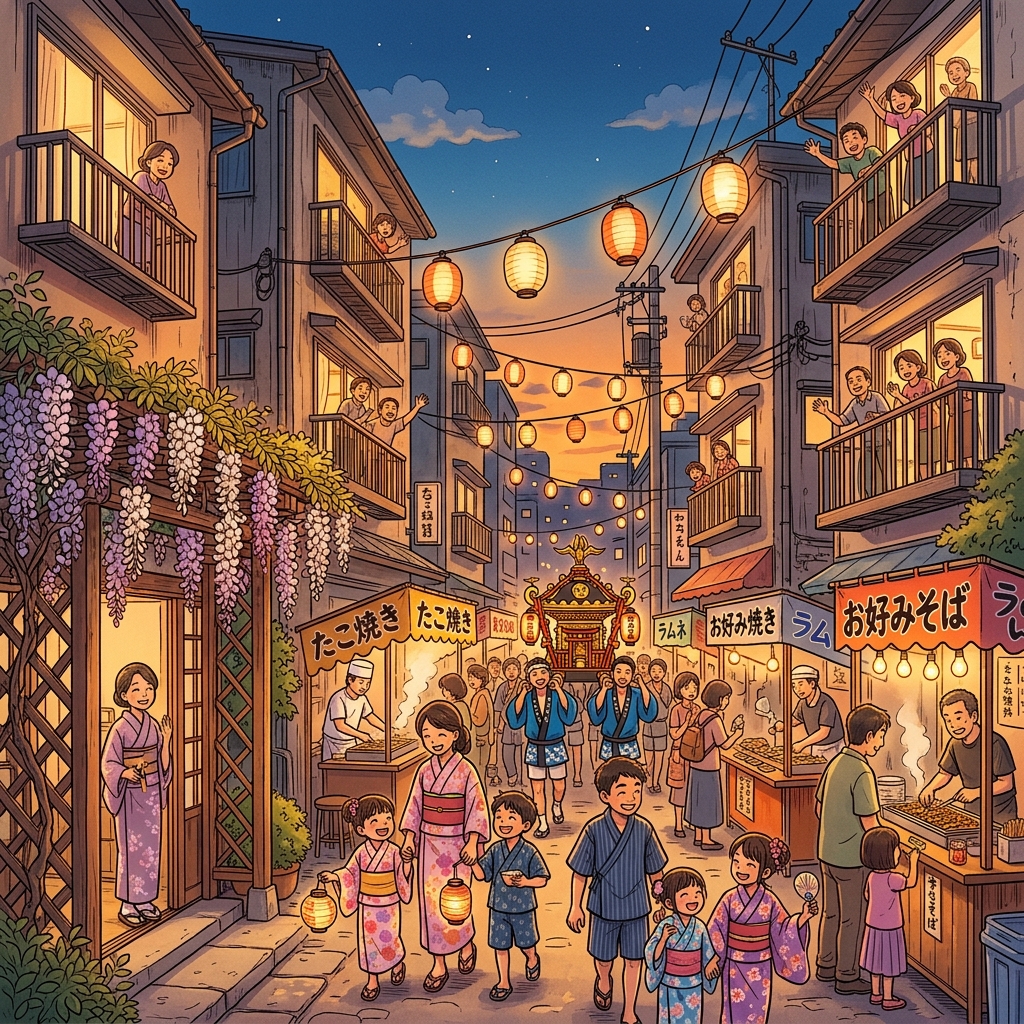
Here is a secret that repeat visitors to Tokyo learn: some of the most memorable matsuri are the smallest ones.
In nearly every Tokyo neighborhood, local shrines hold their own seasonal festivals during this period. These are intimate affairs — a few mikoshi, a handful of food stalls, and genuine neighborhood pride. You will not find them in guidebooks, and you may be the only foreign visitor there.
Hanazono Shrine Festival (May 22–25, Shinjuku) is a good example: a traditional matsuri right in the heart of Tokyo’s entertainment district, with a surprisingly old-school atmosphere.
To discover these hidden festivals, check the bulletin boards at any local train station. Posters are usually in Japanese, but the dates, times, and colorful mikoshi illustrations are unmistakable. You can also ask at your hotel front desk — staff often know about neighborhood events happening that week.
Making the Connection
When you stand on a Tokyo street corner at dusk, watching a mikoshi sway down a narrow lane while drums echo off apartment buildings and neighbors cheer from their balconies, you are witnessing something that has happened in this country for well over a thousand years.
The costumes change. The participants change. The neighborhoods grow and shrink. But the fundamental act — a community gathering to honor something larger than itself, to celebrate being alive in this place, at this time — that remains constant.
That is what a matsuri is. And that is why, of all the things you can do in Japan, standing inside one is something you will carry with you long after you leave.