What Is Onigiri? Japan’s Original Fast Food
Imagine a meal you can carry in one hand, costs less than two dollars, and has been fueling the Japanese people for over two thousand years. That meal is onigiri — a simple ball of rice, shaped by hand, often wrapped in crispy seaweed, and filled with everything from tangy pickled plum to creamy tuna mayo.
Onigiri is not sushi. There is no vinegar in the rice. There is no fish draped on top. It is simpler than that — and in many ways, more beautiful. Onigiri is comfort food that an entire nation grew up eating, from grade-school lunch boxes to late-night convenience store runs.
In 2026, onigiri is having a global moment. Specialty shops are opening in London, Paris, and New York. The Japan Onigiri Association has declared this the era of onigiri as a “world food.” But the best place to taste the real thing is still right here in Japan — whether freshly shaped at a kitchen counter or pulled from the shelf of your nearest konbini.
This guide covers everything: the ancient origins of onigiri, how to make it yourself at home (yes, even your home!), and the wild, wonderful world of convenience store onigiri that will have you trying a new flavor every day of your trip.
A Bite-Sized History: 2,000 Years of Rice Balls
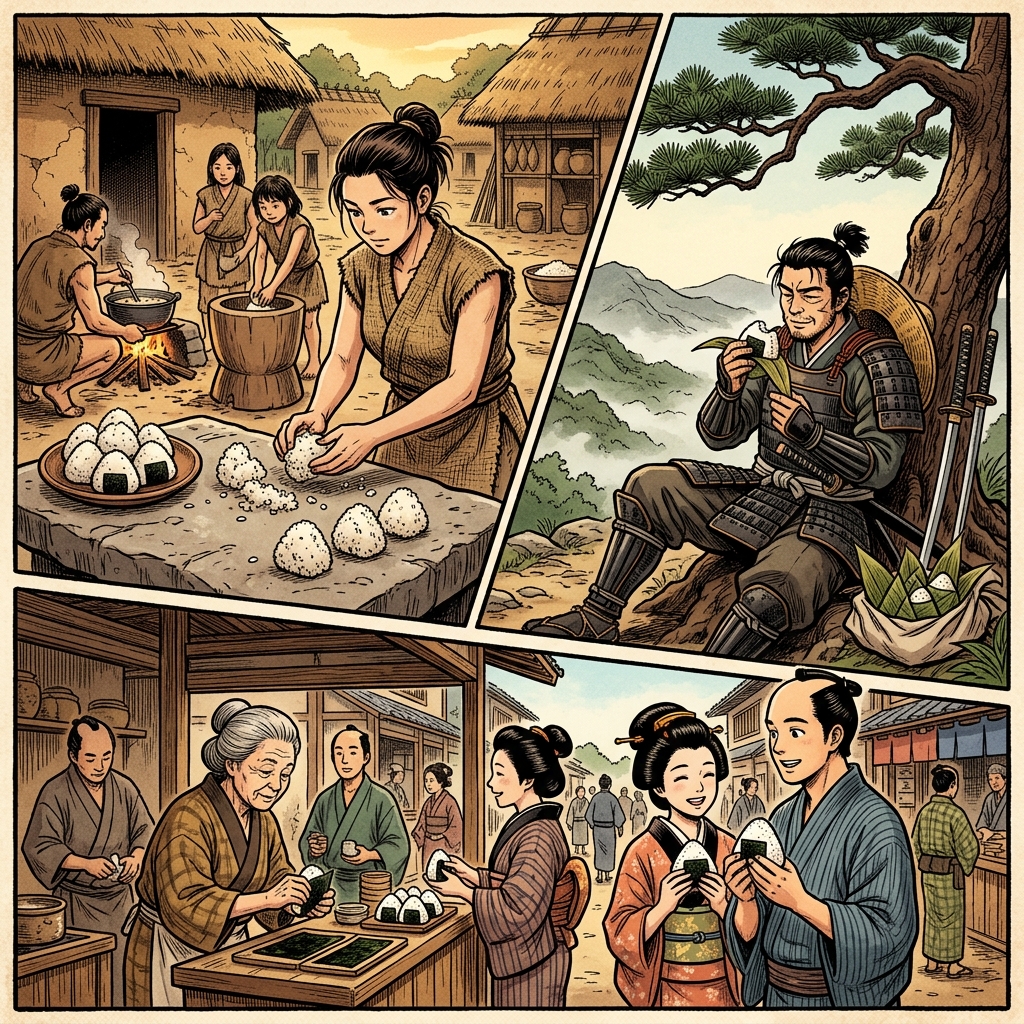
The story of onigiri begins long before Japan had convenience stores, bullet trains, or even chopsticks in every household. Archaeological evidence from the Yayoi period (300 BCE – 300 CE) includes fossilized clumps of rice that appear to have been shaped by hand, suggesting that people were already forming rice into portable lumps for travel and fieldwork.
By the Heian period (794–1185), rice balls called tonjiki were served at aristocratic banquets. Samurai carried them into battle during the Kamakura period (1185–1333) — compact, calorie-dense, and requiring no utensils. Wrapped in bamboo leaves, onigiri was quite literally warrior fuel.
The word “onigiri” itself comes from the verb nigiru, meaning “to grip” or “to press.” Mothers shaped them with their palms and a sprinkle of salt, a gesture of care that continues today. In the Edo period (1603–1868), nori seaweed wrapping became popular as nori farming expanded in Tokyo Bay, giving onigiri its iconic dark-green coat.
The modern revolution came in 1978, when Seven-Eleven Japan introduced the world’s first factory-made convenience store onigiri, complete with a clever plastic wrapper that kept the nori separate from the rice until the moment you opened it. That crispy-meets-sticky sensation — engineered by packaging designers — became a daily ritual for millions of Japanese workers and students.
Today, over 5 billion onigiri are sold through Japanese convenience stores every year. And what was once a humble peasant food now sits proudly alongside sushi and ramen as one of Japan’s most recognized culinary exports.
Make It at Home: The Art of Shaping Onigiri
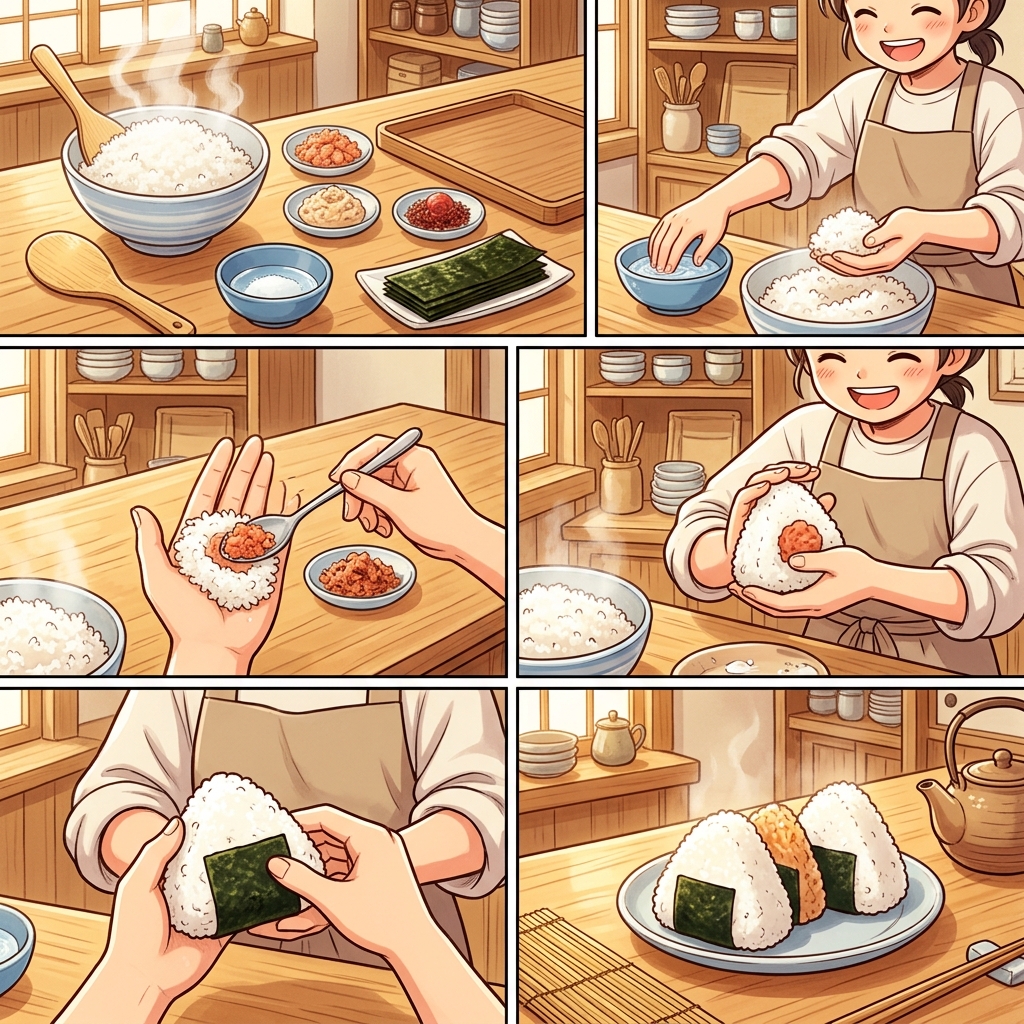
Here is a secret that many visitors to Japan do not realize: onigiri is one of the easiest Japanese dishes you can make at home, anywhere in the world. You do not need special equipment, years of training, or hard-to-find ingredients. All you need is rice, salt, water, and something tasty to put inside.
What You Need
Rice: Use short-grain Japanese rice (look for brands like Koshihikari or Calrose at your local Asian grocery). Long-grain rice will not stick together — this is non-negotiable.
Salt: Fine sea salt works best. You will wet your hands with salted water before shaping.
Nori: Roasted seaweed sheets, cut into strips or rectangles. Buy the kind labeled yaki-nori.
Fillings: Start with these beginner-friendly classics:
- Salted salmon (shake): Grill or pan-fry a salmon fillet with salt, then flake it with a fork.
- Tuna mayo: Mix canned tuna (drained) with Japanese mayo (Kewpie brand is ideal) and a tiny splash of soy sauce.
- Umeboshi (pickled plum): Just one whole plum in the center. Bold, sour, and deeply traditional.
- Okaka (bonito flakes): Toss katsuobushi flakes with a drizzle of soy sauce.
Step-by-Step: Shaping Your First Onigiri
- Cook the rice and let it cool until it is warm but not hot. You should be able to handle it comfortably.
- Prepare a bowl of salted water (about one teaspoon of salt per cup of water). Wet your hands thoroughly — this prevents sticking and seasons the surface.
- Scoop about 100–120 grams of rice (roughly half a cup) onto one palm.
- Make a small well in the center and place your filling inside — about one tablespoon is plenty.
- Close the rice around the filling and begin shaping. Cup one hand into an “L” shape and press gently with the other. Rotate the ball 90 degrees and press again. Repeat until you have a firm triangle.
- Wrap with nori while the rice is still slightly warm so it sticks. A strip across the bottom is the classic style.
The triangle shape is traditional, but do not stress about perfection. Round onigiri, flat discs, even cylinder shapes are all perfectly acceptable. The most important thing is gentle, confident pressure — squeeze too hard and the rice becomes dense and unpleasant; too soft and it falls apart in your bag.
Pro Tips for Your Bento Box
Making onigiri for a packed lunch? Wrap each one individually in plastic wrap to keep it fresh. If you are adding nori, wrap it separately and attach it just before eating to keep it crispy.
Onigiri keeps well at room temperature for about 4–6 hours (longer in cooler weather). For food safety in warm weather, consider using fillings with higher salt content like umeboshi, which has natural preservative properties — this is exactly why samurai chose it centuries ago.
Here is the real message: try making onigiri at home, wherever you live. It is a meditative, satisfying process. There is something deeply grounding about shaping food with your bare hands, and it connects you to a tradition that stretches back thousands of years. Your first attempt might be lumpy. Your second will be better. By the fifth, you will be packing them for picnics.
Konbini Onigiri: Your Daily Flavor Adventure

Now, let us talk about where most people in Japan actually get their onigiri — the konbini (convenience store). With over 56,000 locations nationwide, there is literally one on every other block in most cities. The big three — 7-Eleven, FamilyMart, and Lawson — each stock dozens of varieties, refreshed multiple times per day.
A standard onigiri costs between ¥120 and ¥180 (roughly $0.80–$1.20 USD). That makes it one of the cheapest satisfying meals in a country where restaurant prices can add up fast — especially with Tokyo’s 2026 taxi fare increase and Kyoto’s new lodging tax making budgeting more important than ever.
The “1-2-3” Unwrapping Method
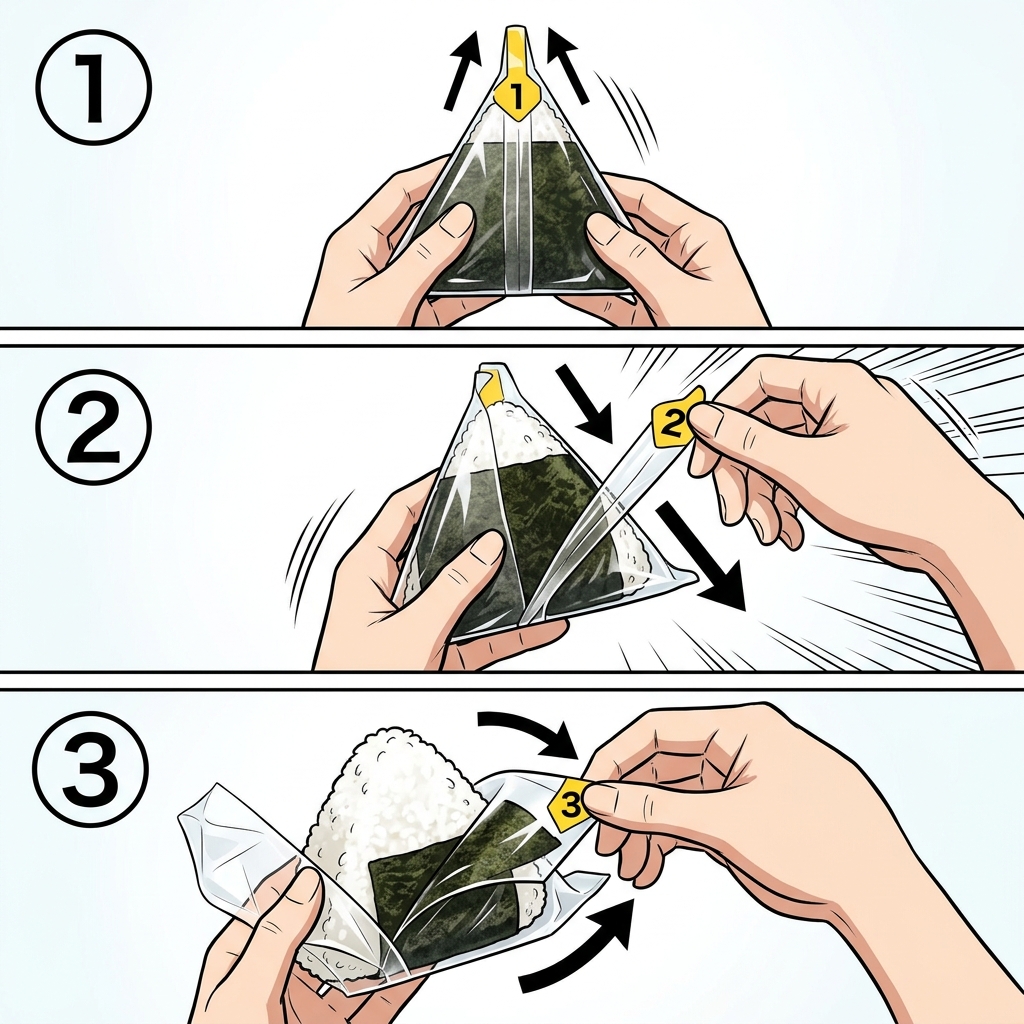
Every konbini onigiri comes in a brilliant piece of packaging engineering. The plastic wrapper keeps the nori seaweed separate from the rice until you open it, so the nori stays perfectly crispy. Look for the numbered tabs:
- Pull “1” — Tear the top strip straight down to the bottom of the wrapper.
- Pull “2” — Slide the right side of the wrapper away from the rice.
- Pull “3” — Slide the left side away. The nori is now hugging the rice.
It takes about three seconds once you get the hang of it. First-timers often rip the nori or accidentally squeeze the rice — everyone has been there. By your third onigiri, you will be a pro.
Classic Flavors You Cannot Miss
These are the all-time bestsellers that have been staples for decades:
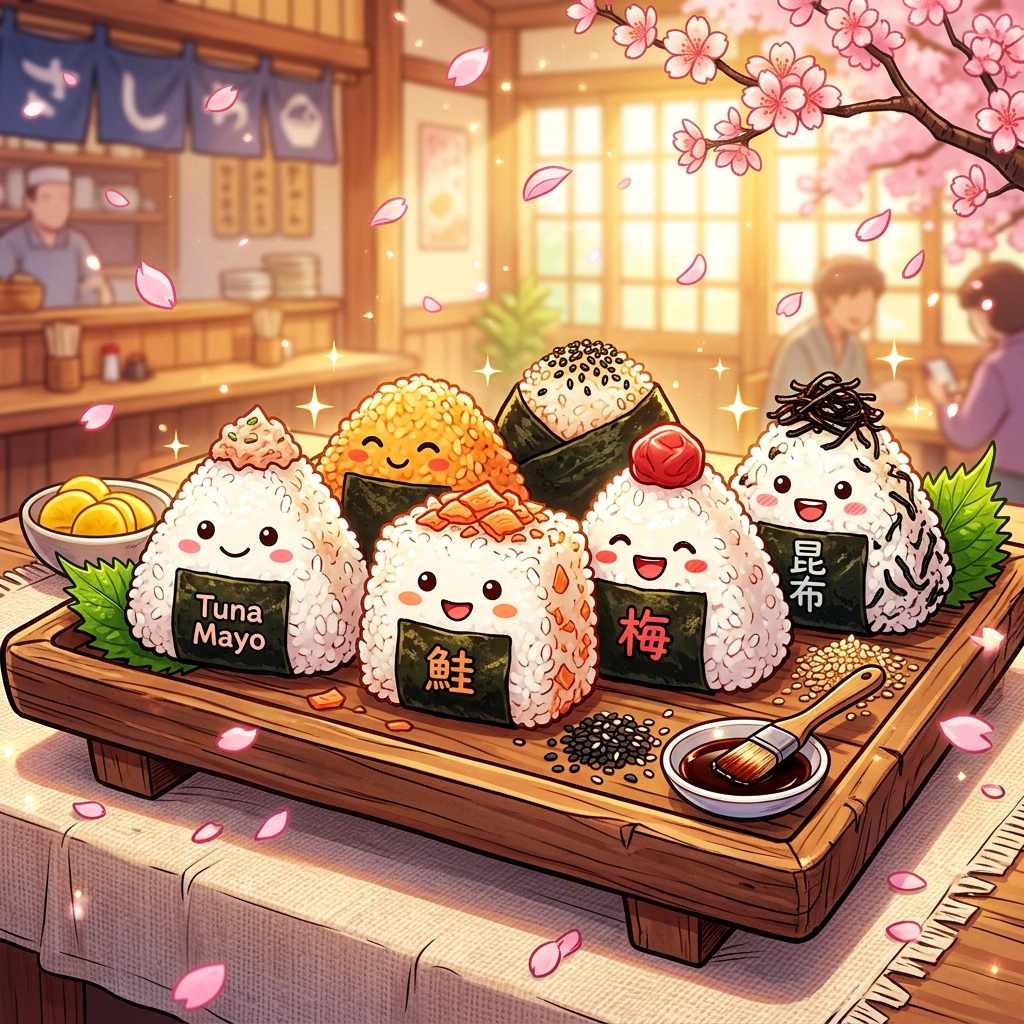
- Tuna Mayo (ツナマヨ): The undisputed champion. Creamy, savory, universally loved. Available at every single konbini in Japan.
- Salmon (鮭 / シャケ): Grilled, salted salmon flakes. Simple, comforting, and the flavor that Japanese people associate most with “home.”
- Umeboshi (梅干し): A single pickled plum in the center. Intensely sour and salty — an acquired taste, but incredibly refreshing in hot weather.
- Kombu (昆布): Strips of kelp simmered in sweet soy sauce. Umami-rich and subtly sweet.
- Mentaiko (明太子): Spicy pollock roe. Tiny, pink, and packed with a gentle chili kick.
Wild and Wonderful: Konbini Exclusives & Seasonal Surprises
This is where it gets fun. The big three convenience store chains compete fiercely on limited-edition and premium onigiri, and the creativity is remarkable. Here are some of the varieties that you will only find at konbini — and that most home kitchens would never attempt:
- Nikumaki (肉巻き): Rice wrapped in thin slices of grilled pork belly, glazed with sweet soy sauce. It is essentially a meat-wrapped rice cylinder, and it has no business being this good at ¥160.
- Shrimp Mayo with Wasabi: A twist on the classic, with a creamy wasabi kick that surprises on the first bite.
- Teriyaki Chicken with Cheese: Melty processed cheese nestled with teriyaki chicken inside the rice. Very un-traditional. Very delicious.
- Mixed Rice (Takikomi Gohan): The rice itself is seasoned and cooked with mushrooms, carrots, and dashi broth — no nori, no central filling, just pure autumn flavors.
- Premium Ikura (Salmon Roe): Glistening orange pearls of salmon roe that pop in your mouth. Usually ¥250–¥300 — the luxury tier.
- Yaki-Onigiri (焼きおにぎり): Grilled with a soy sauce glaze, giving it a crispy, caramelized surface. No nori. Pure smoky satisfaction.
The beauty of konbini onigiri is that they do what home cooks typically do not: they experiment constantly. Every month brings new seasonal flavors — sakura shrimp in spring, grilled eel in summer, chestnut rice in autumn, and crab in winter. Trying a new flavor every day is one of the genuine small joys of traveling in Japan.
Which Konbini Has the Best Onigiri?
This is fiercely debated in Japan, but here is the general consensus:
- 7-Eleven: Known for the best rice quality. They use a proprietary blend and a cooking method that keeps the grains fluffy. Their basic salmon and tuna mayo are considered the benchmark.
- Lawson: Excels at premium and creative flavors. Their “Akuma no Onigiri” (Devil’s Rice Ball) — with tempura bits, mentsuyu sauce, and green onion mixed into the rice — became a viral sensation.
- FamilyMart: Offers strong limited-edition collaborations with regional producers. Their hand-formed style onigiri (te-nigiri) has a looser, more homemade feel.
Our advice? Visit all three. They are everywhere, and comparing their takes on the same flavor (tuna mayo is the classic test) is a surprisingly fun and inexpensive activity.
Beyond the Triangle: Regional Onigiri Styles
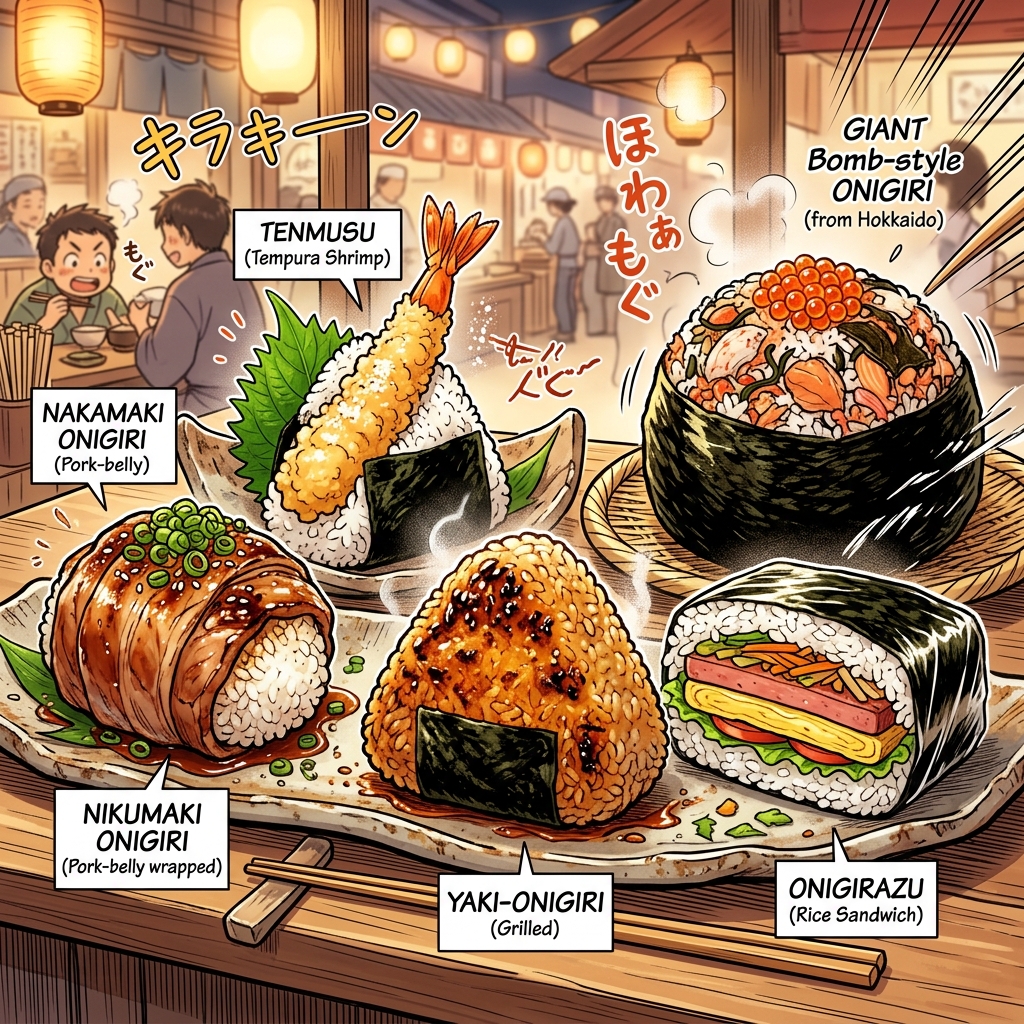
As you travel around Japan, you will discover that onigiri takes different forms depending on the region:
- Tenmusu (Nagoya): A small onigiri with a whole tempura shrimp sticking out of the top. Crispy, playful, and iconic.
- Onigirazu (nationwide trend): The “onigiri sandwich” — rice and fillings pressed flat between two sheets of nori, then cut in half to reveal a colorful cross-section. Popular for bento because it is easy to make and photograph.
- Yawatahama-style (Ehime): Wrapped in a thin egg crepe instead of nori, with sweet-savory fillings.
- Bomb Onigiri (Hokkaido): Oversized, fist-sized rice balls packed with generous fillings — the “kanketsu onigiri” (meal-complete onigiri) concept that is trending in 2026.
Practical Tips for Onigiri Lovers in Japan
Here are some useful tips that will enhance your onigiri experience:
- Breakfast sorted: Grab two onigiri and a bottle of green tea at any konbini for under ¥400. That is a complete Japanese breakfast for less than a cup of coffee at most cafes.
- Read the labels: Most konbini onigiri now have English ingredient labels alongside the Japanese. If not, the picture on the packaging is usually a reliable guide.
- Dietary notes: Vegetarian options are limited — most fillings involve fish or meat. Your safest bet is shio musubi (salt-only rice ball) or kombu (kelp). Always check if the rice itself contains dashi, which is fish-based.
- Pair it right: Onigiri + miso soup from the konbini hot counter = a full meal for under ¥300. Add a side of pickles or a small salad for variety.
- Supermarket onigiri: Do not overlook supermarkets like Aeon, Life, or Seiyu. Their in-store made onigiri, often displayed near the deli section, tend to be larger, slightly cheaper, and sometimes come in region-exclusive flavors that konbini do not carry.
- Night discount: After 7–8 PM, many supermarkets put discount stickers (20–50% off) on their onigiri and bento. Budget travelers, take note.
Your Onigiri Journey Starts Now

Onigiri is more than a snack. It is a window into Japanese culture — the care that goes into cooking perfect rice, the ingenuity of convenience store engineering, the regional pride that produces hundreds of local variations, and the simple human act of shaping food with your hands.
Whether you grab one from a konbini shelf at midnight, order a specialty version at a Tokyo artisan shop, or shape your very first triangle at your own kitchen counter ten thousand kilometers from Japan — you are participating in a tradition that has nourished people for over two millennia.
So try it. Buy three different flavors tomorrow morning. Make a batch at home this weekend. Shape them with your hands. Feel the warmth of the rice. And when someone asks what you are eating, tell them: it is the oldest, cheapest, most perfect portable meal in the world.
Welcome to the world of onigiri.