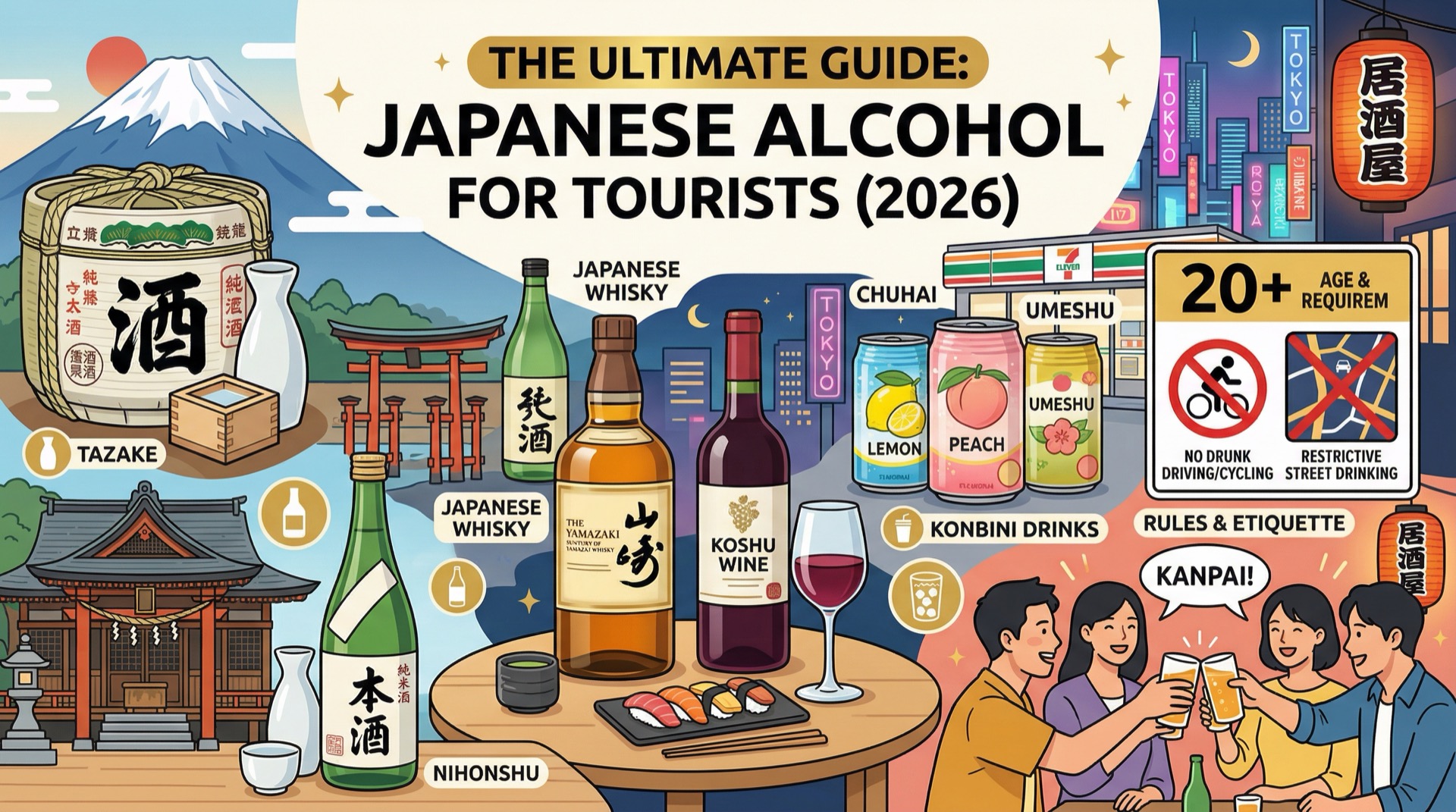
Japan’s drinking culture is as deep and diverse as its history. From traditional brews offered to gods to award-winning modern spirits, exploring Japanese alcohol is a journey in itself.
Whether you are enjoying a high-end dinner or grabbing a late-night drink from a convenience store, here is everything you need to know about navigating the world of Japanese alcohol safely and enjoyably in 2026.
Traditional Japanese Spirits: Sake and Shochu
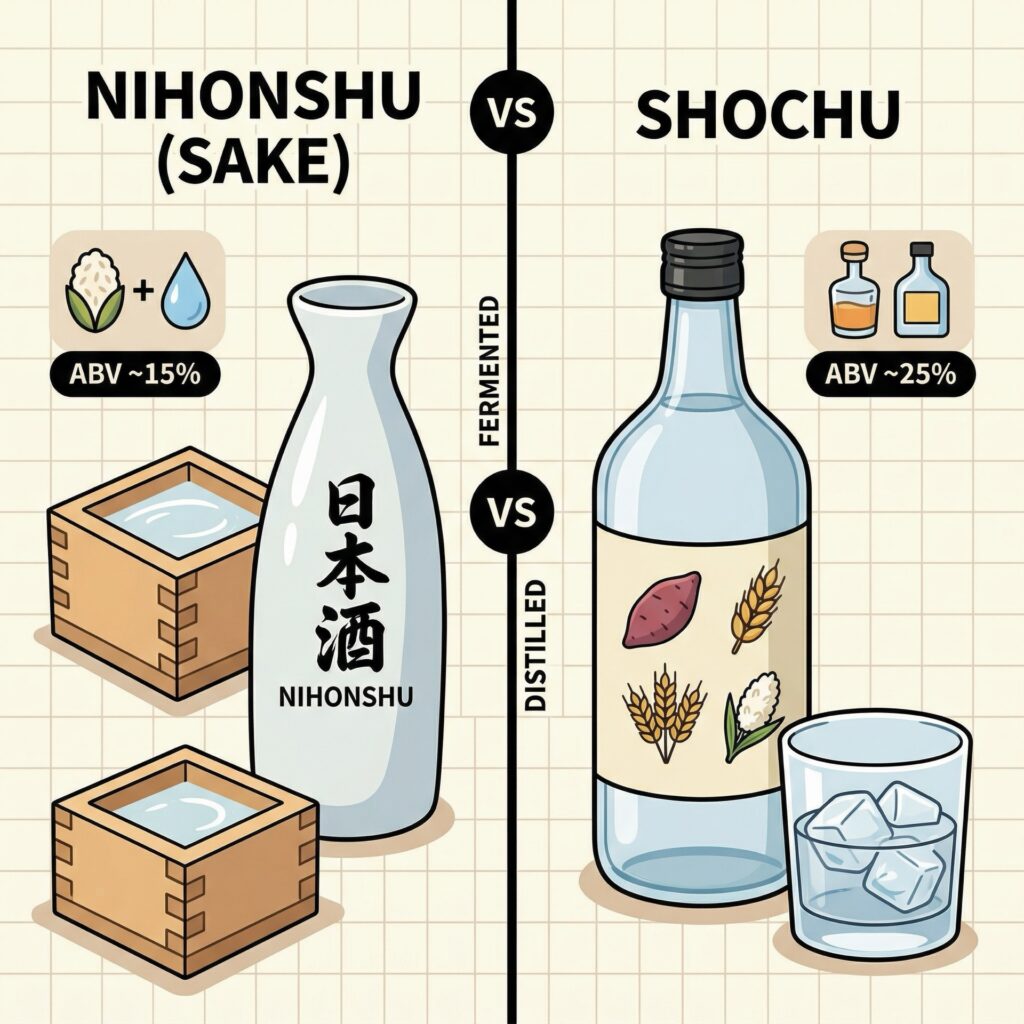
When you think of Japanese alcohol, “Sake” is usually the first word that comes to mind. In Japan, it is officially called “Nihonshu.”
Nihonshu is a fermented rice wine with a history stretching back over a thousand years. Originally brewed in shrines and temples as offerings to the Shinto deities, it evolved into a sophisticated craft. The flavor varies wildly depending on the region, the type of rice, and the purity of the local water.
“Shochu,” on the other hand, is a distilled spirit. While sake has an alcohol content of around 15%, Shochu typically sits around 25%.
With deep historical roots in Japan’s southern island of Kyushu, Shochu can be distilled from sweet potatoes, barley, rice, or even brown sugar. It is usually enjoyed neatly on the rocks, mixed with cold or hot water, or used as a base for mixed drinks.
Modern Mastery: Japanese Whisky and Wine
Japan isn’t just about traditional spirits; it has mastered Western alcohol as well.
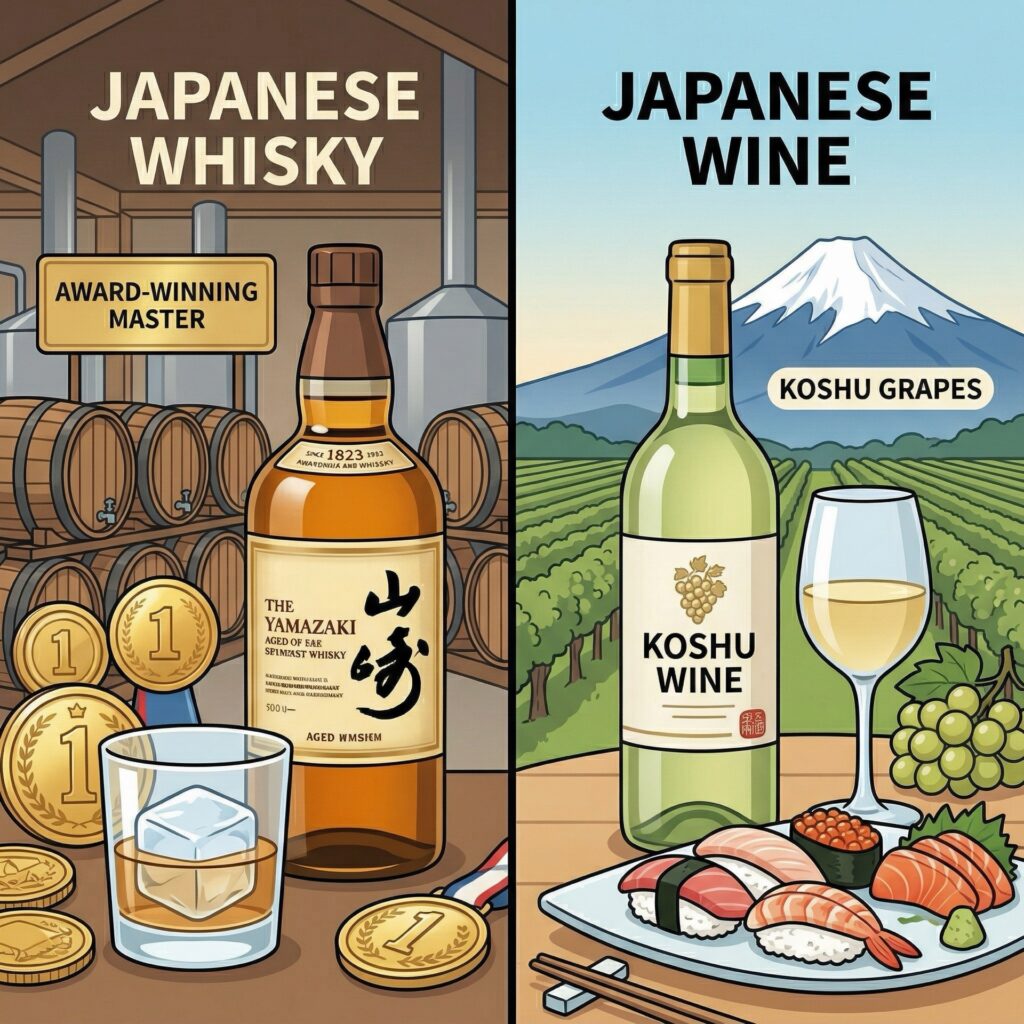
Commercial Japanese whisky production began in the 1920s, heavily inspired by Scottish methods. Today, brands like Suntory and Nikka produce some of the most sought-after and highly awarded whiskies in the world. Their meticulous blending and aging processes have made Japanese whisky a global phenomenon.
Japanese wine is also gaining international recognition. Winemaking in Japan, particularly in the Yamanashi Prefecture, has developed uniquely to match the local climate. Wines made from the indigenous “Koshu” grape are crisp, delicate, and pair perfectly with seafood and sushi.
Supermarket and Convenience Store Finds
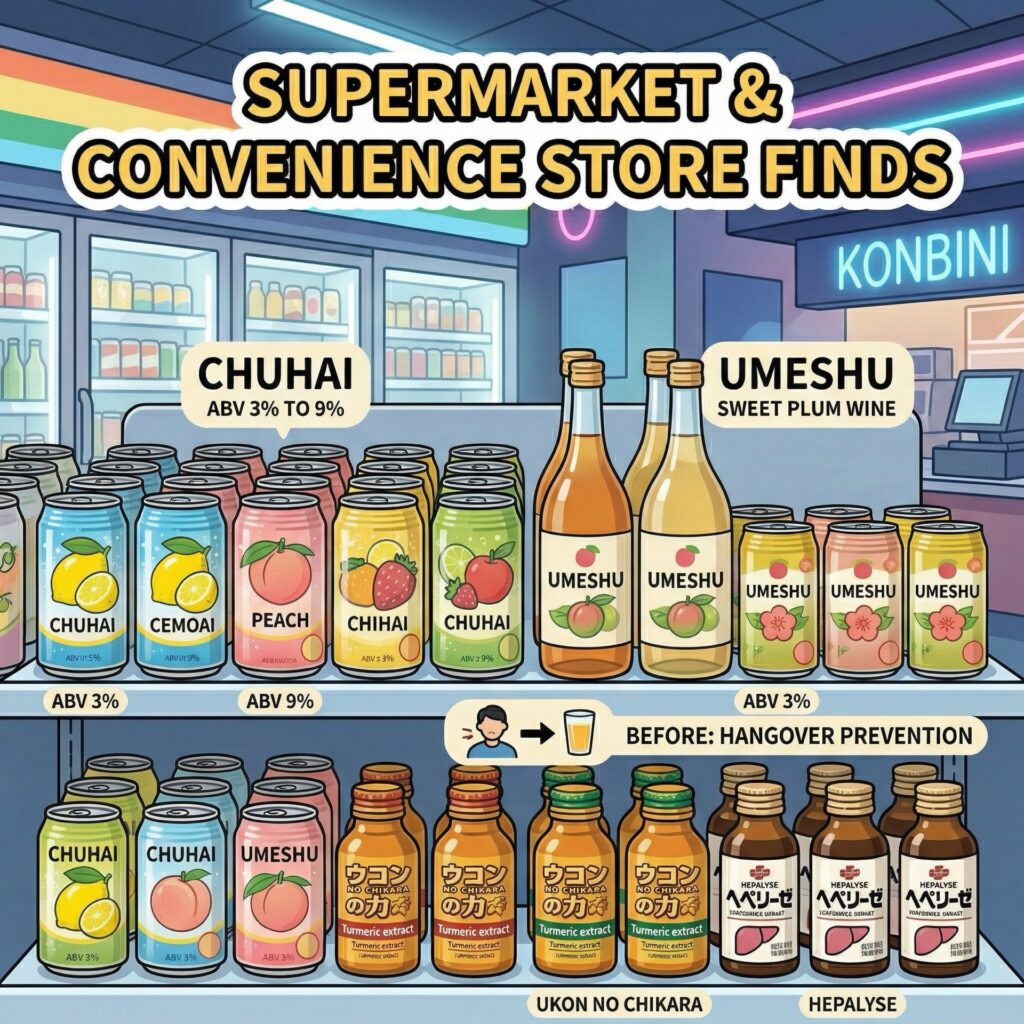
If you visit a Japanese supermarket or convenience store (Konbini), you will be amazed by the endless aisles of colorful, ready-to-drink cans.
Among the most popular choices is “Chuhai,” short for “Shochu Highball.” These are sweet, fruity, carbonated drinks where Shochu or vodka is mixed with fruit juices like lemon or peach, usually ranging from 3% to 9% alcohol. Another favorite is “Umeshu,” a sweet and tart plum wine that is incredibly smooth and popular even among those who dislike the strong taste of alcohol.
Important Legal Rules and Etiquette in Japan
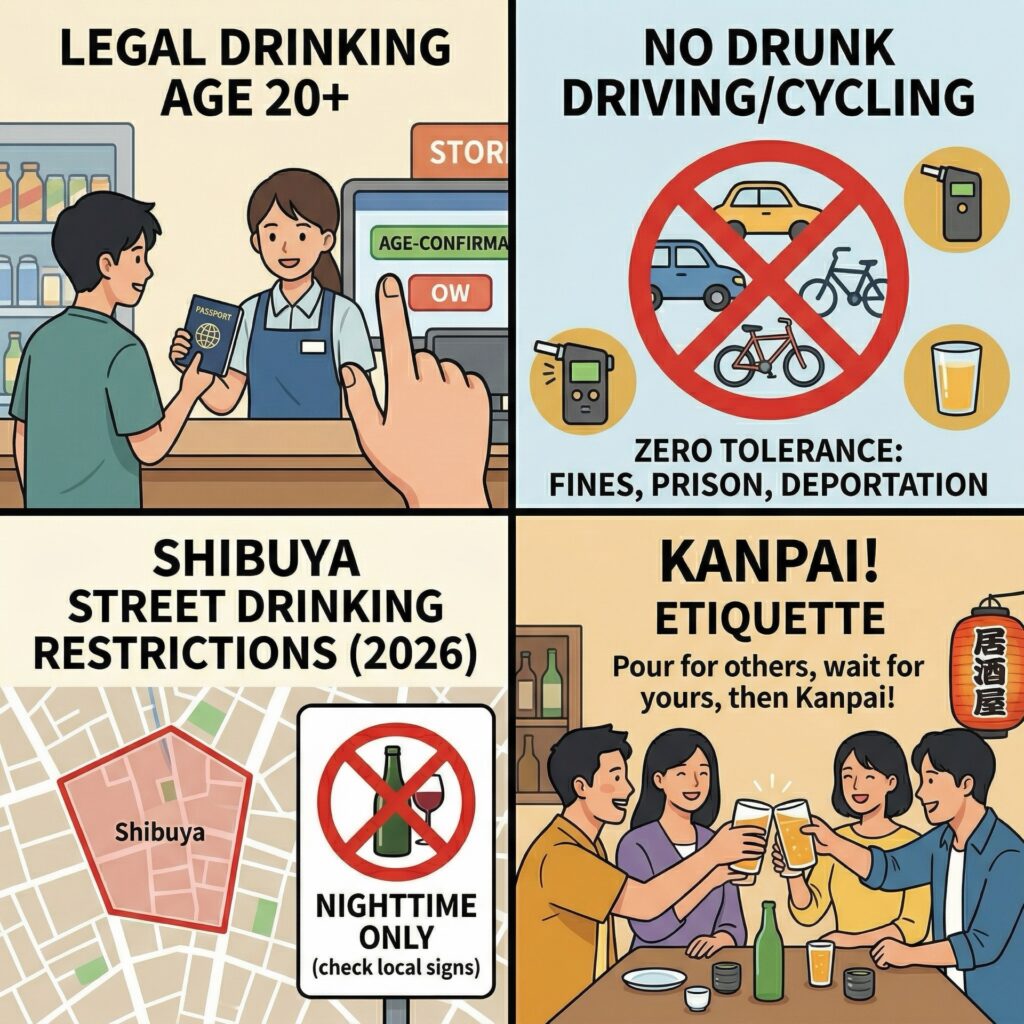
Before you take your first sip, you must know the rules. The legal drinking age in Japan is 20 years old, not 18, so expect supermarkets or convenience stores to ask you to tap an age-confirmation button on the screen, and bars to check your passport.
You must also be aware of Japan’s incredibly strict, zero-tolerance laws against drinking and driving, where even a single sip can result in severe fines, imprisonment, and immediate deportation—a rule that also applies to riding bicycles!
Furthermore, while drinking alcohol on the streets or in parks has historically been legal and normal, recent overtourism issues have led areas like Shibuya to restrict public drinking on streets during nighttime hours all year round in 2026, so always check local signs.
Finally, regarding drinking etiquette: when drinking with locals, never pour your own drink. Fill the glasses of the people around you, wait for them to fill yours, and once everyone’s glass is full, raise them and say “Kanpai!” (Cheers!).