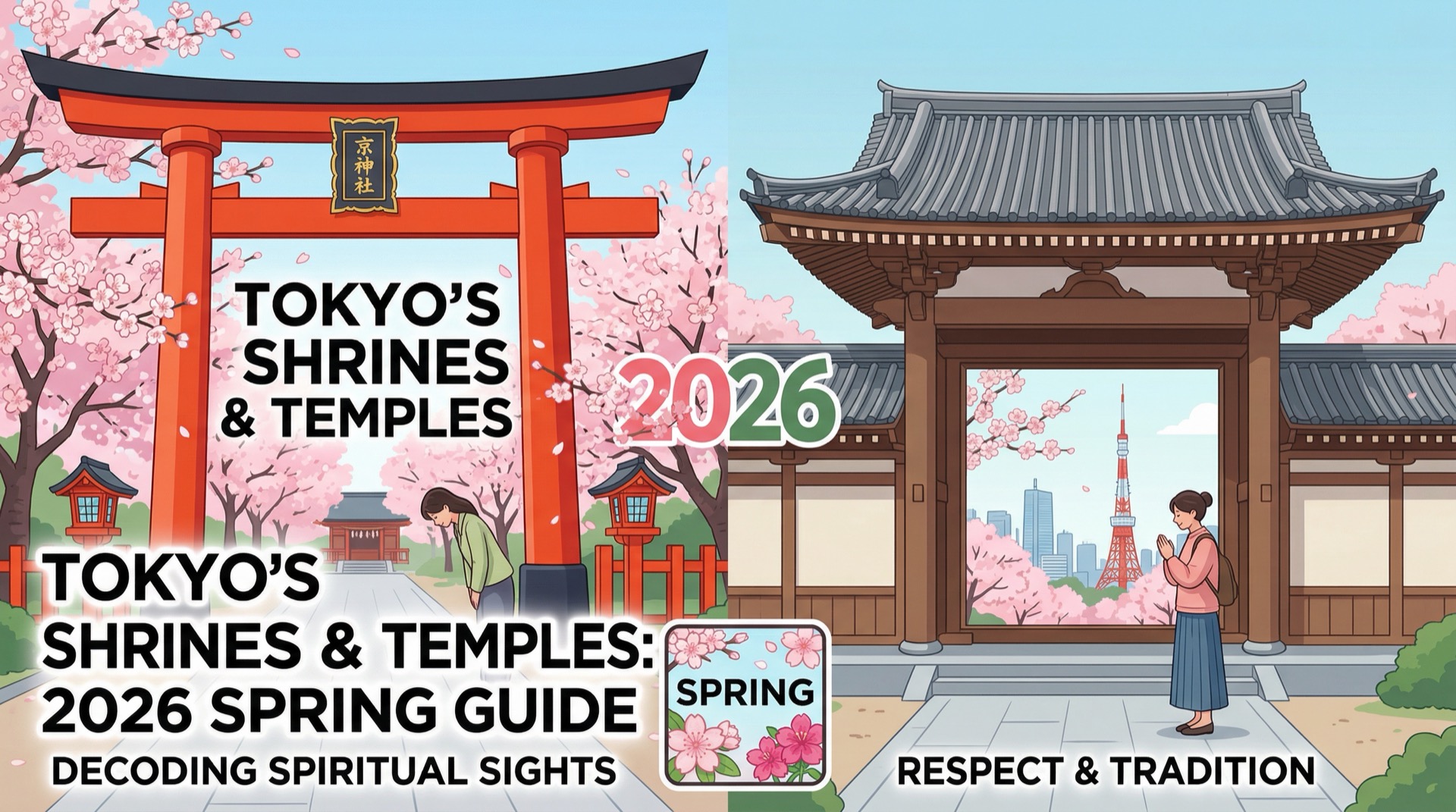
Spring in Tokyo is pure magic. As the city bursts into pale pink cherry blossoms and vibrant azaleas, millions of travelers flock to historical sites to capture the perfect 2026 travel memory.
But as you stand before a majestic wooden structure, a common question arises: “Wait, is this a Shinto shrine or a Buddhist temple?”
Understanding this fundamental difference transforms your trip from simply taking photos into a deeper, more meaningful cultural experience. Plus, with overtourism being a hot topic in 2026, knowing the history and proper manners is the ultimate way to be a respectful traveler.
Here is everything you need to know about navigating Tokyo’s sacred spaces this spring, complete with practical hacks for the season.
Shinto Shrines vs. Buddhist Temples: The Basic Differences
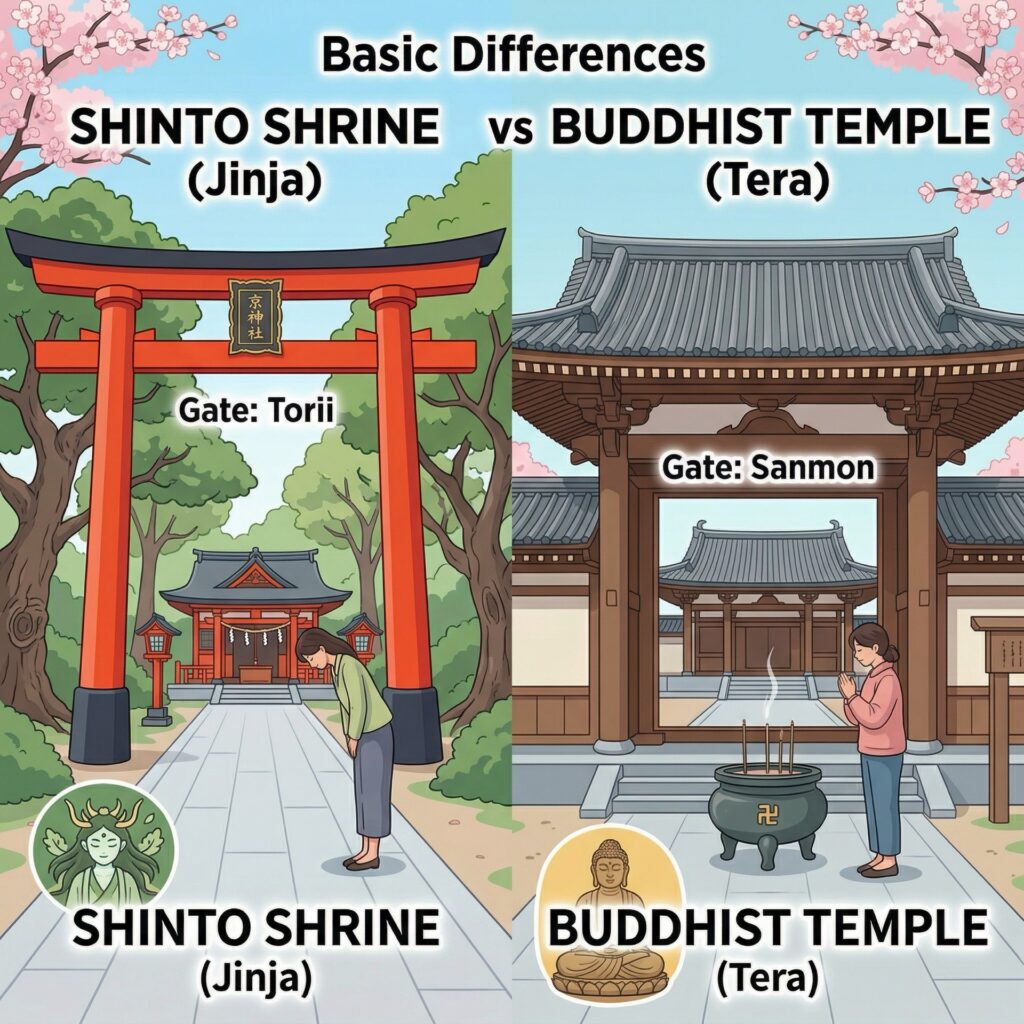
Japan is unique because its two main religions—Shintoism (native to Japan) and Buddhism (imported from mainland Asia)—have coexisted peacefully for centuries. Historically, they even merged, but today they operate as distinct spaces.
The easiest way to tell them apart is the entrance.
If you walk under a “Torii gate” (often vermillion red, with two vertical pillars and a crossbar), you are entering a “Shinto Shrine” (Jinja). Shrines are the homes of “Kami” (nature spirits and deities). Famous Tokyo examples include Meiji Jingu and Nezu Shrine.
If you pass through a large, roofed wooden gate known as a “Sanmon”, you are entering a “Buddhist Temple” (Tera). Temples house statues of the Buddha or various Bodhisattvas. The iconic Senso-ji in Asakusa and Zojo-ji near Tokyo Tower are prime examples.
How to Pray: The Golden Rule of Clapping
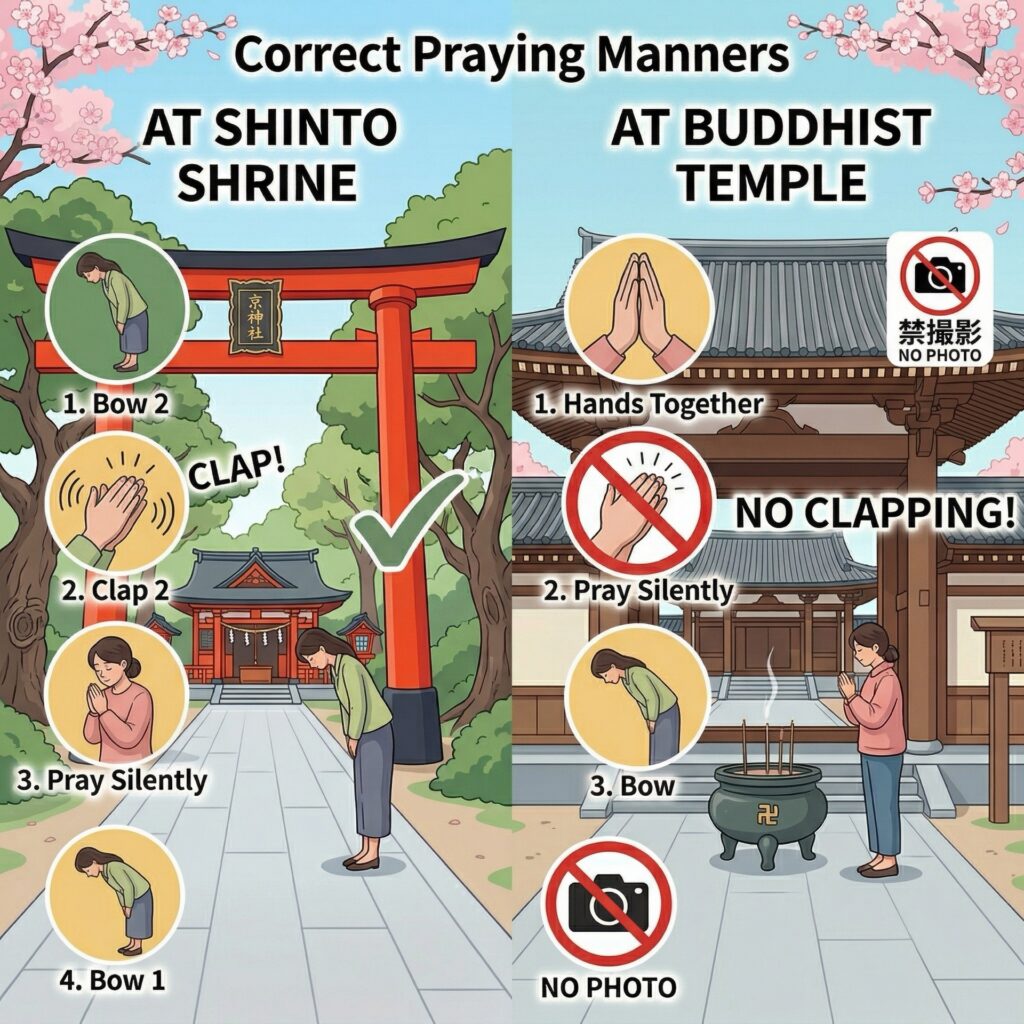
The biggest mistake foreign visitors make is clapping at the wrong place!
At a Shinto Shrine:
- Bow twice.
- Clap your hands twice loudly (to awaken or greet the deity).
- Pray silently.
- Bow once more.
At a Buddhist Temple:
- Put your hands together quietly in front of your chest (like a praying motion).
- Pray silently.
- Bow. 「Do NOT clap at a temple!」
Manner Check for 2026: Always respect no-photography signs. Due to massive crowds, many sacred halls now strictly prohibit taking photos of the inner sanctum. Enjoy the moment with your eyes instead of your smartphone.
The Art of “Goshuin” and Modern Upgrades
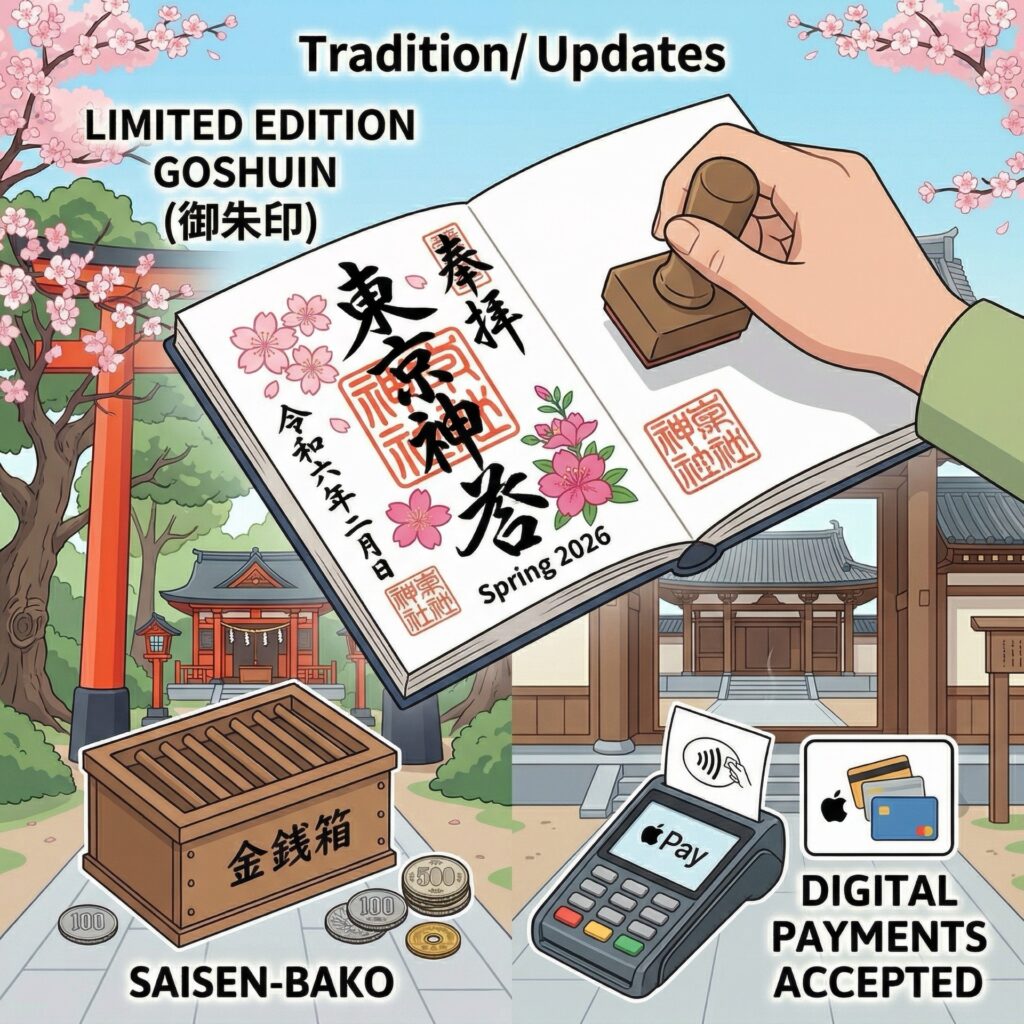
One of the most beautiful souvenirs you can collect is a “Goshuin”—a hand-drawn calligraphy seal proving your visit to a shrine or temple.
In spring, many spots in Tokyo offer limited-edition sakura (cherry blossom) or azalea Goshuin designs that are true works of art.
While offering money to the divine has historically been a cash-only affair, times are changing. Many major Tokyo temples and shrines in 2026 now accept digital payments or credit cards for omamori (amulets) and goshuin. Still, it is always wise to keep a handful of 100-yen and 500-yen coins for the actual offering box (saisen-bako).
Night Illuminations: A Mystical Perspective
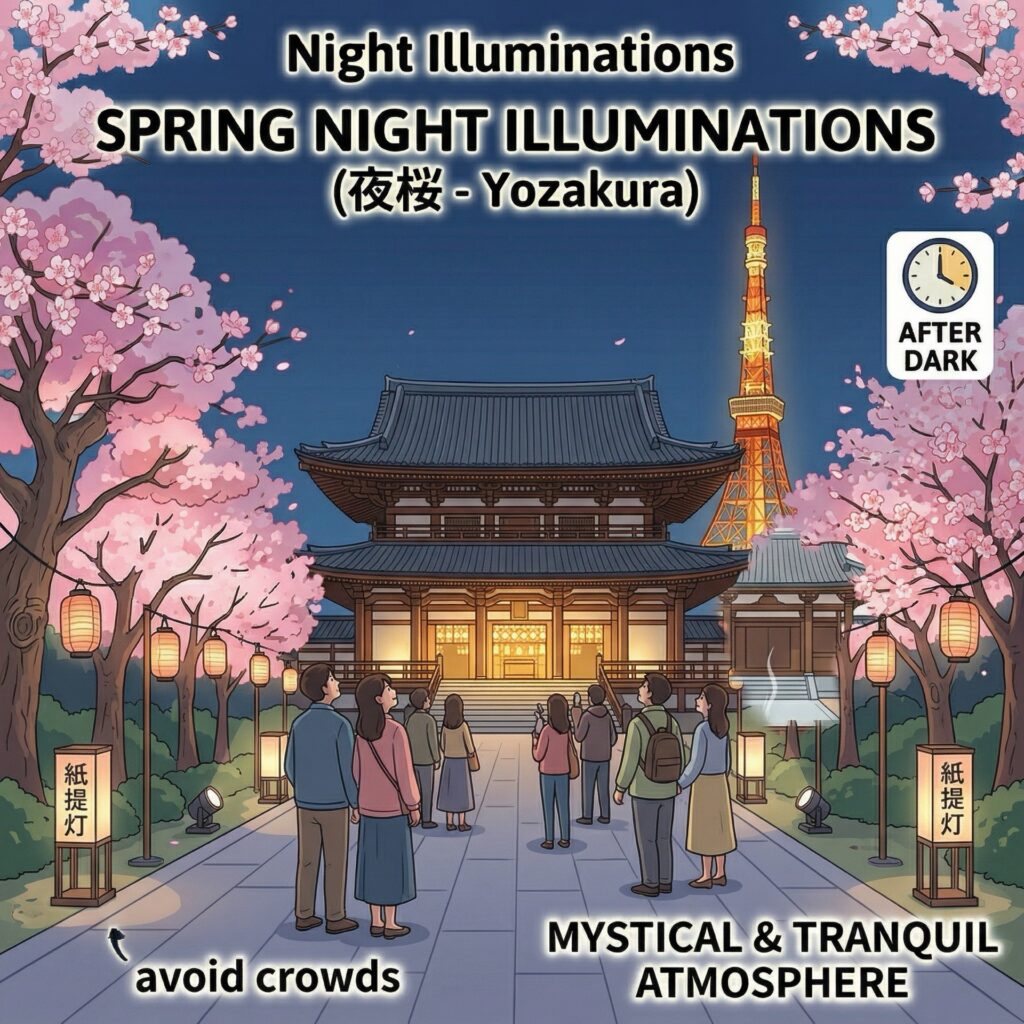
Tokyo comes alive at night, and its historical sites are no exception. During the peak spring weeks in late March and April, spots like Chidorigafuchi (near Yasukuni Shrine) and Ueno Park (home to Kanei-ji Temple) host stunning evening illuminations.
Visiting after dark offers a mystical, tranquil atmosphere, saving you from the heavy daytime crowds. The contrast of ancient architecture against glowing blossoms and modern cityscapes is breathtaking.
Essential Practical Hacks for Spring 2026
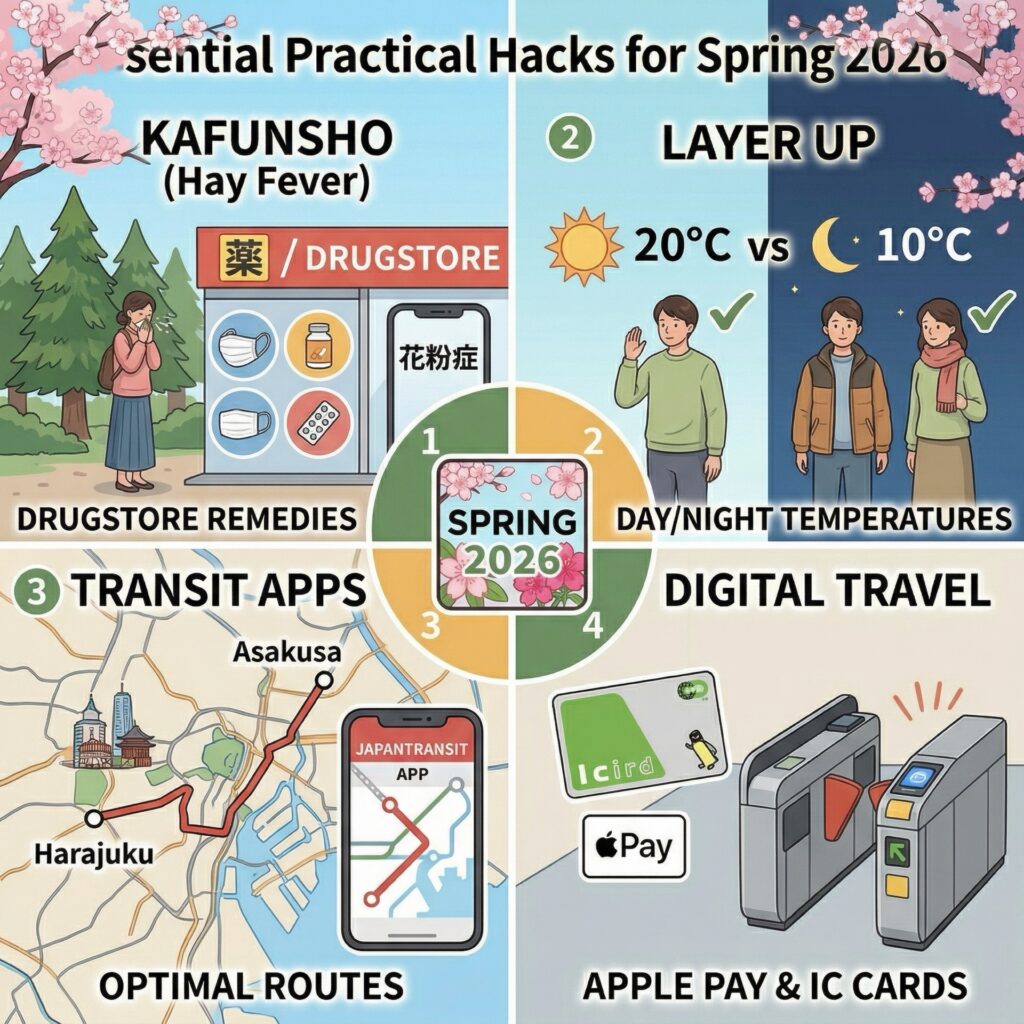
If you are exploring Tokyo’s outdoor historical sites this spring, keep these practical survival tips in mind.
「1. Battle Kafunsho (Hay Fever) Like a Local」 Spring in Japan means severe cedar and cypress pollen. If you suddenly find yourself sneezing or suffering from itchy eyes while exploring Meiji Jingu, head straight to a local drugstore like Matsumoto Kiyoshi or Welcia. You don’t need a prescription. Simply show the pharmacist the word “花粉症 (Kafunsho)” on your phone. Japanese over-the-counter allergy medications are highly effective and will save your trip!
「2. Layer Up for Temperature Drops」 While daytime spring temperatures in Tokyo can reach a comfortable 20°C (68°F), it often drops dramatically to around 10°C (50°F) after sunset. If you plan to attend nighttime temple illuminations, always pack a heat-retaining inner layer, a light jacket, or a scarf.
「3. Use Transit Apps Effectively」 With new rail connections and transit systems introduced leading up to 2026, getting between Asakusa (temples) and Harajuku (shrines) is faster than ever. Download apps like JapanTransit to find optimal routes and rely on Apple Pay or digital IC cards for seamless travel.
By understanding the rich history behind these sacred sites and taking a few practical precautions, your spring journey through Tokyo will be unforgettable, deeply respectful, and incredibly comfortable.