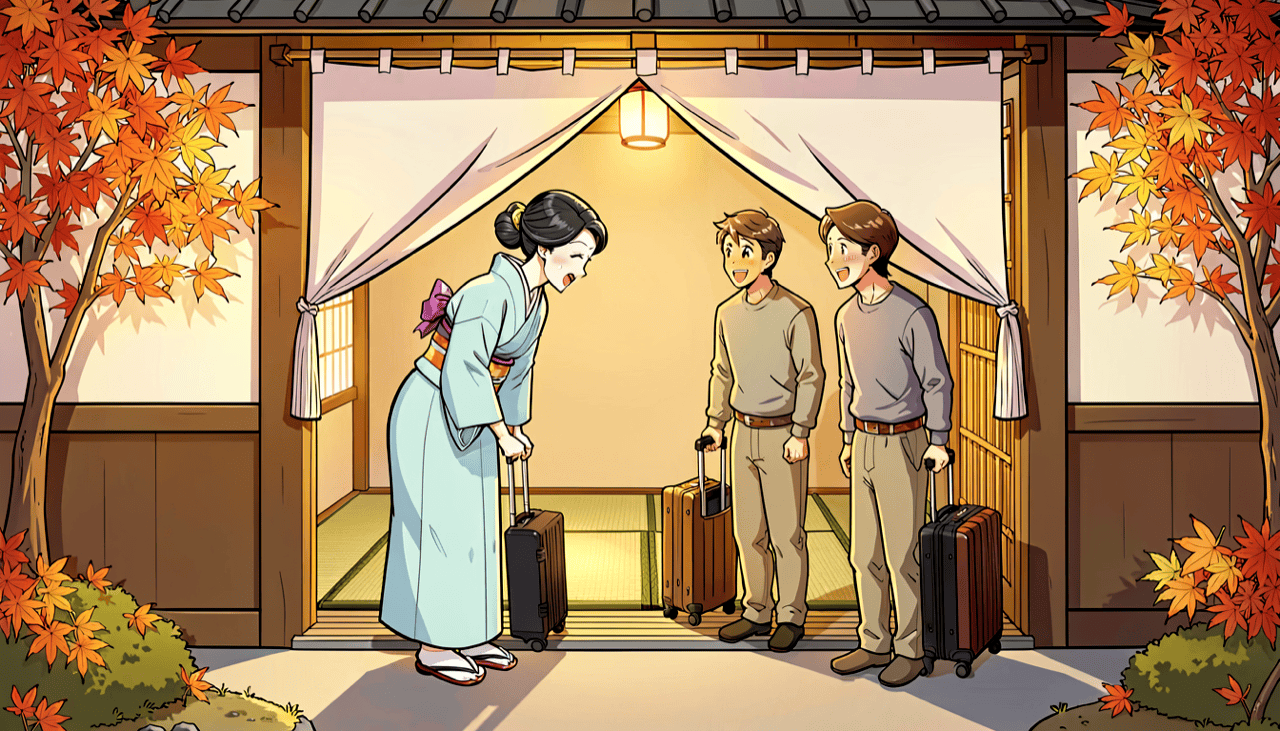
You finish your meal at a small restaurant in Tokyo, and as you stand to leave, the owner bows — not once, but several times — even as you walk out the door and she can barely see you anymore. You’re handed a hot towel at the start of every sit-down meal. A shop assistant doesn’t just point you to the right shelf; she walks you there personally, waits while you find what you need, and bows when you turn to leave.
None of this was in the guidebook. And yet it happens, again and again, across every corner of Japan.
What you’re experiencing has a name: omotenashi (おもてなし). It’s one of the most-discussed concepts in Japanese culture — and one of the most misunderstood. This article unpacks what it really means, why it works differently from Western hospitality, and how you can respond to it gracefully as a visitor.
What Is Omotenashi, Really?
The word is often translated simply as “hospitality,” but that translation misses something essential. Omotenashi comes from the Japanese verb motenasu — to handle, to entertain — combined with the spirit of omote (surface/face) and nashi (without). Together, the phrase suggests care given without pretense and without expectation of return.
In the West, hospitality often exists within a transaction. A waiter is friendly because a tip is expected. A hotel concierge goes the extra mile because that’s what earns a good review. In Japan, omotenashi operates outside that loop entirely. The care given to a guest isn’t conditional on payment or reward — it’s an expression of sincerity and deep respect.
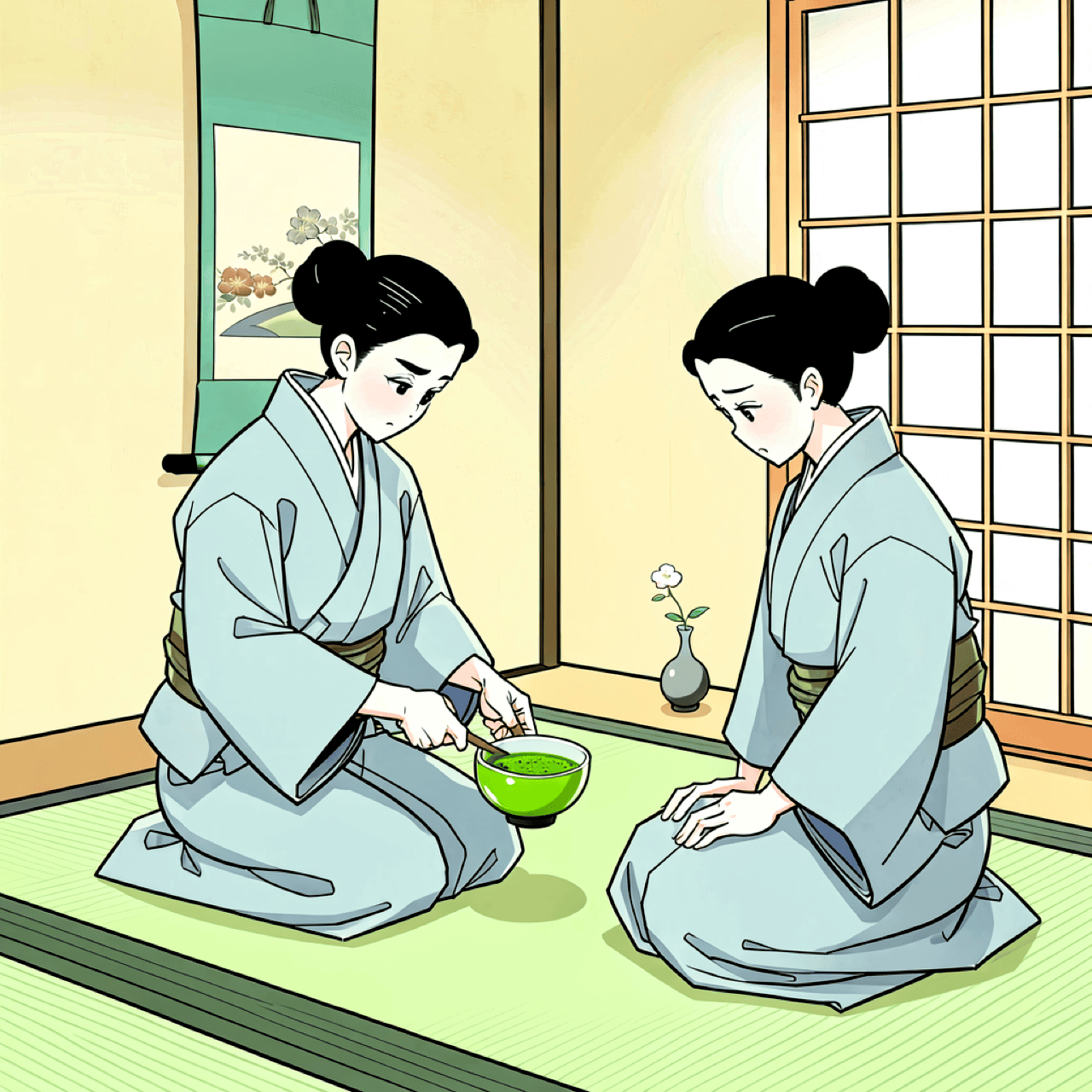
This philosophy traces its roots to the Japanese tea ceremony. When a tea master prepares a bowl of matcha for a guest, every element of the room — the hanging scroll, the flowers, the temperature of the water — is chosen specifically for that person, on that day. There is no menu, no transaction, no expectation that the guest will return. It’s pure, present-moment hospitality.
You’ll find that spirit alive today in restaurants, inns, shops, and even chance encounters on the street.
The Quiet Rituals You’ll Notice Everywhere
Omotenashi rarely announces itself. It shows up in the small, almost invisible details of daily service — and once you know what to look for, you’ll start seeing it everywhere.
The oshibori. Almost every sit-down restaurant will greet you with a small rolled towel — hot in winter, cold in summer. It’s meant for cleaning your hands before eating. It’s one of the simplest acts of anticipatory care: the host prepares for your comfort before you’ve even sat down.
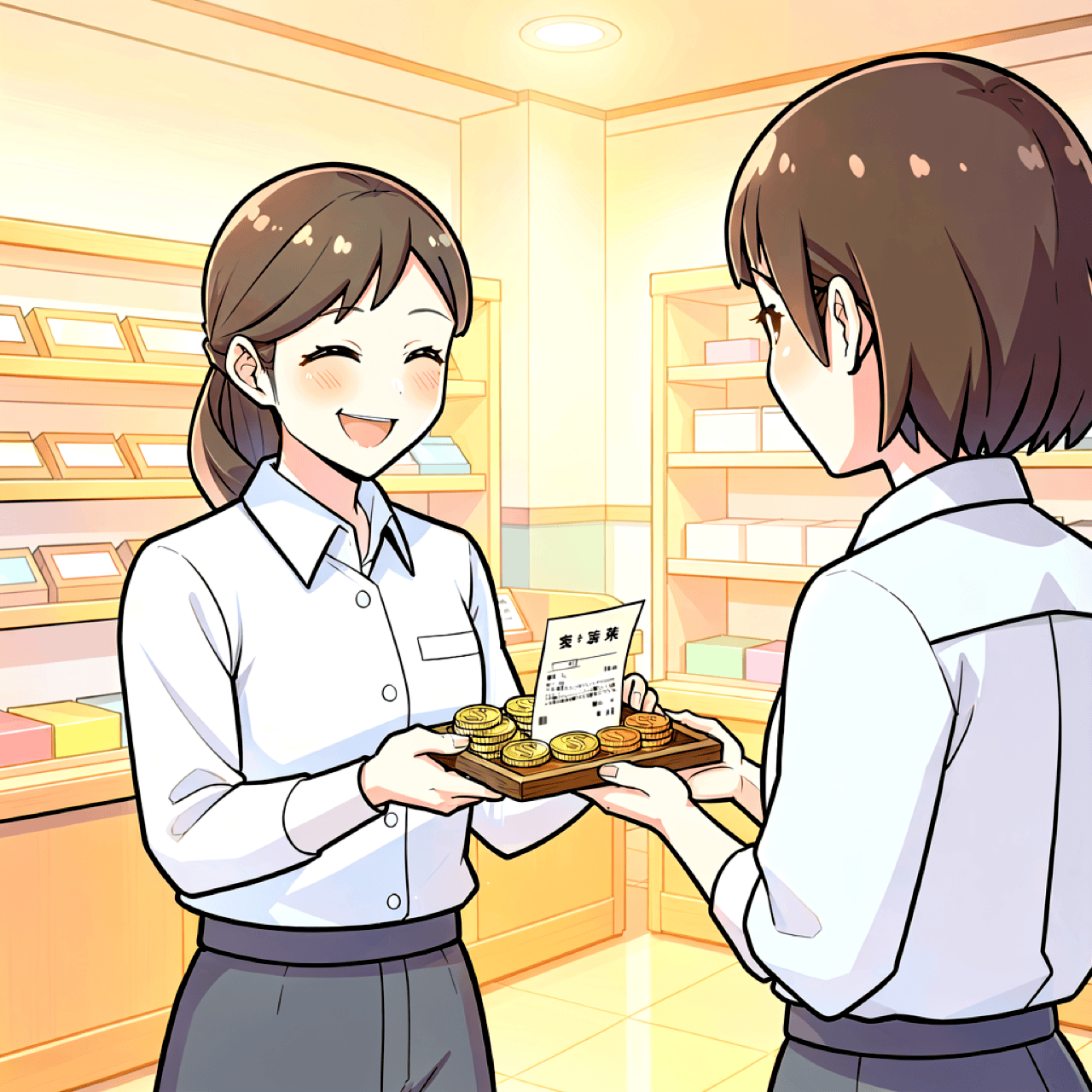
Change presented on a tray. At many shops and restaurants, your change isn’t handed to you directly — it’s placed on a small tray and presented to you with both hands. This removes the risk of accidentally touching hands (which can feel intrusive in Japanese personal-space culture) and frames even a routine transaction as an act of care.
The store escort. Ask a shop assistant where to find something, and there’s a good chance they won’t just point — they’ll walk you there. Pointing at a person or customer is considered somewhat rude in Japan. Personal guidance is the omotenashi alternative.
“Irasshaimase!” Step into almost any Japanese shop or restaurant and you’ll hear a chorus of this greeting — “Welcome!” — called out by every staff member within earshot. It’s not choreographed for your benefit; it’s a genuine expression that your presence has been acknowledged and you are welcome.
The deep bow on departure. When you leave a shop or restaurant, you may notice staff bowing long after you’ve turned your back. Some will bow until you’re completely out of sight. This isn’t performance; it’s the completion of the act of hospitality — the host sees the guest off fully, without rushing back to the next task.
Why Tipping Is Rude — And What to Do Instead
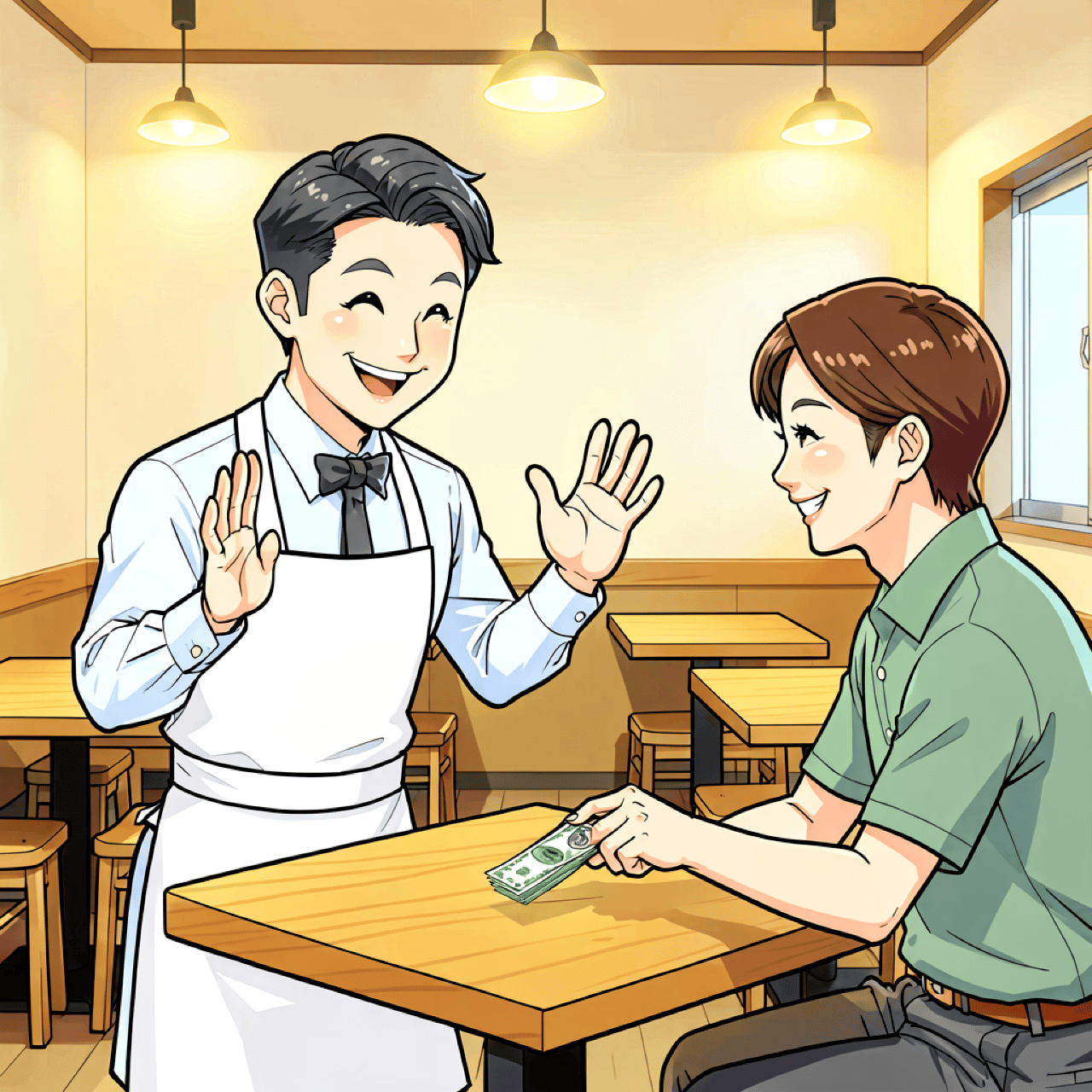
This is perhaps the most important practical note for Western visitors: tipping in Japan is not just unnecessary — it can genuinely cause discomfort. At best, a staff member will be confused. At worst, they may chase you down the street to return the money, assuming you left it by mistake.
The reason comes back to omotenashi itself. In Japan, good service isn’t a performance done in hopes of extra reward — it’s simply how things are done, as a matter of professional pride and cultural expectation. Offering a tip can imply that you thought the service was incomplete without it, which can feel subtly insulting.
So what should you do instead?
- Say it out loud. “Arigatou gozaimashita” (ah-ree-gah-toh go-zai-mash-tah) — “Thank you very much” — spoken sincerely and with a slight bow, carries far more weight than cash.
- Say “gochisousama deshita.” After a meal, this phrase (go-chee-soh-sah-mah desh-tah) means “it was a feast” — a culturally resonant way to honor the cook’s effort.
- Leave a review. A genuine, specific online review means the world to small Japanese businesses. Returning to the same restaurant or shop on a future trip means even more.
- Bring omiyage. If you visit the same place more than once, a small gift from your home country — ideally a packaged sweet that can be shared among staff — is one of the most thoughtful things you can do.
Ryokan Stays: Where Omotenashi Reaches Its Peak
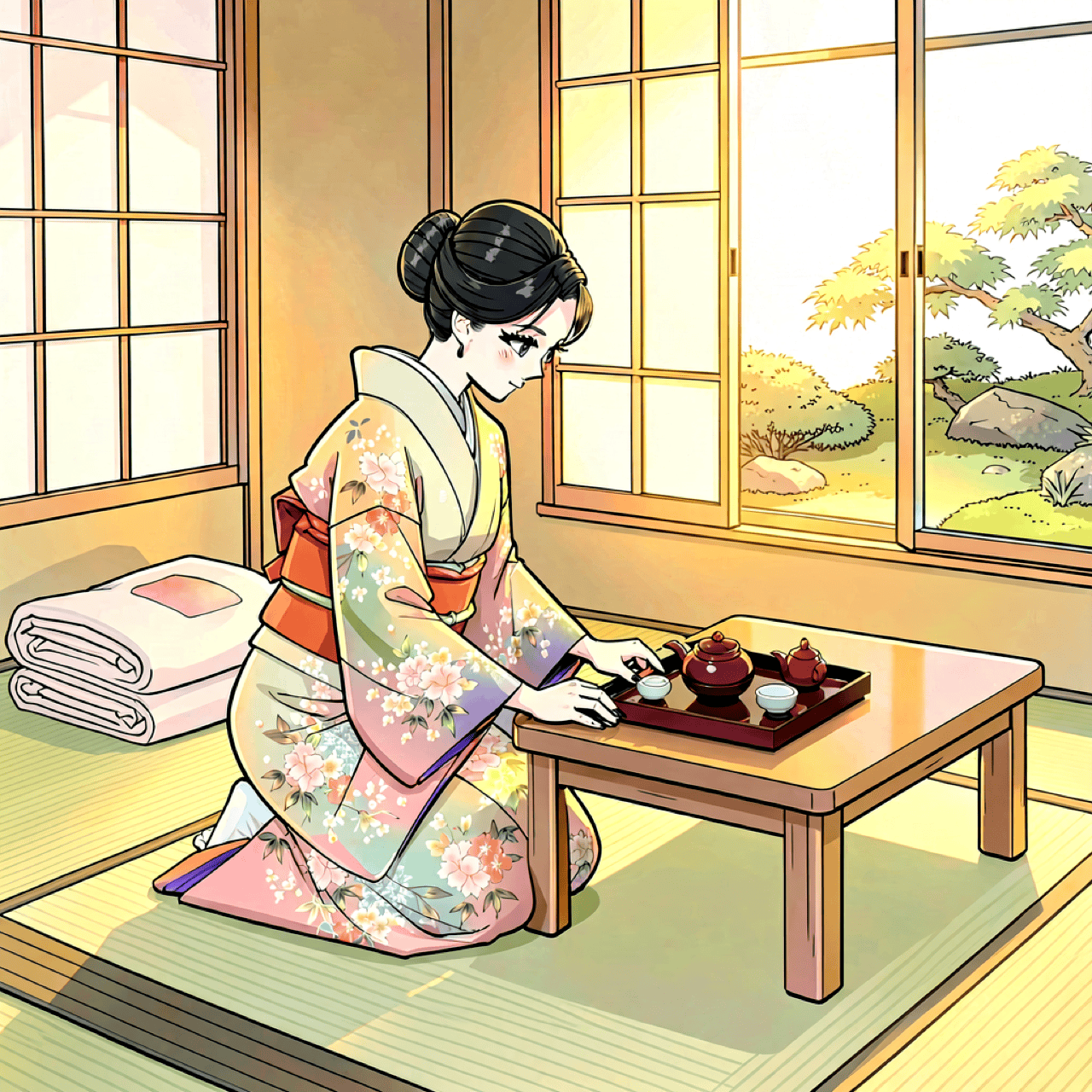
If you want to experience omotenashi in its most concentrated form, stay at a traditional Japanese inn — a ryokan. These are not hotels. They’re an entirely different philosophy of accommodation, and the rules and rituals that come with them are part of the experience.
The genkan. The moment you arrive, you’ll remove your shoes at the entryway (genkan) and step up into a different world. Slippers will be provided. (Note: slippers don’t go into tatami rooms — you’ll leave them at the doorway.)
The yukata. Your room will contain a yukata — a casual cotton robe for wearing around the inn. Always wear it left over right (your left panel on top). Right over left is reserved for funeral attire and will cause genuine alarm. A simple memory trick: put your left hand inside the collar first.
The nakai-san. Your room attendant — often called nakai-san — is the heart of your ryokan stay. She will bring tea and wagashi (traditional sweets) when you arrive, explain the inn’s facilities, serve dinner in your room (in many traditional ryokan), and transform your room into a sleeping space by laying out the futon while you’re at dinner. This is omotenashi in human form.
The onsen. If your ryokan has a traditional hot spring bath, there’s one inviolable rule: wash thoroughly at the shower stations before entering the communal bath. The onsen water is shared, and cleanliness before soaking is a matter of deep cultural and hygenic respect. Small towels can rest on your head while soaking, but must never enter the water.
The meal. Ryokan kaiseki (multi-course) dinners are timed and sequenced with intention. Try to eat each course as it arrives rather than mixing or rearranging dishes — the chef has thought carefully about the order and temperature of each element.
When Language Fails, Kindness Finds a Way
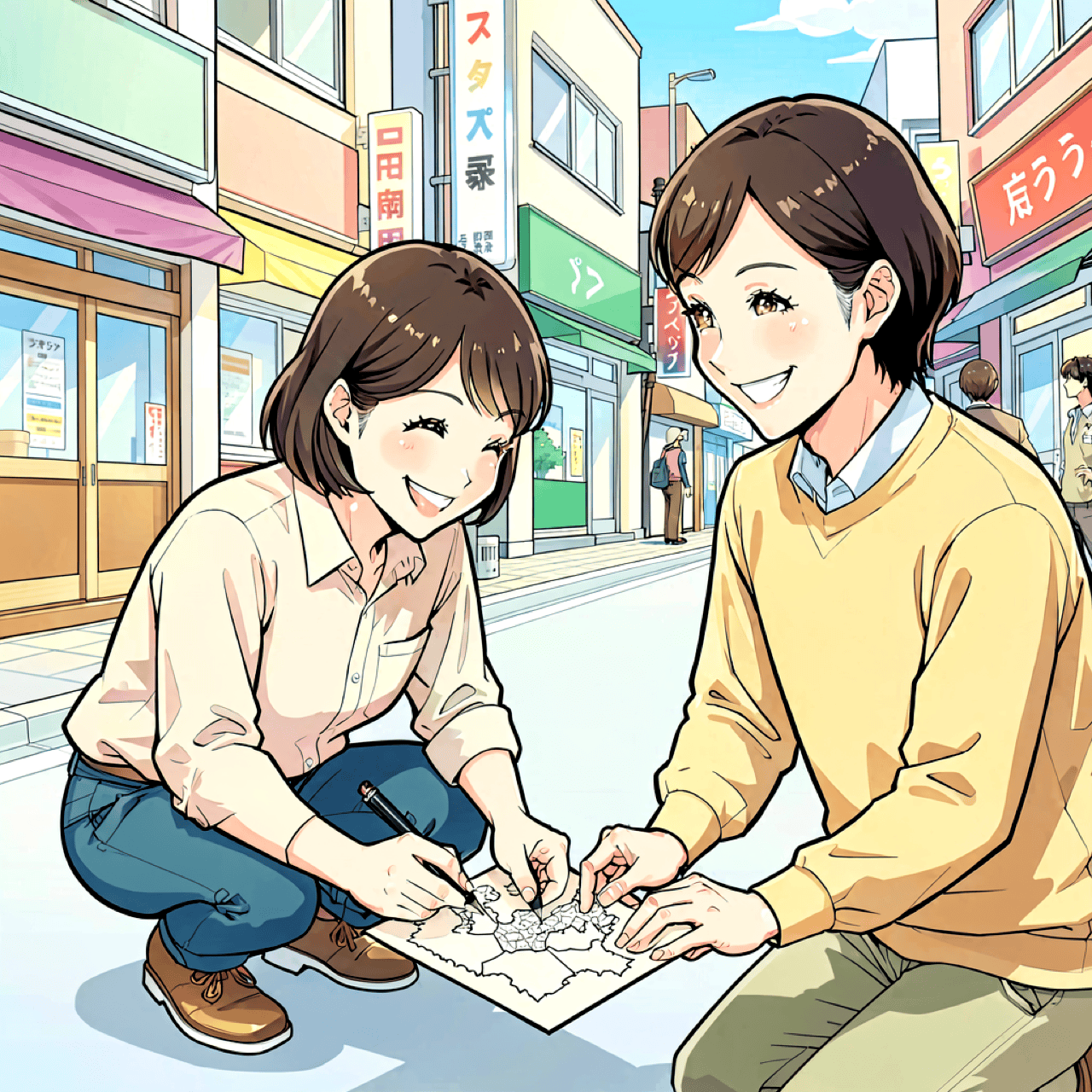
One of the most touching expressions of omotenashi isn’t found in hotels or restaurants — it happens on the street, spontaneously, when you least expect it.
Many travelers report the experience of being lost, showing a Japanese passerby a printed address or a map on their phone, and watching that person — despite speaking no English — gesture for them to follow. And then actually walking them to the destination, sometimes twenty minutes out of their own way.
This connects to a concept related to omotenashi called kikubari (気配り) — the art of reading the atmosphere and acting proactively to meet someone’s need before they have to ask. It’s the quality that makes a host notice your teacup is getting low before you reach for it. It’s the shopkeeper who runs after you because she noticed you left your umbrella behind. It’s the station attendant who watches the platform and approaches the traveler who looks confused.
If someone in Japan offers unsolicited help, the culturally gracious response is to accept it with gratitude rather than insisting you’ll manage alone. Refusing help — especially with language barriers — can sometimes feel, to the helper, like a rejection of their sincerity. A warm “Arigatou gozaimasu” (ah-ree-gah-toh go-zai-mahs) and a bow goes a long way.
How to Be a Gracious Guest
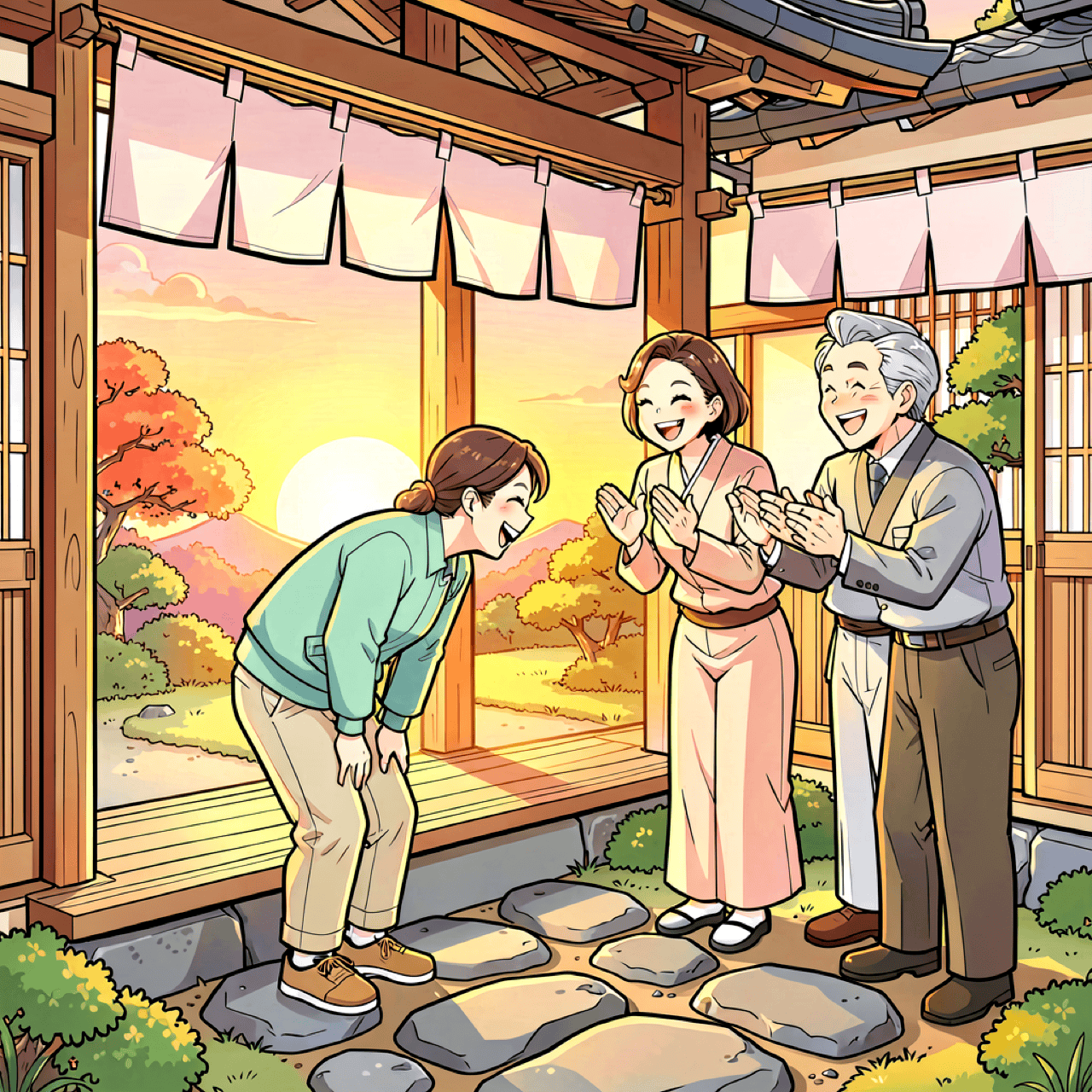
Receiving omotenashi well is itself an art. You don’t need to match it gesture for gesture, but a few small habits will make your interactions richer and more meaningful for everyone.
Bow slightly when receiving anything. Whether it’s change, a room key, or a cup of tea, a small nod or half-bow when you receive something signals awareness and appreciation. You don’t need to replicate the deep formal bows of a nakai-san — a simple, sincere nod is entirely appropriate.
Respect the space. Omotenashi implies that the host has prepared the environment thoughtfully. Honour that by queuing patiently, keeping noise levels low in traditional spaces, and following posted rules — removing shoes, not eating while walking, keeping phones on silent in quiet areas.
Be specific in your appreciation. “This was wonderful” is kind. “The way you seasoned the dashi in the first course was extraordinary” is something a chef will remember for years. Specific compliments — even gestured across a language barrier — are one of the greatest gifts a guest can give.
Return. In Japanese hospitality culture, the highest compliment a guest can pay is to come back. If you find a small family-run restaurant, a favourite ryokan, or a neighbourhood kissaten (coffee shop) that moves you — go back. Say you’ve returned. They will remember you.
Japan has a reputation for being difficult to navigate for first-time visitors. The language is unfamiliar, the customs are specific, and the unwritten rules can feel overwhelming. But underneath all of it is a culture that genuinely, deeply wants you to feel at home. That’s omotenashi. And once you understand it, Japan stops feeling foreign — and starts feeling like the most welcoming place on earth.
※ Illustrations in this article are AI-generated and may not represent actual locations, products, or services.