Quick Winter Weather Update (January 2026)
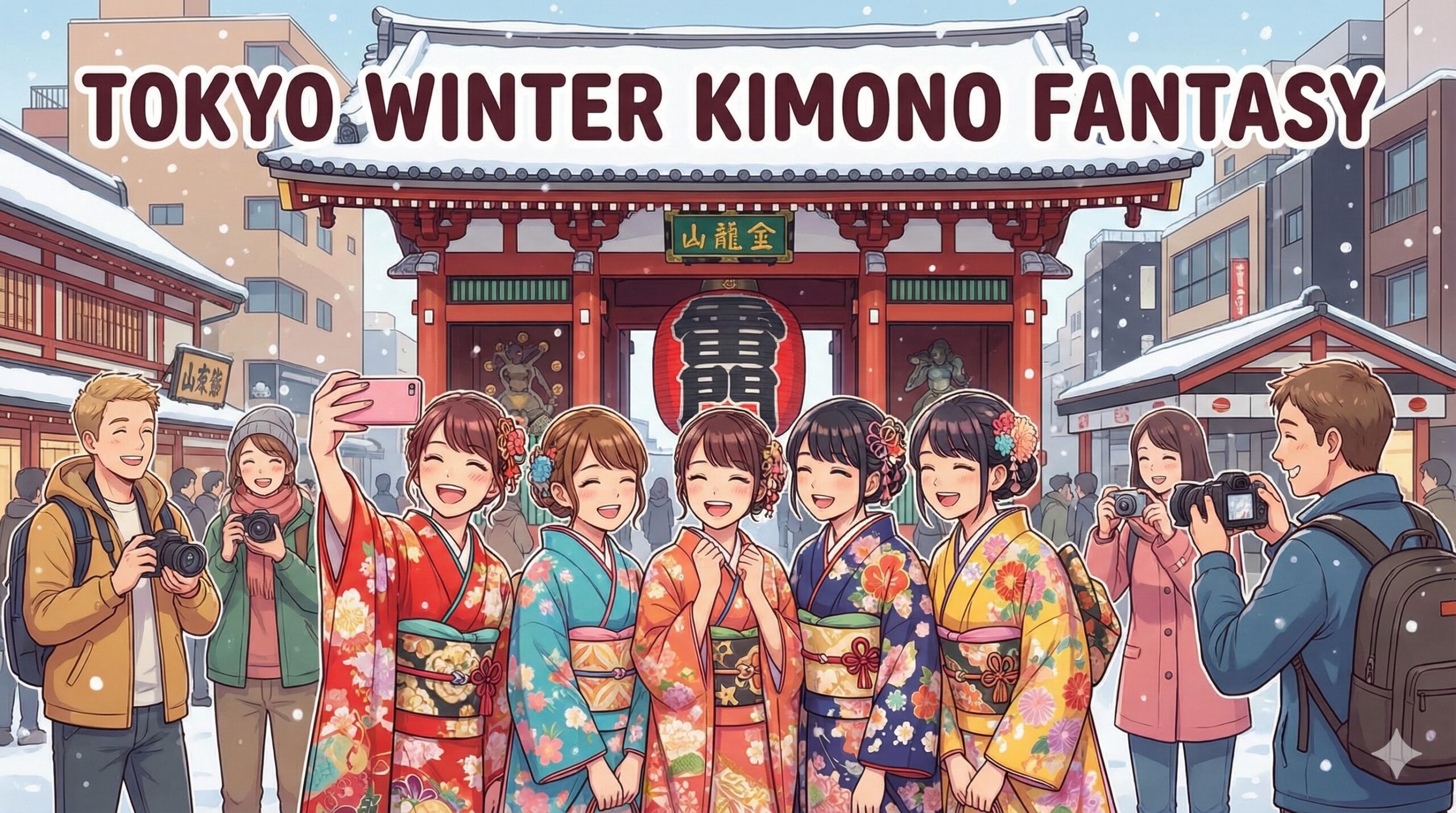
Before we dive into the delicious world of hot pots, let’s talk about the weather outside! If you’re in Tokyo right now, you’ve probably noticed two things: the sky is a stunning, clear blue, and the air is biting cold.
The “Tokyo Winter Sun” Illusion January in Tokyo is famous for its “Fuyu-bare” (winter sunshine). While it looks bright and warm from your hotel window, the wind chill and low humidity make it feel much colder. Daytime highs hover around 10-12°C (50-54°F), but once the sun sets, temperatures rapidly drop to below 3°C (37°F).
The Art of Layering Tokyo’s indoor spaces—trains, department stores, and restaurants—are kept very warm with heaters. To stay comfortable, layering is your best friend. A heavy coat over an easily removable sweater or cardigan is the local pro-tip. If you’re feeling underdressed, head to a nearby Uniqlo to grab some “Heattech” thermal wear—it’s a literal lifesaver for Tokyo winters!
Stay Hydrated and Warm The air is exceptionally dry this month. Keep yourself hydrated, and if you’re planning to walk around at night, stop by any convenience store to buy a “Kairo” (disposable heat pad). Tucking one into your pocket or sticking it to your undershirt makes waiting for that perfect bowl of Oden so much more pleasant.
The crisp winter air makes the city lights and views of Mt. Fuji look sharper than ever. Just stay bundled up, and let’s find you the perfect hot meal to melt away the chill!
Tokyo’s Winter Glow
A Tourist’s Masterguide to Oden & Nabe Hotpots
1. The Art of the Communal Pot
📜 A Tale of 400 Winters
Before the neon lights and skyscrapers, the people of Edo (Old Tokyo) found warmth in a simple bowl. Oden and Nabe are more than food—they are the history of Tokyo’s survival through cold winters.
The Oden Revolution
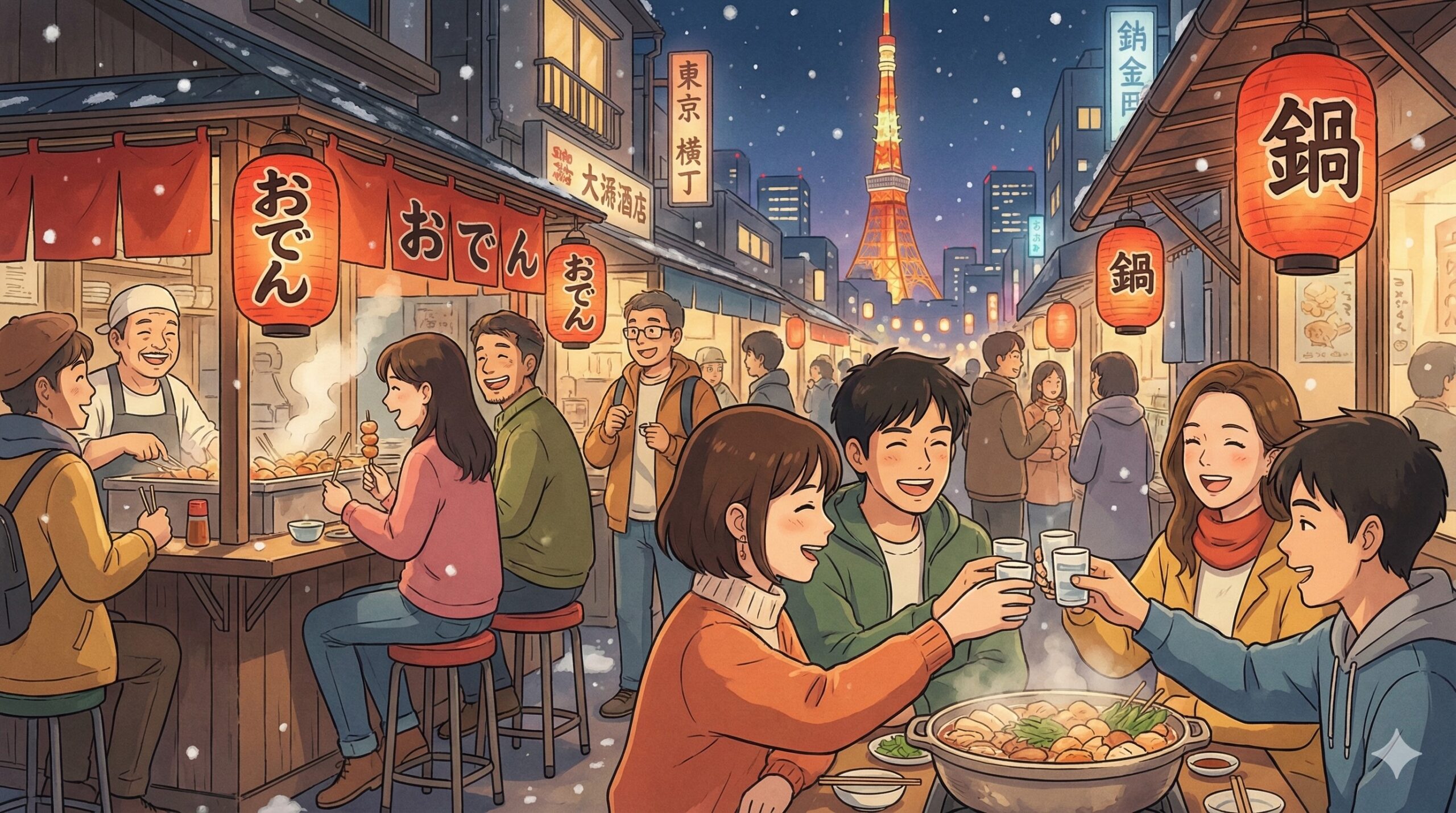
Originally, “Dengaku” was tofu grilled with miso. But as Edo grew, street stalls (Yatai) needed something faster and warmer. They began boiling ingredients in a soy-based Dashi. This Tokyo-style “black broth” became the fuel for the city’s craftsmen and samurai alike.
Nabe & the Hearth
Traditional Japanese homes were built around an “Irori” (sunken hearth). A single pot was hung over the fire, and the family gathered to share one meal. This created the “Ichigo Ichie” spirit—the belief that this specific moment with these people around this pot is unique and should be cherished.
🥢 Master the “Pot Etiquette”
How to eat like a local without saying a word:
- The “Toribashi” Rule: When taking food from a shared Nabe, use the dedicated “serving chopsticks.” If none are provided, it is polite to ask the staff. Never use the chopsticks that have been in your mouth to touch the communal food!
- Don’t Be a “Nabe-Arashi”: (Literally: Pot Storm). Avoid stirring the pot vigorously to find your favorite piece. It ruins the aesthetic and breaks delicate ingredients like tofu. Respect the order.
- The Skimming Ritual: You will see a small bowl and a mesh spoon. This is for skimming the foam (Aku) from the surface. Doing this keeps the broth clear and the flavor pure. It’s a group effort!
- The Sacred “Shime”: The final act. Once the ingredients are gone, we add rice (Zosui) or Udon. This “Shime” represents the culmination of all flavors from the night. Don’t leave before the Shime!
2. Where to Experience the Heat
Each district of Tokyo offers a different “winter flavor.” Select an area to find your spot:
Asakusa
Under-Track
Ryogoku
Anywhere
Asakusa: The 100-Year Broth
In the shadow of Senso-ji Temple, you’ll find “Oden-ya” that have been bubbling since the Meiji era.
Top Spot: Asakusa Otafuku. Their broth is famous for being “replenished but never replaced” for decades, creating a flavor you simply can’t find elsewhere.
Perfect for: Travelers who want to feel the history of old Edo while sitting on tatami mats.
🍢 Test Your Tokyo Knowledge
You are at a Tokyo 7-Eleven. Which item is a “Tokyo-Only” specialty made of wheat flour that you must try?